
Riverwalk.
The Riverwalk appears in trail records without a documented length, suggesting either an unmeasured pathway or a route still being cataloged in the system. Given the name, it likely follows a waterway corridor—common in Adirondack communities where riverside paths connect neighborhoods or access fishing spots.
- Leg-stretcherShort and nearly flat — an hour or less
- Peak foliage window — color starts up high and works down the valleys through mid-October.
Seasonal pattern for this trail · tops out ~1,558 ft · live closures appear above
- WoodSurface
- Has bridgesCrossings
Read the line before you walk it.
What the trailhead is doing today.
Where the hike begins.
Curated trailheads & parking near this route.
Editorial trailhead listings within roughly 3 miles — permit info, parking capacity, and access-road conditions.
Guides, outfitters & shuttles.
If you’re already out here.
Saranac Lake.
The corner of the Park this trail calls home — its hamlets, waters, lodging, and the rest of its field record.
Read the Region→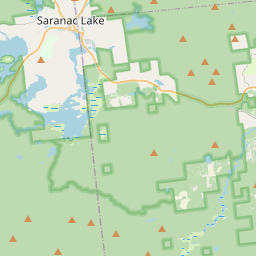
Make a weekend of it.
Closest editorial picks for a meal, a scoop, a pint, a bed, and a sight worth your time.
Eat.
4- Owl's Nest Pizza Parlor459 ft
Owl's Nest Pizzeria is a local favorite in Saranac Lake, New York, offering New York Style pizza, wings, subs, and other munchies. Available for dine-in, take-out, and delivery, it's a convenient spot to grab a slice.
- China Jade0.1 mi
A long-running Chinese restaurant on Saranac Lake's Main Street, doing classic American-Chinese standards for dine-in and takeout, Tuesday through Saturday.
- Our Plates0.2 mi
Our Plates offers Caribbean and Southern-inspired cuisine for pickup at 7 Broadway. Enjoy dishes like Empanadas Locas, Dominican Chimi Burgers, Bistec Encebollado, and Tres Leches cake.
- Red Fox1.1 mi
The Red Fox Restaurant is a longtime Saranac Lake landmark known for its Steak, Seafood, and Italian dishes, offered in a spacious Adirondack-style setting.
Sip.
4- Blue Moon490 ft
Blue Moon Café in Saranac Lake offers dine-in, pick-up, and curbside delivery services. Guests can enjoy weekly specials, restaurant menus, baked goods, coffee, grocery items, and adult beverages.
- Origin Coffee0.1 mi
Origin Coffee Co is a specialty coffee shop with locations in Lake Placid and Saranac Lake serving a chef-driven breakfast and lunch menu.
- Nori's Village Market0.3 mi
Nori's Village Market and Riverside Cafe offers a market with organic and local produce, bulk foods, coffee, and teas, alongside a cafe serving natural, vegetarian, vegan, gluten-free, and local meat options.
- Saranac Juice5.5 mi
Cold-pressed juices, cleanses, protein elixirs, and nut mylks from Saranac River Ranch in Bloomingdale, made from organic produce grown on the farm or sourced from local Adirondack growers.
Sweet.
4- Mountain Mist Custard0.9 mi
A summer fixture on the shore of Lake Flower in Saranac Lake, with picnic tables and a dock you can tie a boat to. Frozen custard and soft serve with weekly-rotating flavors, shakes, and sundaes.
- Mark Twain Maple Works1.3 mi
Mark Twain Maple Works produces New York State maple syrup on the shore of Saranac Lake in the Adirondack Park. They have been making syrup since 2013, expanding their operation and offering various grades.
- Donnelly's Soft Ice Cream2.7 mi
A fourth-generation Saranac Lake institution on a former dairy farm, serving exactly one rotating soft-serve flavor each day — twisted with vanilla on the same 1953 machine. Cash only; check the daily flavor. Memorial Day to Labor Day.
- Emma's Lake Placid Creamery8.0 mi
A 1950s-themed creamery in the heart of walkable Lake Placid, famous for its Maple Creme soft serve alongside 16 hard flavors, gelato, sorbet, and old-fashioned malts. The reliable apres-hike treat.
Drink.
4- Bitters & Bones0.3 mi
Saranac Lake's only downtown brewery, restaurant, and bar, Bitters & Bones offers craft beer brewed upstairs, fresh local cuisine for breakfast, lunch, and dinner, and craft cocktails. It features rooftop decks and unique private event spa…
- RiverTrail Beerworks0.4 mi
RiverTrail Beerworks is Saranac Lake’s only riverfront brewpub, located on the Saranac Lake River Walk and Rail Trail. It features a heated patio, firepits, two golf simulators, and serves lunch and dinner daily with house-brewed beers and…
- Ray Brook Brewhouse3.3 mi
Ray Brook Brewhouse is a unique brewery in Ray Brook, NY, offering wild and traditional brews paired with adventurous dishes made from local and exotic ingredients.
- The 1892 Bar & Grille5.7 mi
The 1892 Bar & Grille is a locally owned rustic bar and restaurant in Lake Clear, NY, offering homemade food. Recently under new ownership, it brings fresh energy and an updated menu to its patrons.
Stay.
4- Hotel Saranac0.3 mi
Hotel Saranac — 100 Main Street, Saranac Lake. 1927-era National Register property reimagined as a modern boutique within the Hilton Curio Collection.
- Prescott House ADK0.4 mi
Welcome to Prescott House ADK, a cozy guesthouse in Saranac Lake that accommodates hikers, skiers, and history enthusiasts. The property features rooms with private or shared baths, a common kitchen, eating area, and a recreation room with…
- voco Saranac Lake NY - Waterfront by IHG0.5 mi
A waterfront IHG hotel on Lake Flower in Saranac Lake with an indoor pool, hot tub, pet-friendly rooms, and the on-site Lakeside Drift restaurant. Walking distance to downtown.
- Branch Farm Bed and Breakfast0.9 mi
Branch Farm Bed and Breakfast offers three private accommodations on the shores of Lake Flower, complete with home-cooked breakfasts and direct access to outdoor pursuits.
See.
4- Adirondack Center for Loon Conservation0.1 mi
The Adirondack Center for Loon Conservation works to protect common loons in the Adirondack Park and educates communities about the importance of these iconic birds and their lake ecosystems.
- Adirondack Birding Center0.1 mi
The Adirondack Center for Loon Conservation protects common loons in the Adirondack Park through research, conservation, and education. They focus on understanding and mitigating human impacts to ensure loons thrive as environmental sentin…
- Ice Palace at the Saranac Lake Winter Carnival0.4 mi
The Ice Palace is a prominent feature of the Saranac Lake Winter Carnival, a historic annual celebration in New York State established in 1897.
- Adirondack Carousel0.4 mi
A community-built carousel on Depot Street in Saranac Lake, with hand-carved Adirondack animals (bear, loon, deer, otter) instead of horses. Year-round, indoors, and the best rainy-day move in town for kids under 8.
Add to the record.
Free, takes thirty seconds. Yours forever.
Every page on this site gets better when readers contribute. Mark a peak you’ve climbed, drop a photo, file a field note, or flag a correction — every addition makes the next visitor’s page better.
File a report.
Trail conditions, water level, bug pressure, blowdown. The kind of detail that helps the next person plan.
Write a field note →Spot something off?
Wrong elevation, outdated access notes, a coordinate that's drifted. We'd rather hear it than miss it.
Suggest an edit →
Frequently asked.
- How long is the Riverwalk?The Riverwalk is approximately 0.01 miles (0.0 kilometers) — a short out-and-back suitable for most fitness levels.