Why the Adirondacks for cycling.
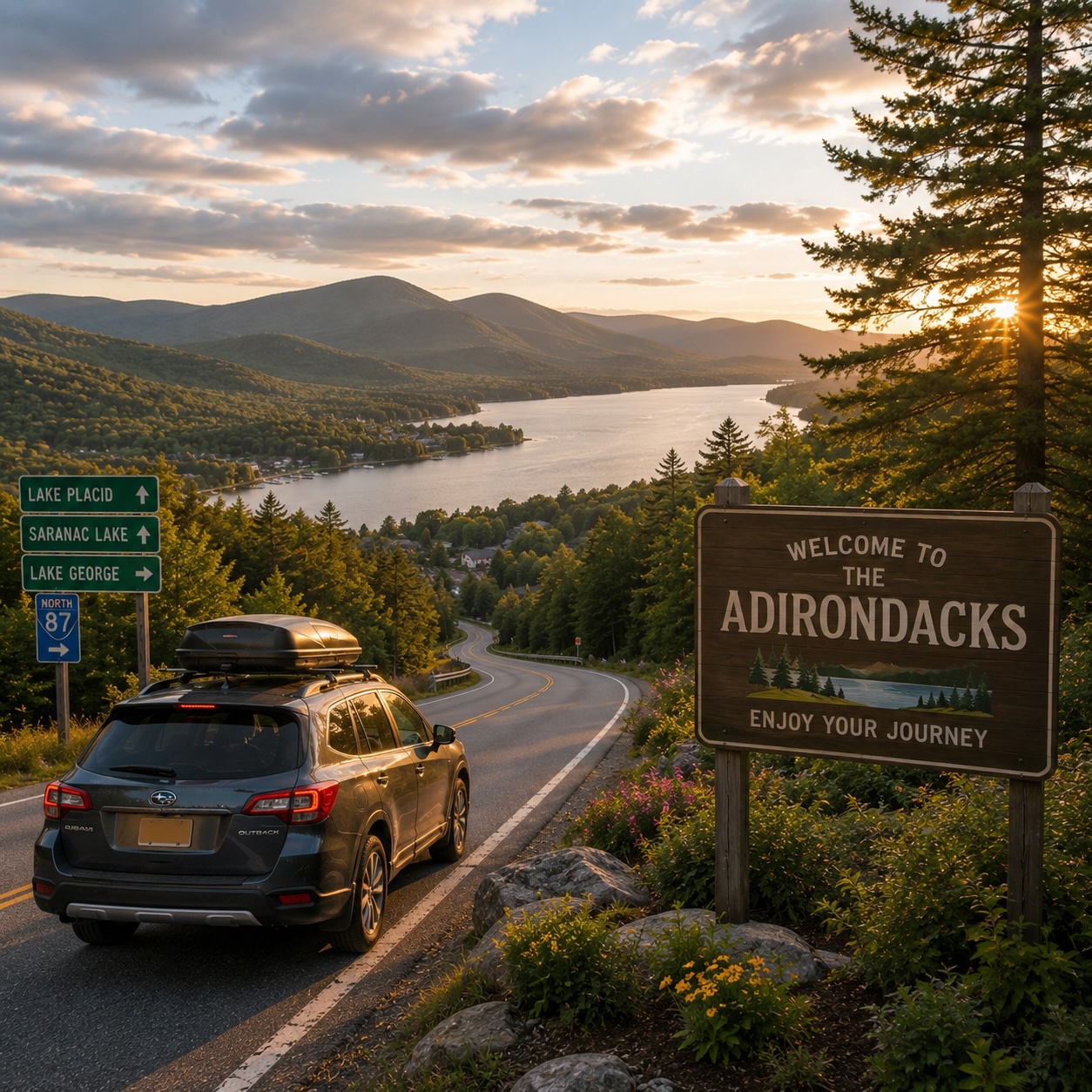
For the cyclist the Adirondacks present three distinct invitations. The first is the Adirondack Rail Trail — a 34-mile, vehicle-free, hard-packed multi-use path that opened in stages over the past several years and is now the easiest, most accessible cycling experience in the entire Park. The second is the road network — a web of state routes and county roads that includes the Lake Placid Ironman bike course, the Olympic Byway, and dozens of named loops ranging from twenty miles to a hundred. The third is the mountain bike scene — anchored by lift-served Whiteface, the Hardy Road network in Wilmington, the Mt. Pisgah trails in Saranac Lake, and the gravel routes that converge each June at the Black Fly Challenge.
Each of these three audiences uses the same Park very differently. Rail-trail riders want flat, scenic, kid-friendly. Road riders want long miles, real climbs, low traffic, and views. Mountain bikers want technical features and vertical. This guide treats them as related but separate disciplines, and helps you find the right one for the trip you’re actually planning.
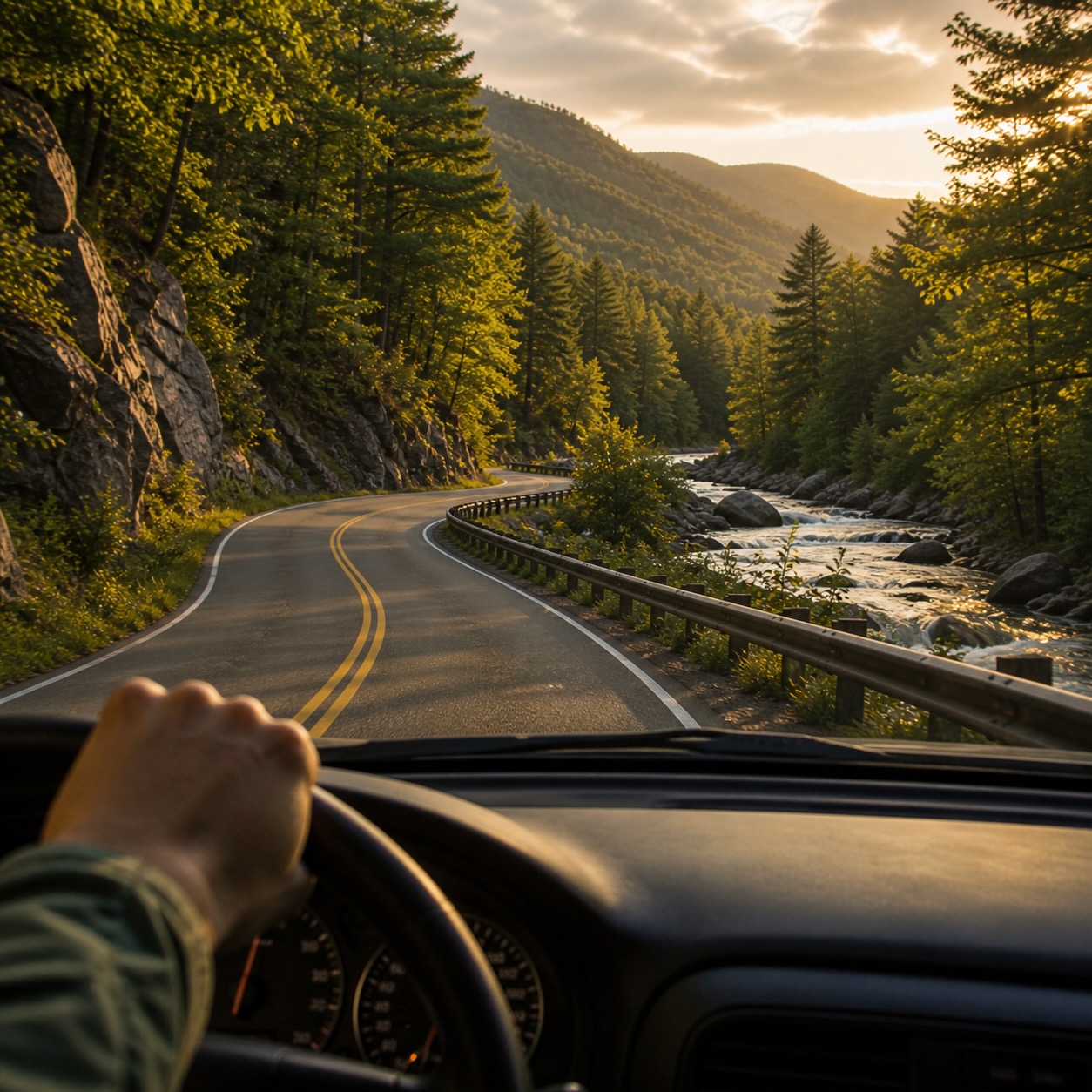
The Adirondacks are not the most cyclist-friendly region in the Northeast — they are one of the most cyclist-rewarding. Shoulders are narrow on many state routes; some popular climbs share pavement with summer RV traffic; cell service is unreliable. The reward is real: long, low-traffic county roads, summit views every twenty miles, and rail-trail infrastructure now in its prime. Plan accordingly. Ride with the rear-view mirror.
The three cycling cultures.
The rail-trail rider
Casual to moderate. Hybrid bike, gravel bike, e-bike, or comfort bike. The Adirondack Rail Trail is the centerpiece — a 34-mile multi-use path linking Lake Placid, Ray Brook, Saranac Lake, Lake Clear, and Tupper Lake, with grades nowhere exceeding 2%. Family-friendly, accessible, and the single best introduction-to-the-Adirondacks ride in the Park. Most rail-trail riders are not training; they are exploring.
The road rider
Road bikes, drop bars, lycra, training mileage. The community is anchored by the Lake Placid Ironman (the bike course is one of the most-ridden routes in the Park, accessible whether or not it’s race day) and by a constellation of named loops — the Whiteface climb, the Saranac–Tupper–Lake Clear loop, the High Peaks Scenic Byway, the Lakes-to-Locks corridor along Lake Champlain. Strong road riders treat the Adirondacks as a serious training destination.
The mountain biker
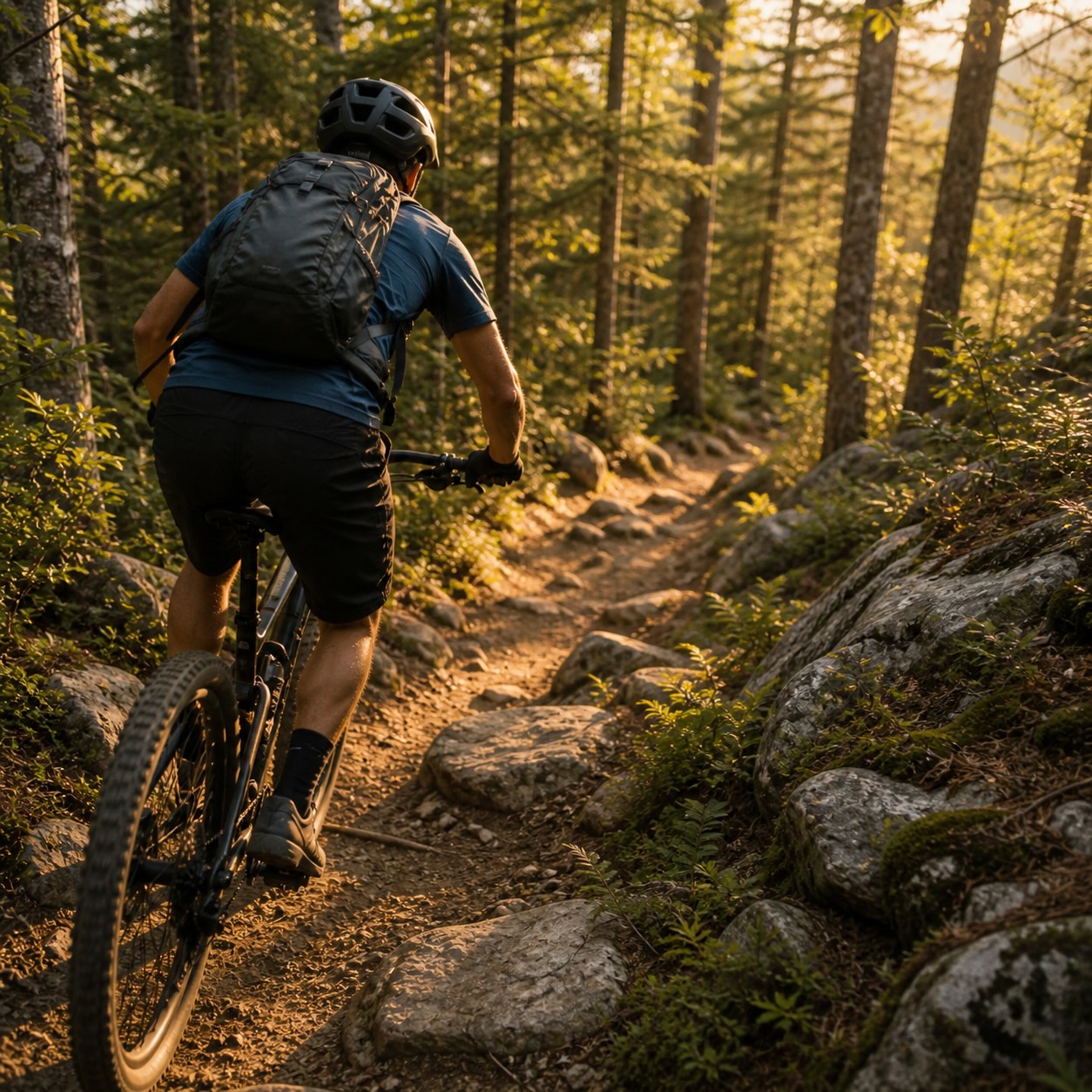
The smallest of the three communities but the fastest-growing. Whiteface Mountain Bike Park runs lift-served downhill in summer with five trails of varying difficulty. The Hardy Road network in Wilmington offers dozens of miles of singletrack maintained by the local trail organization. Mt. Pisgah in Saranac Lake holds the village ski hill’s summer mountain biking. The VIC at Paul Smith’s College has its own network. Plus the gravel scene — see Chapter 6.
The Adirondack Rail Trail.
The Adirondack Rail Trail is, in our editorial view, the single most successful Adirondack tourism investment of the last decade. The 34-mile path follows the corridor of the historic Adirondack Railroad, which carried passengers from Utica to Lake Placid for over a century before being converted to a recreation trail. The conversion completed in 2024. The result is a hard-packed, crushed-stone surface suitable for hybrid bikes, gravel bikes, e-bikes, comfort bikes, walkers, runners, and (in winter) cross-country skiers and snowmobilers.
The four sections
Lake Placid to Ray Brook (5 miles)
The newest section. Connects the Lake Placid trailhead to Ray Brook, where the trail crosses Route 86 and continues toward Saranac Lake. Excellent for a short out-and-back from a Lake Placid base.
Ray Brook to Saranac Lake (4 miles)
Wooded, rolling, with views of McKenzie Pond. Ends at the Union Depot in Saranac Lake village, which functions as the trail’s de facto eastern hub.
Saranac Lake to Lake Clear (10 miles)
The middle section. Crosses the Saranac River, passes Lake Colby, runs through the village of Lake Clear. The longest section of contiguous wilderness on the trail.
Lake Clear to Tupper Lake (15 miles)
The longest segment. Passes Floodwood, traverses the Pine Pond / Floodwood Pond area, ends at the Tupper Lake trailhead. A full day with stops; a long half-day for strong riders.
Riding the full 34 miles
One-way, point-to-point. Most riders shuttle: leave a car at one end, drop a car at the other, or arrange shuttle service from a bike shop. The trail is gradual enough that direction doesn’t matter much; the prevailing wind in summer is from the southwest, which slightly favors east-to-west riding. Allow 4–6 hours for the full 34 miles at a casual pace, with stops for lunch in Saranac Lake or Lake Clear.
- Section I — Lake Placid → Ray Brook 5 mi · Easy. Newest section. Family-friendly. Out-and-back from Lake Placid trailhead.
- Section II — Saranac Lake → Lake Clear 10 mi · Easy-moderate. The middle stretch. Wooded, scenic, river crossings, a real ride.
- Full traverse — Lake Placid → Tupper Lake 34 mi · One-way. Shuttle one car. Allow 4–6 hours at a casual pace.
The trail also doubles as a year-round corridor: cross-country skiers and snowmobilers in winter, walkers and runners in every season. Visiting cyclists pair well with a beach-day swim at Mirror Lake or Lake Flower at the end of the ride.
Road and gravel rides on the map.
The marquee paved and gravel rides in the Park, plotted end-to-end. Pick a ride to see its line and the towns, lakes, peaks, and listings it passes within a few miles of.
A 34-mile crushed-stone rail-trail conversion on the former New York Central Adirondack Division corridor, linking Tupper Lake, Lake Clear, Saranac Lake, Ray Brook, and Lake Placid. Vehicle-free, gentle grade, and one of the longest contiguous off-road bike paths in the Northeast.
Multi-use (bikes, hikers, snowmobile in winter). Surface is firm crushed stone — hybrid or gravel tires recommended; a road bike will manage but it is not ideal. Trailheads with parking in each village.
Geometry is hand-digitized for visualization, not turn-by-turn navigation. Use the source link on each route for the authoritative cue sheet.
Road riding — the marquee loops.
Road cycling in the Adirondacks rewards the rider who plans the route. The named loops below are the routes most committed road cyclists work through over a season or a multi-week training visit. Distances and climbing numbers are approximate.
The Lake Placid Ironman bike course
112 miles, ~6,500 feet of climbing. Two laps of a 56-mile loop from the village of Lake Placid out through Keene, Jay, Wilmington, and back via Whiteface. Ridden on closed roads on race day in late July; rideable on open roads any other day of the year. The Whiteface climb is the marquee feature — a 7-mile sustained ascent that ends with views of the Lake Champlain Valley.
The Saranac–Tupper–Lake Clear loop
Approximately 50 miles. From Saranac Lake village, ride west on Route 3 to Tupper Lake, then north on Route 30 to Lake Clear, then east on Route 86 back to Saranac Lake. Relatively flat by Adirondack standards, with one substantial climb out of Tupper Lake. A good day’s ride; lunch in Tupper Lake.
The High Peaks Scenic Byway loop
Approximately 70 miles. From Lake Placid, south on Route 73 through Keene Valley to Underwood, then loop back via Route 9 and Route 86. Substantial climbing; the Cascade Pass and Pitchoff sections are the marquee. Best done as a long single day with provisions in Keene Valley.
The Lakes-to-Locks corridor
Variable distance — 20 miles to 100+. The Lake Champlain shoreline, from Ticonderoga north through Crown Point, Westport, Essex, Willsboro, Keeseville, and Plattsburgh. Generally flat, scenic, with regular village stops for food and water. Best for the mileage-focused rider who wants to add up base miles in low-stress terrain.
The Whiteface climb (as a standalone)
The road to the summit of Whiteface — the Veterans’ Memorial Highway — is open to cyclists in summer (with restrictions, and an uphill-only window for safety). 8 miles of sustained climbing with grades up to 12%. The annual Whiteface Mountain Uphill Bike Race in early June is the regional benchmark for the climb; check the events calendar for the current date.
Mountain bike trails on the map.
Singletrack and lift-served networks plotted as ride lines. Pick a route to see its trail signature and the towns, peaks, and listings sitting alongside it.
A representative 6-mile loop within the Hardy Road singletrack network in Wilmington — flowy beginner-to-intermediate trails across rolling hardwood forest near the base of Whiteface. The full network has many more miles and connectors than one polyline can show.
Trailhead and parking on Hardy Road. Network is signed at intersections; pick up a map at the kiosk or from the local trail association. Best ridden when dry — clay sections get greasy after rain.
Geometry is hand-digitized for visualization, not turn-by-turn navigation. Use the source link on each route for the authoritative cue sheet.
Mountain biking — Whiteface, Hardy, and beyond.
Whiteface Mountain Bike Park
Lift-served downhill mountain biking at Whiteface in summer. Five marked trails of varying difficulty, including beginner-friendly options and expert technical descents. Operates Friday through Sunday from late June through early September. Day passes available; bike rentals and protective gear (helmets, knee/elbow pads, full-face) on site. The marquee mountain bike experience in the Park.
The Hardy Road network (Wilmington)
Maintained by the local Hardy Road trail organization in Wilmington. Dozens of miles of singletrack across multiple difficulty levels. Free to ride. The network is the Adirondacks’ primary destination for traditional XC and trail riding — pedal-powered, technical, with real climbs and descents. Best accessed from Wilmington village.
Mt. Pisgah (Saranac Lake)
Mt. Pisgah — the village ski hill — operates summer mountain biking on its modest vertical. Good for an after-work ride or for warming up on the early-season day. Beginner to intermediate trails. Walking distance from Saranac Lake village.
The VIC at Paul Smith’s
The Paul Smith’s College Visitor Interpretive Center maintains a network of cross-country and singletrack trails on its 3,000-acre property. More cross-country than technical. Pleasant, family-friendly, with an interpretive overlay.
Other networks worth knowing
The Tupper Lake Tri-Lakes Trail Network. The Mt. Van Hoevenberg mountain bike trails (in summer; Nordic in winter). The BREIA trails near Old Forge. Each network has its constituency; talk to the local bike shop before showing up cold.
Gravel and the Black Fly Challenge.
The gravel cycling scene in the Adirondacks is younger than the road scene but growing fast. The marquee event is the Black Fly Challenge, a 40-mile gravel race held annually in early June (timed, deliberately, to the peak of black fly season — hence the name). The course runs from Inlet to Indian Lake on a mix of paved roads, dirt forest roads, and unimproved tracks. The race draws hundreds of riders; participation is the introductory bid for becoming part of the Adirondack gravel community. Check the events calendar for the current year’s date and registration window.
Beyond the race, the Park is full of unimproved roads — many of them old logging roads, fire roads, or low-maintenance county roads — that reward gravel-bike exploration. The DEC publishes maps of public-use roads on state land. The Hamilton County back roads, the central Adirondack forest preserve, and the area around Newcomb and Long Lake are particularly rich.
Cycle Adirondacks & supported tours.
For visitors who want a multi-day cycling experience without the planning burden, Cycle Adirondacks is the marquee option. A weeklong supported tour running each August, organized by the Wildlife Conservation Society’s Adirondack Program. Different route each year (mostly road, some gravel options), with a moving base camp, gear shuttle, mechanical support, catered meals, and a cap of around 250 riders. Sells out months in advance — see the events calendar for current registration timing.
Several private operators run shorter supported tours, custom multi-day rides, and inn-to-inn cycling vacations. The marketplace is fragmented; a query to a regional outfitter (see Chapter 10) is often the best way to find a current operator.
Family rides and rail-trail logistics.
The Adirondack Rail Trail is the obvious answer for family rides — flat, no traffic, scenic, with regular village stops. Beyond the rail trail, several other family-friendly options:
- The Bloomingdale Bog Trail Flat, wide, mostly straight, through wetland country. Wildlife viewing (often moose tracks). 3.6 miles one-way.
- The Mirror Lake loop 2.7 miles around Mirror Lake at the heart of Lake Placid village. Combines walking, scenery, and several stops for ice cream.
- Shore roads on Lake George and Schroon Lake Low-traffic, scenic, good for family group rides. Pick a quiet weekday.
- The Olympic Sites loop Lake Placid's Olympic venues are linked by short bike-ride distances on village roads. A working family itinerary.
For more on a kids-first ADK trip, see the family field guide.
Atlas of major rides.
A working reference of named rides worth your day. Each row is a route the regional cycling community has converged on over time — from the 34-mile rail trail through the 112-mile Ironman course and out into the gravel back country.
| Ride | Region | Distance | Surface | Difficulty | Tier |
|---|---|---|---|---|---|
| Adirondack Rail Trail (full) | Tri-Lakes / Tupper | 34 mi | Crushed stone | Easy | Flagship |
| Lake Placid Ironman course | Lake Placid | 112 mi | Paved | Strong intermediate | Flagship |
| Whiteface Veterans Hwy climb | Wilmington | 8 mi (one-way) | Paved | Hard | Flagship |
| Saranac–Tupper–Lake Clear loop | Tri-Lakes | 50 mi | Paved | Moderate | Strong |
| High Peaks Scenic Byway loop | Lake Placid / Keene | 70 mi | Paved | Hard | Strong |
| Black Fly Challenge | Inlet → Indian Lake | 40 mi | Mixed gravel | Hard | Flagship |
| Bloomingdale Bog Trail | Saranac Lake | 3.6 mi (one-way) | Hard pack | Easy | Beginner |
| Whiteface Bike Park | Wilmington | Lift-served | MTB downhill | Beginner to Expert | Flagship |
| Hardy Road network | Wilmington | Variable | MTB singletrack | Variable | Strong |
| Mirror Lake loop | Lake Placid | 2.7 mi | Paved/sidewalk | Easy | Beginner |
| Mt. Pisgah trails | Saranac Lake | Variable | MTB | Beginner-Intermediate | Strong |
| Lakes-to-Locks (Westport segment) | Champlain Valley | 30 mi | Paved | Moderate | Strong |
| Old Forge to Inlet | Fulton Chain | 8 mi | Paved | Easy | Beginner |
Difficulty assumes moderately fit recreational riders; Flagship marks routes that are the regional benchmark for their discipline.
On the map.
Where the rides launch from and where the shops live. Anchor towns appear alongside the bike-shop network and outfitters across the Park — Tri-Lakes is the densest cluster, with secondary hubs at Inlet/Old Forge, Wilmington, and Warrensburg.
- Keene Valley LodgeListing
- + 5 pending coordinates
Bike shops, rentals, and shuttles.
The regional bike-shop network is concentrated in the Tri-Lakes — Lake Placid, Saranac Lake, Tupper Lake — with additional anchors in Wilmington for the MTB scene and Old Forge for the western Adirondacks. Most shops rent rail-trail-suitable bikes by the day or half-day, including e-bikes, and offer shuttle service to and from trail termini. Multi-day rentals are widely available for visitors staying through the week.
- Lake Placid — full-service road & MTB The anchor bike shops of the High Peaks region. Sales, rental, repair, fitting, group rides, expertise across road and MTB. Multi-day rental programs and shuttle coordination.
- Saranac Lake — independent rail-trail specialists Strong for rail-trail rentals; the local indie shops know the regional gravel network deeply.
- Wilmington — MTB-focused The Hardy Road specialists. Rental, instruction, and service for the mountain bike audience.
- Tupper Lake — multi-sport outfitters Bikes, paddles, gear. Trail-end rental for rail-trail riders going east-to-west.
- Old Forge — gravel, MTB, road The western Adirondacks anchor.
For specific shops with hours, phone, and current rental fleets, browse the Lake Placid, Saranac Lake, Wilmington, and Old Forge region directories.
When to ride, when not to.
Spring (April through June)
The road and rail trail open early. The Whiteface highway opens in May. The Black Fly Challenge runs in early June. Mud and pothole season on dirt roads runs through late May. Black flies on shaded singletrack from mid-May through late June.
Summer (July through August)
Peak season. All routes available. Road traffic is heaviest on weekend afternoons. Whiteface Bike Park is in full operation. Plan early-morning rides on the busy state routes; reserve summer afternoons for the rail trail, the Hardy Road network, or low-traffic county roads.
Fall (September through October)
The best riding window in the Park. Cool, dry, low traffic, foliage. Cycle Adirondacks runs in late August. The rail trail is glorious through October.
Winter
The road network closes for cyclists by November. The Adirondack Rail Trail converts to a snowmobile and Nordic ski corridor December through March. Fat-bike riding is increasingly popular at networks with regular grooming (the VIC, parts of Mt. Van Hoevenberg, sections of the rail trail).
What to bring.
For a rail-trail day
- The bike (rented or your own; hybrid or gravel preferred)
- Helmet (always)
- Water bottle (refill at village stops)
- Snacks; lunch money for village stops
- Light layers for temperature swings
- Phone in a frame bag
For a serious road ride
- Road bike or gravel bike
- Helmet and rear-view mirror
- Spare tube, tire levers, mini-pump, multi-tool
- Two water bottles minimum (refills are sparse on long loops)
- Bonk-prevention calories
- A printed route — cell coverage drops in the back country
For mountain biking
- Mountain bike (rentals available at lift-served networks)
- Helmet rated for trail/downhill use
- Knee and elbow pads (mandatory on Whiteface; smart on Hardy)
- Full-face helmet for downhill park days
- Hydration pack
Safety on Adirondack roads.
Adirondack road shoulders are inconsistent. Some state routes have wide, paved shoulders; others have no shoulder at all. Summer brings RV traffic. The narrow stretches of Route 73 between Lake Placid and Underwood deserve particular respect. Three principles:
- Ride with a rear-view mirror Either bar-end or helmet-mounted. The Adirondacks reward the rider who can see what is coming up behind them.
- Be visible High-vis kit, daytime running lights both front and rear. The lighting tax is small; the visibility return is large.
- Plan around traffic peaks Saturday afternoons in summer on Route 73 between Lake Placid and Keene are the worst. Sunday mornings and weekday early hours are the best.
Cell coverage is unreliable through most of the Park interior. A printed map and the ability to read it remain the most important pieces of safety equipment for a long road ride.
The bike shoulder is what it is. The reward, when you find the right county road on the right morning, is what makes you come back. Plan around the constraint and enjoy what's actually here.
Frequently asked questions.
Yes. The full 34-mile path from Lake Placid to Tupper Lake completed in 2024. Surface is hard-packed crushed stone the entire way.
No. A hybrid, gravel, e-bike, or comfort bike all work. Road bikes with very narrow tires are not ideal but are rideable.
Yes — the bike course runs on open public roads (Routes 73, 9N, and 86 plus connectors) and is rideable any day of the year. Race day in late July is the only day it's closed for general traffic.
Yes — the Veterans Memorial Highway is open to cyclists in summer with posted uphill-only windows for safety. The Whiteface Mountain Uphill Bike Race in early June is the formal benchmark.
Late June through early September, Friday–Sunday operations. Confirm dates on the resort site each year.
Mt. Pisgah in Saranac Lake or the green-rated trails at Whiteface Bike Park. The Hardy Road network has beginner sections but is best with a local pointing you at the right loops.
Hard. 40 miles of mixed surface — paved, dirt forest road, unimproved track — with real climbs and weather exposure. Most finishers are experienced riders. Casual gravel riders can absolutely do it; train for it.
Mixed. Some routes (the rail trail, low-traffic county roads, the Lakes-to-Locks corridor) are excellent. Others (parts of Route 73, the Whiteface highway with traffic) demand respect. Ride with a rear-view mirror, ride visible, and plan around peak traffic.
Sources & further reading.
This guide is editorial — written to help you plan well — and is not a substitute for current race calendars, bike-park operating dates, or NYSDEC trail-condition advisories.