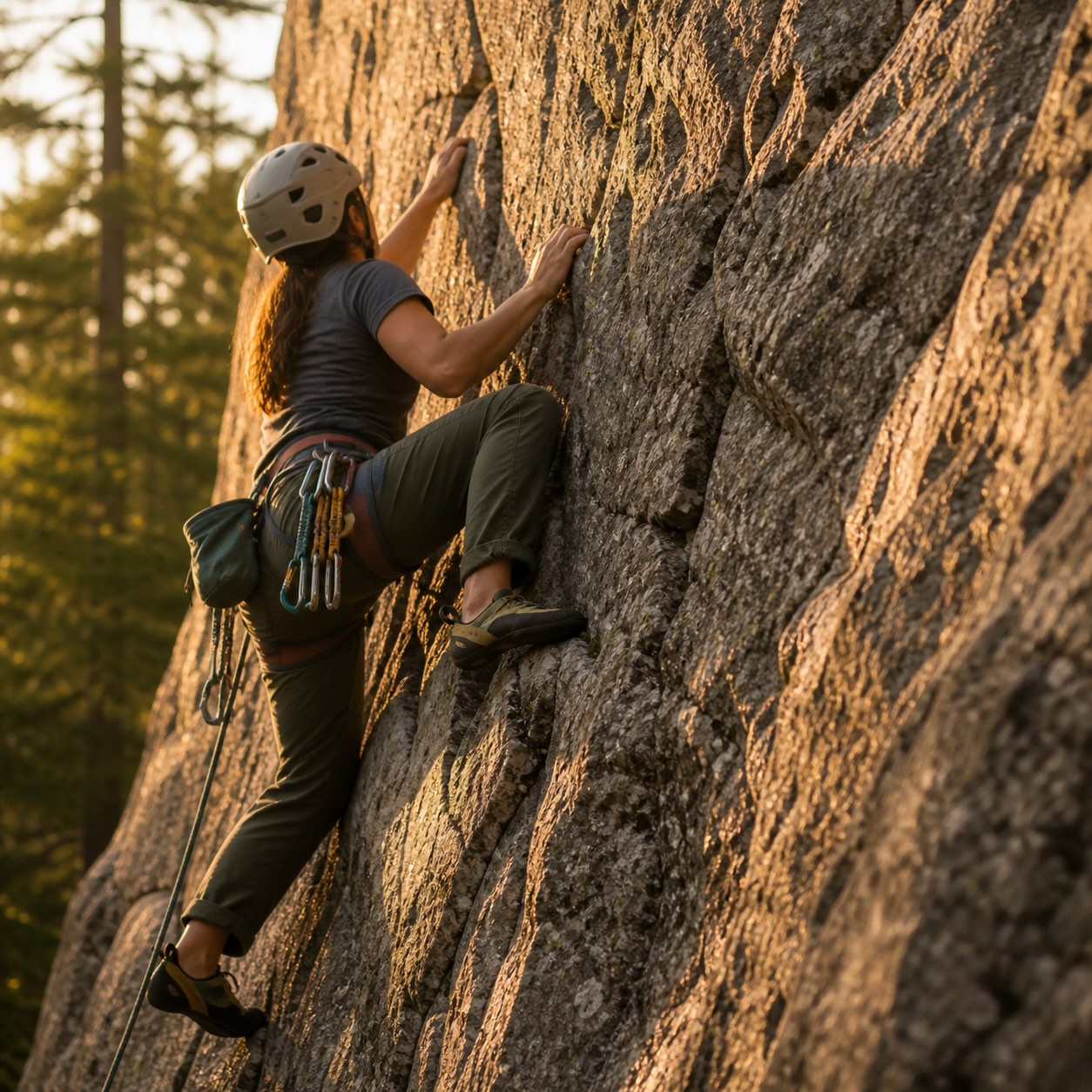
What climbing in the Adirondacks is.
The Adirondacks are one of the great traditional climbing destinations in the eastern United States — less famous than the Gunks, less convenient than Rumney, but with a depth of routes, a quality of rock, and a community ethic that has made the region a destination for serious traditional climbers since the 1960s.
The character of the climbing here is mostly trad, mostly multi-pitch, mostly walk-up approaches under thirty minutes. There are a few bolted sport areas — Poke-O has a handful, and the McKenzie Pond Boulders are the local bouldering spot — but the Park’s reputation is built on long routes that require a full rack and the judgment to use it.
In winter, the same cliffs become some of the best ice climbing terrain in the Northeast. The combination of cold temperatures (the Adirondacks are colder than the Whites or the Catskills), reliable freeze, and dramatic ice flows makes the Chapel Pond corridor and Cascade Pass two of the most-climbed ice destinations between the Catskills and Quebec.
This is a focused guide — an introduction to the major crags, the ice season, and the working logistics of climbing here. It is not a route guide. The serious route reference is Adirondack Rock by Jim Lawyer and Jeremy Haas (now in its second edition); the website adirondackrock.com publishes new-route updates. The American Alpine Club’s Mountain Project page for the Adirondacks is the most-used digital reference for visiting climbers.
The major crags.
The Park’s climbing is concentrated but not centralized. The regional guidebook documents over a hundred crags. The four areas below cover the great majority of the trips a visiting climber will plan.
- Chapel Pond / Keene Valley corridor The most-climbed concentration in the Park. Multi-pitch trad on Chapel Pond Slab, the Washbowls, the Beer Walls. Twenty-minute drive from Keene Valley on Route 73.
- Cascade Pass Pitchoff Chimney Cliff and the Cascade Lakes corridor. Five-to-fifteen-minute approaches; in winter, marquee ice.
- Poke-O-Moonshine The premier hard-rock destination in the Park. Four-hundred-foot anorthosite face, 5.8 to 5.13. Also one of the marquee ice areas.
- Wallface The Park's biggest cliff. Remote, alpine-quality trad climbing in the High Peaks Wilderness. Two-hour approach. Not for first-time visitors.
Beyond those four, the Park has dozens of named crags that reward repeat visits — Moss Cliff in the Notch Mountain area, Crane Mountain south of Warrensburg, Gothics for remote alpine, Silver Lake King Wall, Spanky’s Wall, and the McKenzie Pond Boulders for bouldering.
Pick a crag on the map.
Twelve marquee crags — the canonical short list every regional climber works through. Pick one to see its location, grade range, route count, approach time, peregrine-closure status, and a link to the current Mountain Project beta.
- Chapel Pond Pass
- Cascade Pass
- Wilmington corridor
- High Peaks
- Lake George
- Warrensburg / Johnsburg
- Saranac Lake
- Keene Valley
Chapel Pond Slab
Seven hundred feet of low-angle anorthosite slab. Multi-pitch routes in the 5.5–5.7 range that travel 8 or 9 pitches — where most Adirondack climbers learn to follow long routes. The marquee easy multi-pitch in the Park.
Closure dates and grade ranges are editorial summaries. Always confirm current status with NYSDEC + Mountain Project — peregrine windows shift year-to-year.
Chapel Pond / Keene Valley corridor.
The most-climbed concentration in the Park, all within a twenty-minute drive of Keene Valley on Route 73. Park-and-walk approaches under fifteen minutes. The right base for any visiting climber’s first trip to the region.
Chapel Pond Slab
Seven hundred feet of low-angle rock with multiple routes in the 5.5 to 5.7 range that travel over eight hundred feet of vertical terrain. The classic Adirondack introduction-to-multipitch climb. Every guide service in the region runs first-day clients here. The walk-up from the road is essentially zero.
Upper & Lower Washbowl Cliffs
Steeper, harder, with classic multi-pitch lines — Hesitation (5.8) and Partition (5.9) on the Lower Washbowl, plus a dozen other lines documented in Adirondack Rock. These are the cliffs most affected by Peregrine closures (see Chapter 10).
Roaring Brook Falls & the Beer Walls
The Beer Walls are the cragging-day default — short single-pitch routes, friendly grades, and easy walk-up from the Route 73 pullouts. Roaring Brook Falls climbs the rock alongside the waterfall.
Spider’s Web
Test-piece for the area’s strong climbers. Steep, technical, hard. If you are new to the Adirondacks this is not your first stop; if you climb 5.11+ on trad gear, this is on the list.
Cascade Pass.
Just north of the Chapel Pond corridor on Route 73, between Keene and Lake Placid. Five-to-fifteen-minute approaches and a different feel from the Keene Valley side — more exposure, longer views.
Pitchoff Chimney Cliff
The marquee summer crag of Cascade Pass. Routes like Pete’s Farewell (5.7) and The El (5.8), with exposure looking out across the Cascade Lakes. A handful of harder lines in the 5.10 range fill out the wall. Approach is a five-minute walk from a Route 73 pullout.
The Cascade Lakes corridor
In winter this entire corridor — Pitchoff’s north face plus the south-facing slabs across the road — becomes one of the marquee ice areas in the region. In summer, the focus is Pitchoff itself.
Poke-O-Moonshine.
About twenty miles north of Keene Valley, just off the Northway exit at Lewis. The premier hard-rock destination in the Park. The Main Face is four hundred feet of steep anorthosite — the same rock that builds the High Peaks summits — with routes ranging from 5.8 to 5.13.
Multi-pitch classics
- Bloody Mary (5.9) The most-climbed line on the Main Face. Sustained, exposed, photogenic — the Adirondack 5.9 most visiting climbers want to tick.
- Gamesmanship (5.8) Slightly easier alternative on the Main Face. Long, clean, classic Poke-O movement.
- The Fastest Gun (5.10a) The middle-grade test piece. Cruxy, well-protected, long enough to feel like a real outing.
- The Slab (south face) Five hundred feet of lower-angle climbing on the south face. A different style of day from the Main Face — more friction, less commitment.
Poke-O ice
Poke-O is also one of the marquee ice climbing destinations in the Adirondacks. Road-side approaches and serious climbing in equal measure. See Chapter 7 for the specific ice routes.
Poke-O typically observes a May 1 – August 1 closure on portions of the Main Face for Peregrine nesting. NYSDEC posts the current-year boundaries each spring. Always verify before driving up.
Wallface & remote crags.
Wallface is the Park’s biggest cliff — 750+ feet of remote, serious traditional climbing in the heart of the High Peaks Wilderness near Indian Pass. Two-hour approach. The routes are committing alpine-quality climbs that demand experience and judgment.
Not for first-time visitors to the Park. The right Wallface trip is built off prior Adirondack experience, multi-pitch trad fluency, and willingness to bivy if a route runs late. The classic objectives — Mental Blocks, Diagonal — are documented in Adirondack Rock.
Other remote crags worth knowing about: Moss Cliff in the Notch Mountain area (long approach, big lines, falcon-closed in spring); Gothics for true alpine-route feel; and Crane Mountain for a south-of-the-Park trip with shorter approaches than the High Peaks.
Ice climbing — the season and the routes.
The Adirondack ice season runs roughly mid-December through mid-March, with peak conditions in January and February. The region is colder than the White Mountains or the Catskills, the freeze is more reliable, and the ice forms thicker. Three primary destinations dominate the season.
Chapel Pond Canyon
The Chapel Pond Slab in winter becomes one of the best beginner-to-intermediate ice destinations in the East — seven hundred feet of climbable ice, often top-ropable from above, with routes that build skill across multiple pitches. Walk-up approach is essentially zero.
Cascade Pass
The North Face of Pitchoff and the south side of the Cascade Lakes both produce reliable winter ice. Mostly intermediate; some harder lines tucked into shaded gullies. The corridor between Pitchoff and the lakes holds dozens of moderate routes.
Poke-O-Moonshine ice
The hardest concentrated ice climbing in the Park. Positive Thinking (WI5−) is one of the most famous ice routes in the East — sustained vertical ice followed by acrobatic moves over a pillar. Neurosis (WI4) is a classic. The Waterfall Area (WI4–5) holds dozens of unnamed lines on a single sweeping expanse. Poke-O has road-side approaches and serious climbing in equal measure.
An ice route that is in on Friday can be gone by Monday after a thaw. The conditions report from Rock and River Lodges is the long-running primary reference for current Adirondack ice — always check before driving up. Local guide services maintain their own conditions reports as well.
For first-timers and visiting climbers.
The Adirondacks reward returning climbers and patient first-timers; they are unforgiving of the ones who show up assuming the climbing is like the Gunks. The pattern that works:
- First trip — book a guided day If you've never climbed outdoors here, the right first day is with one of the regional guide services. They will choose the crag, the route, and the conditions. Half-day ~$300, full-day ~$500 for a private climb.
- First crag — Chapel Pond Slab If you have outdoor experience but are new to the Adirondacks, this is the introductory multi-pitch climb. Easy approach, moderate routes, reliable rock.
- First ice — Chapel Pond Canyon, top-roped The Chapel Pond Slab in winter is the right introduction to outdoor ice. Top-rope from above; a tight community on busy weekends; clean falls.
- Second trip — Pitchoff or the Beer Walls Once Chapel Pond is in the rear-view, Pitchoff Chimney Cliff and the Beer Walls are the natural next step. Short approaches, friendly grades, real ADK character.
- Eventual trip — Poke-O Save Poke-O for after you've climbed in the Keene Valley corridor. The grades are sandbagged compared to the Gunks; the rock rewards strong footwork; the approach via the Northway is fast.
Guide services & gear.
The Adirondacks have a small but professional guiding community concentrated in Keene Valley and Keene. All three of the major outfits below run rock and ice programs; all maintain conditions notes through the season; all can match a guide to a client’s level and goal.
- Adirondack Rock and River The regional anchor. Lodge in Keene, guided rock and ice, instruction, and the long-running ice conditions report at rockandriver.com.
- Adventure Spirit Guides Custom guided rock and ice. Multi-day programs. AMGA certifications across the guide team.
- Cloudsplitter Mountain Guides Locally-owned guide service. Rock, ice, and backcountry programs throughout the Adirondacks and beyond.
- The Mountaineer (Keene Valley) The regional climbing shop and de-facto community hub. Gear, books, demo skis in winter, and the venue for Mountainfest. Beta from the staff is reliable.
- Adirondack Rock (book) The definitive route reference. Two volumes, by Lawyer & Haas. Updates published continuously at adirondackrock.com.
- Mountain Project — Adirondacks The most-used digital reference for visiting climbers. Topos, route descriptions, recent reports.
For lodging adjacent to the climbing — see Chapter 12 and the regional listings under Keene Valley and Lake Placid.
Ethics, access, and Peregrine closures.
Falcon closures
Several Adirondack cliffs observe seasonal closures from May through August to protect Peregrine Falcon nesting sites. Affected cliffs typically include Moss Cliff, Poke-O-Moonshine, and the Lower and Upper Washbowl Cliffs. The NYSDEC posts current closures each spring; check before planning a trip during these months.
Public land & private access
Most Adirondack climbing is on state forest preserve land — free, open, and without permit. A small number of crags cross onto private land; respect the access agreements that the climbing community has built over decades. Park where indicated. Pack out everything. The continued openness of these crags depends on continued good behavior.
Local norms
The Park’s climbing community is small. The norms are local. Two principles for visiting climbers: be quiet at the crag(the Adirondack climbing experience is shaped by the landscape — don’t bring a Bluetooth speaker), and defer to local knowledge on conditions. The Mountaineer staff, the guide services, and the conditions report at rockandriver.com are all reliable; Internet beta from outside the region is often months out of date.
Adirondack rescues are slow. Wallface, Moss Cliff, and the high backcountry are hours from a road; even Poke-O and Chapel Pond are an hour from the nearest hospital. Climb conservatively, carry a real first-aid kit, and tell someone your plan.
Mountainfest & community.
The Adirondack Mountainfest
Held annually in late January at The Mountaineer in Keene Valley. The premier ice climbing festival in the East. Clinics, gear demos, slideshows, and the climbing community in one place for a weekend. The right weekend for a visiting climber to land in Keene Valley.
For broader regional events alongside Mountainfest weekend, see the events calendar.
Local culture
The Adirondack climbing community is small enough that most of the strong local climbers know each other, and big enough that you can show up for a weekend and find partners. Drop into The Mountaineer; read the bulletin board at Rock and River; check the chalkboard at Noon Mark Diner for partner notices. The system is informal, and it works.
Where to stay.
For climbing-trip lodging, three categories cover almost every visit:
- Adirondack Rock and River Lodge (Keene) The climber’s-lodge default. Rooms above the guide service, a real climber’s-kitchen culture, and ice-conditions notes posted on the wall.
- Keene Valley & Keene small inns A handful of small inns and rental cabins within five minutes of the Beer Walls and Chapel Pond. Quiet, climber-friendly.
- Lake Placid hotels & motels Twenty-five minutes to the Cascade Pass crags. More restaurants, more variety. The right choice if half the group is climbing and half is doing something else.
Browse current options under Keene Valley, Lake Placid, or the broader regional directory. For winter trips around Mountainfest weekend, book early — Keene Valley fills first.
Frequently asked questions.
With a guide, yes — the Chapel Pond Slab is one of the friendliest multi-pitch introductions in the East. Without a guide, the Adirondacks are not the right place to start outdoor climbing; the routes assume trad fluency.
Mid-May through October is the realistic rock season. June can be wet and buggy; July through September are the prime months. October offers fall foliage and crisp friction climbing if the weather cooperates.
Mid-December through mid-March, with peak conditions in January and February. Early-season ice (December) is thin; late-season (March) is rotten in the sun. Dial in to the conditions report before driving up.
Yes. Adirondack Rock by Lawyer & Haas is the route reference; Mountain Project is the digital companion. The Mountaineer carries the book.
No. The Park is mostly trad. Poke-O has a handful of bolted lines; the McKenzie Pond Boulders are the local bouldering. Bring a full rack.
Trad-equivalent grades, longer routes, shorter approaches than the Gunks for the major crags, far fewer crowds. The rock is anorthosite (Poke-O) or various metamorphic rocks (Chapel Pond corridor) — different feel from Gunks conglomerate.
On many routes, yes — Chapel Pond Slab in particular is a top-rope-friendly introduction in both seasons. Many routes have walk-off tops that make rigging simple.
The Beer Walls and Chapel Pond Slab work for older kids with a guide. The Mountaineer rents kid-sized climbing shoes. Family-trip pacing means one route, not five.
On state forest preserve land, leashed dogs are generally permitted, but at the crag they should be kept well clear of the rock and the rope. Most of the regional climbers leave dogs at the trailhead or the lodge.
Sources & further reading.
This guide is editorial — written to help you plan well — and is not a substitute for current route conditions, falcon closures, weather, or the judgment of your guide.