Why ADK swimming is different.
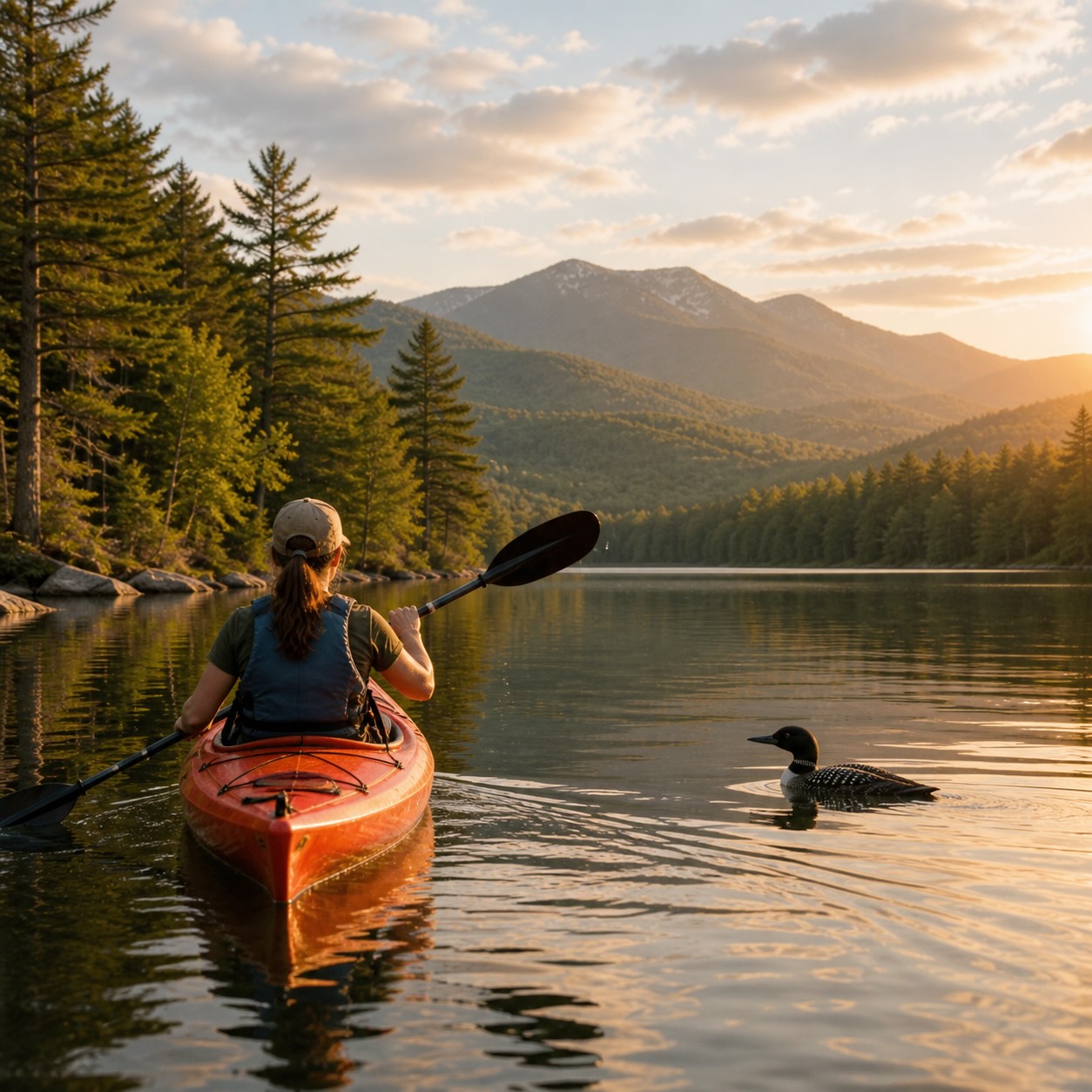
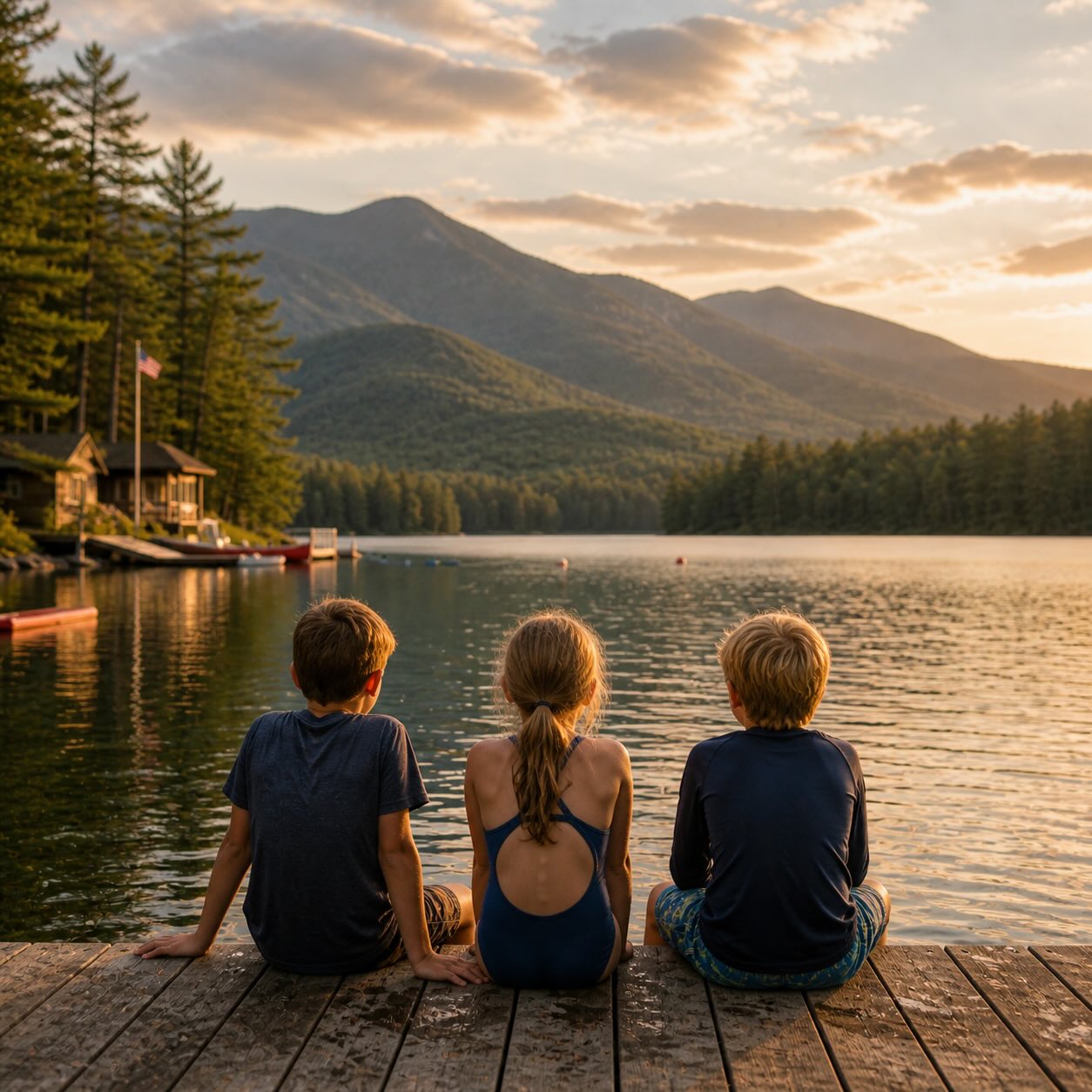
Most American swimming destinations fit one of two molds: ocean beaches, or aquatic parks pretending to be lakes. The Adirondacks fit neither. The Park is a freshwater wilderness with three thousand swimmable lakes and ponds, and the experience of swimming here is fundamentally different from swimming anywhere else in the Northeast.
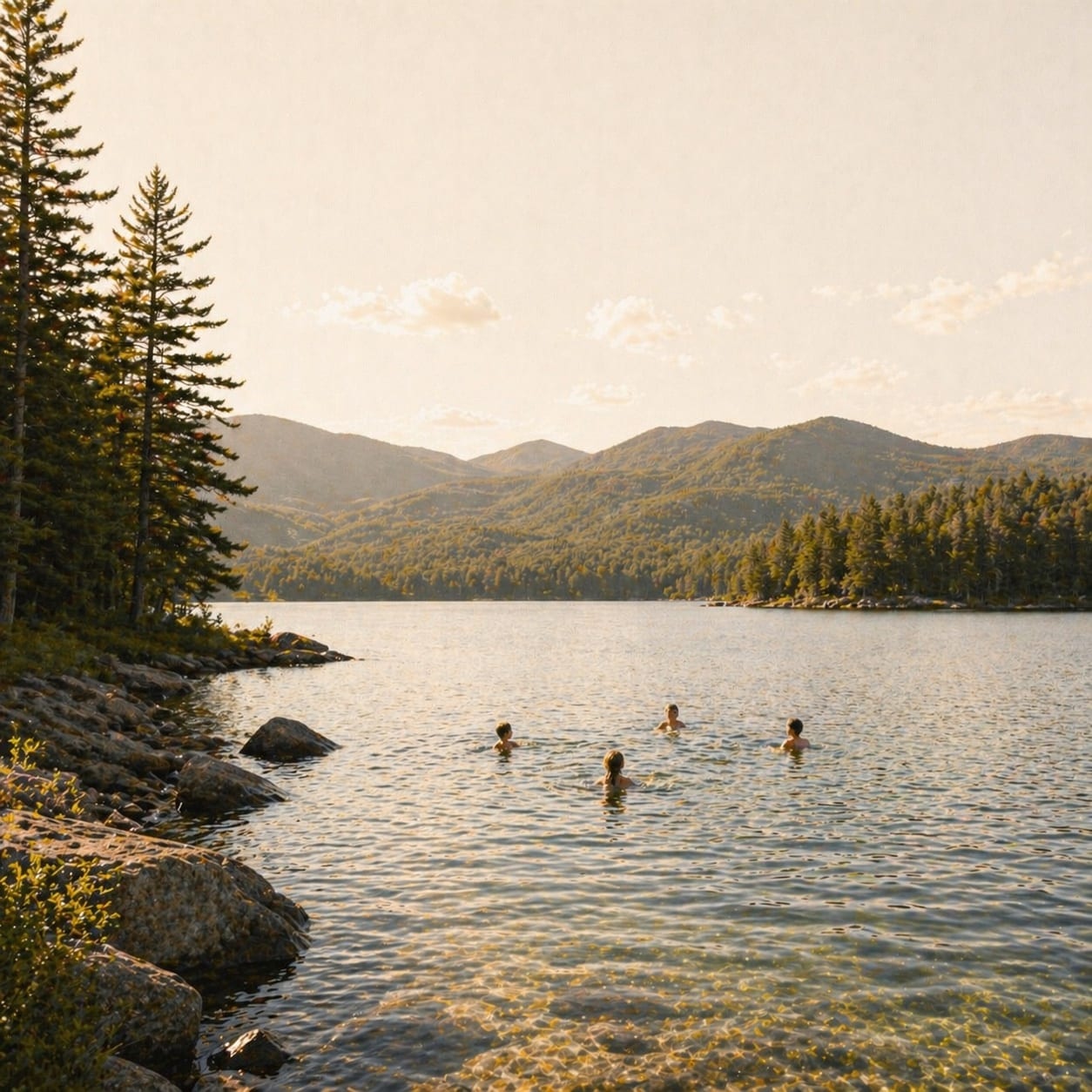
Start with the water itself. Adirondack lakes are oligotrophic — low in nutrients, low in algae, mostly clear to the bottom in twenty feet of water. They’re cold all the way through, a function of being deep, north-facing, and snowmelt-fed. They smell like nothing, which is its own kind of feature. They taste of clean granite and pine.
Then there’s the scale. The Park contains three thousand lakes and ponds. Most have public access. Many have public beaches. Some have lifeguards. None have boardwalks, vendors, jet skis on the swimming side, or the ambient anxiety of an ocean. You can drive forty-five minutes from one swim and find a completely different one — different size, different bottom, different feel.
And the surrounding context. An ADK beach is not its own destination. It’s part of a town, or a state campground, or a trailhead, or a lakefront resort. You can swim in the morning, hike in the afternoon, and have ice cream at sunset. The swimming is woven into a larger trip rather than being the trip.
The five swimming-water types.
Not all Adirondack swimming is the same kind of swimming. Before the regional chapters, here’s the framework that organizes the rest of the guide.
Type 1 — Public town & municipal beaches
Run by towns or villages. Sandy entries, lifeguards in season, restrooms, parking lots, modest fees ($0–$10). Predictable, family-tested, often crowded on summer weekends. Examples: Million Dollar Beach (Lake George), Mirror Lake Beach (Lake Placid), Schroon Lake Town Beach, Inlet Town Beach, Lake Algonquin Beach in Wells.
Type 2 — State campground beaches
Run by NY State DEC. Available to day-use visitors for a small fee (typically $10/vehicle). Lifeguarded in peak season. Often the best beach experience in the Park because they’re embedded in undeveloped lakes with limited approach roads. Almost never crowded. Examples: Sacandaga, Moffitt Beach, Lake Eaton, Lake Durant, Northampton Beach, Rollins Pond, Fish Creek Pond, Lewey Lake.
Type 3 — Resort & lodge beaches
Private waterfronts attached to lakeside lodges and resorts. Access is for guests; some properties also allow day-use for a fee or with a meal reservation. The trade-off: smaller beaches, but consistent service, beach chairs, towels, and a restaurant fifty feet away.
Type 4 — Swimming holes & waterfalls
The cliché ADK postcard. Cold pools at the base of waterfalls, flume-carved gorges, granite slabs you can lay on. No lifeguards. Variable parking. Often a short hike in. Best in late June through August when the water’s warmed slightly and runoff has dropped to safe levels.
Type 5 — Small ponds & backcountry waters
Heart Lake, Henderson, Chapel Pond, the Saint Regis canoe-area ponds. Some have a sliver of beach; most have a flat rock or a dock. The reward is solitude — you may be the only swimmer for the day. Pack out everything; treat the access like a trail.
Choosing the right type for your day
Family with toddlers and grandparents? Type 1 — town beaches with lifeguards and bathrooms. A real summer-vacation day with a cooler? Type 2 — state campground beaches. A romantic afternoon? Type 3 or Type 4. Hiking with a swim built in? Type 4 or Type 5.
Lake George region beaches.
Lake George holds the densest concentration of public beaches in the Park, in part because the south basin has been a vacation-economy town for over a century. Six anchor beaches along the western and southern shore, plus pocket beaches in Bolton Landing and Hague.
Million Dollar Beach
The headline. Operated by NYS DEC at the south end of Lake George Village. Sand bottom, lifeguards mid-June through Labor Day, large parking lot ($10/vehicle). Bathhouse, picnic area, and direct walking access to the village. Crowded on summer weekends; weekdays are calmer.
Shepard Park Beach
Free public beach in the heart of Lake George Village. Smaller than Million Dollar but central to everything — restaurants, ice cream, the steamboat dock. Lifeguards in season.
Usher’s Park Beach (Lake George Town)
Quieter alternative just north of the village. Town-resident parking permit or visitor fee; lifeguards in season; usually has space when the village is packed.
Veterans Memorial Park Beach (Hague)
North-end Lake George. Long sandy beach, picnic pavilions, boat launch. The water at the north basin is cooler and clearer than the south.
Rogers Memorial Park Beach (Bolton Landing)
Small, central, walkable. The Bolton Landing beach is part of the village green and works well for a half-day of swimming broken up by lunch on Lake Shore Drive.
Sandy Bay Beach (Diamond Point)
Mid-lake, between the village and Bolton. Resort-area beach access — confirm with your lodging or a posted parking sign before you arrive.
High Peaks region beaches.
The High Peaks aren’t known for beaches — but the lakes around Lake Placid and Saranac Lake have a strong seven-beach circuit, plus a pair of trailhead lakes (Heart, Sand) that double as swimming destinations after a hike.
Mirror Lake Beach (Lake Placid)
The walk-everywhere beach of the High Peaks. Mirror Lake is motorless, swim-warmed by August, and rings the village. Lifeguarded public beach with shallow entry — one of the best family beaches in the Park.
Sand Lake (Lake Placid area)
Trailhead lake reached by a short trail off Whiteface Memorial Highway. No lifeguard, no facilities — but a real sand bottom and reliable swimming on a hot day.
Lake Flower Beach (Saranac Lake)
Village beach in downtown Saranac Lake. Lifeguarded in season, easy walking distance to restaurants and the rail trail.
Ampersand Bay Beach (Saranac Lake)
On Lower Saranac Lake at the edge of the village. Quieter than Lake Flower, with views toward the Saranac chain.
Tupper Lake Municipal Beach
Underrated. Big sandy beach on a big lake, lifeguards in season, free parking. The Wild Center is a fifteen-minute drive away — easy to combine.
Heart Lake (Adirondack Loj)
Trailhead swimming. The Adirondack Mountain Club’s Loj property charges a day-use fee; the lake is cold, deep, and ringed by High Peaks. Best after a Mt. Jo or Algonquin hike.
Lake Placid Beach Club (Whiteface Inn)
Resort beach on Lake Placid proper. Guest access primarily; day-use varies seasonally — confirm before driving.
Central Adirondacks & Hamilton County.
The center of the Park is where the swimming gets quietest, cleanest, and least crowded. Hamilton County alone holds more public beaches per capita than anywhere else in New York State.
- Lake Algonquin Beach (Wells) Small dam-pool beach in the village. Lifeguard, picnic tables, free.
- Schroon Lake Town Beach Long sandy public beach in the heart of Schroon Lake village. Lifeguards in season.
- Indian Lake Beach Town beach with mountain views. Family-friendly entry.
- Long Lake Town Beach Right in the village. Combines well with the seaplane base across the road.
- Speculator Town Beach (Lake Pleasant) Big lake, classic Adirondack beach setting.
- Piseco Lake — Point Comfort State-run beach on the western shore of Piseco. Quiet.
- Caroga Lake town beaches Two town beaches on East and West Caroga. Old-fashioned, low-key.
- Northville beaches (Great Sacandaga) Sandy entry on the north end of Great Sacandaga Lake.
Old Forge & the Fulton Chain.
Old Forge is the southwest gateway to the Park and the entry point for the Fulton Chain — eight connected lakes that support some of the best lake-life swimming in the Adirondacks. The chain has been a family-vacation circuit since the late 1800s.
- Old Forge Beach (First Lake) Sandy, walkable to downtown Old Forge. Lifeguard. Combines well with Enchanted Forest Water Safari for families.
- Inlet Town Beach (Fourth Lake) Big lake, big beach. Lifeguard, picnic area, boat launch next door.
- Eagle Bay Beach (Fourth Lake) Small, quiet, north-shore Fourth Lake beach. Better water-temperature than the south end on a hot day.
- Limekiln Lake Beach (state campground) DEC campground beach with lifeguards and a swim area. Day-use fee. One of the best in the central Park.
- The Fulton Chain by paddle Beaches don't have to be the destination — paddling First through Fourth lake gives you twenty cove-and-rock-shelf swim spots that no road reaches.
State campground beaches.
The Park’s NYSDEC campground beaches are the best-kept-secret swimming destinations in the Northeast. Day use is open to the public for a modest fee (typically $10/vehicle), lifeguards staff most beaches in peak season, and the surrounding lakes are largely undeveloped.
- Sacandaga Campground Beach (near Wells/Speculator) Large sandy beach, cold deep water, lifeguard.
- Moffitt Beach (Speculator) Sleeper-pick. Long sand entry, low boat traffic, family-perfect.
- Lake Eaton (Long Lake) Sandy beach on a long, narrow lake. Excellent paddling base.
- Lake Durant (near Indian Lake) Quiet, high-elevation campground beach. Cooler water.
- Lewey Lake (Indian Lake area) Across the road from Indian Lake. Big sand beach, mountain backdrop.
- Forked Lake Remote. Beach by canoe-paddle is part of the appeal.
- Northampton Beach (Northville, Great Sacandaga) Largest state-campground beach on the southern Park edge.
- Rollins Pond & Fish Creek Pond (Saranac Lake area) Connected campgrounds, both with swim areas. Premier paddling base in the Park.
- Lincoln Pond (Elizabethtown) Small, family-friendly beach campground.
- Caroga Lake State Campground Beach plus standard campground services.
- Limekiln Lake (Inlet) Already mentioned under Old Forge — bears repeating; one of the best campground beaches in the Park.
Day-use access at most state campgrounds requires only the per-vehicle fee at the gate, but a few popular campgrounds (Fish Creek in particular) limit day-use during peak season. Check the NYSDEC campground page for the specific lake before driving.
Resort & lodge beaches.
Many Adirondack lodges and resorts maintain private beaches for guests. The good ones aren’t about size — they compete on amenity. A clean dock, a swim raft anchored offshore, beach chairs, towels, and someone bringing iced tea from the lodge.
What to look for in a beach-tier resort
- West-facing or south-facing exposure More sun on the water from late morning through afternoon.
- Sandy or pebbled entry Avoid weed-and-mud-bottom shorelines — fine for paddling, miserable for kids.
- A lifeguarded swim raft or roped area Resorts that staff a beach attendant tend to keep the property tidy and the kids safer.
- A short walk to the lodge If the beach is a quarter-mile down a path you'll use it once. If it's fifty steps from the porch you'll use it daily.
For specific properties, see the lakeside listings under Lake George, Lake Placid, and Old Forge.
Swimming holes & waterfalls.
The classic Adirondack swimming hole is a cold pool at the base of a waterfall, reached by a short hike, with a granite shelf to lay on. No lifeguards. No facilities. You go in your own shoes, you bring your own towel, and you read the water before you jump.
Split Rock Falls (Elizabethtown)
Roadside pull-off on Route 9. Tiered pools and slabs of bedrock along the Boquet River. Best in late June through August once spring runoff drops.
The Cascades (Lake Placid area)
Twin waterfalls between Lake Placid and Keene. Quick scramble from the road, deep pool at the base. Slippery rock — wear sticky-soled shoes.
The Flume (Wilmington)
On the West Branch of the Ausable. A sequence of plunge pools and bedrock chutes; popular but big enough to absorb a crowd. Cold water, even in August.
OK Slip Falls (Indian Lake)
Waterfall destination. The hike is moderate; the swim at the base is more for cooling off than committing.
Roaring Brook Falls (Keene)
Short walk from the Giant trailhead pullout. The falls themselves drop nearly 200 feet; the lower pool is the swimmable section.
Rainbow Falls (Lake Placid)
In the Adirondak Loj area. Bring a guidebook — access can vary with seasonal closures and trail maintenance.
Bouquet Gorge / Bouquet River (Elizabethtown area)
Series of slot-canyon pools where the Bouquet cuts through bedrock. Local-favorite swim. Treat with respect — the current is stronger than it looks during high water.
Never jump into water you haven't entered first by walking. Submerged rocks and depth changes are the leading cause of swimming-hole injuries in the Park. The local fire department won't fish you out — they'll have to call in a regional rope-rescue team, and that takes hours.
Small ponds & overlooked spots.
The Park’s thousand small ponds are mostly anonymous — and that’s the point. Park-and-paddle access, sometimes a short carry, almost always a flat rock or a dock instead of a beach. The reward is solitude.
- Heart Lake (Adirondack Loj area) Already covered under High Peaks — included here as the gateway to the Lake Colden / Avalanche Pass swimming circuit.
- Henderson Lake (Newcomb) Trailhead-and-paddle pond. Clear, cold, deep. The High Peaks are the backdrop.
- Chapel Pond (St. Huberts) Roadside pull-off pond on Route 73. Iconic ADK swimming-and-climbing destination — climbers warm up on the cliffs above.
- Round Pond (Saranac Lake area) Short carry from the road. Calm, family-friendly, almost always private.
- Saint Regis Pond & Lower St. Regis Canoe-area ponds. The Saranac Inn region's best paddle-and-swim circuit.
Pond access protocol
Most small ponds in the Forever Wild Park are accessed via public trailheads on State Forest Preserve land. Pack out everything. No glass. No fires below the high-water mark. No soap. Treat the pond like the trail.
Beach-day logistics.
Parking strategy by region
Lake George Village fills by 10am on summer Saturdays — arrive by 9 or after 4. Mirror Lake parking is village-permit only for non-residents during peak weeks; the Mirror Lake Inn lot and the train-station lot are walkable backups. State campground beaches almost never sell out their day-use capacity, even on holiday weekends.
Lifeguard hours
Most public beaches and state campground beaches lifeguard from late June through Labor Day, generally 10am–6pm. Off-hours swimming is at-your-own-risk and posted as such.
The “two-beach day” framework
The most underused tactic for an ADK swim day: a morning swim at one beach, a sandwich somewhere in between, an afternoon swim at a second beach. Mirror Lake morning, Heart Lake afternoon. Million Dollar morning, Hague Veterans afternoon. Schroon Town morning, Pharaoh Lake walk-in afternoon.
The post-swim ice cream stop
Built into the regional culture. Every beach town has the place. Lake George: the Lake George Pub & Brewing dock.Lake Placid: Emma’s, the Cottage. Old Forge: the front porch of any Main Street stand. Saranac Lake: the village ice cream window. Build the stop into the route.
What to bring — packing list.
- Polarized sunglasses (glare off lake water is brutal)
- Reef-safe sunscreen — SPF 30+
- Bug spray with picaridin or DEET (June–August)
- Two towels per person — one for after, one for the cooler
- Water shoes or Crocs (rocky entries are common)
- Cooler with ice — most beaches have no concession
- Sandwiches, fruit, salty snacks
- Refillable water bottles per person
- Dry bag for phones if you're paddling out
- Cash for state-campground day-use fees
- Lightweight rain shell (mountain weather changes fast)
- First-aid basics, including kid-strength antihistamine
For swimming holes specifically, add: sticky-soled hiking shoes (granite is slippery wet), a small rope for hauling packs across rocks, and a printed map of the trail in case cell coverage drops.
Water safety & cold-water reality.
Cold water shock
Adirondack lakes are cold even in mid-summer; lake-bottom temperatures stay in the 50s well into August. Cold-water shock — involuntary gasp reflex when entering water below 60°F — is the single most common cause of swimming fatalities in the Park. Walk in. Don’t jump in cold.
Lifejacket law
New York state law requires every person on a boat under 21 feet to wear a US Coast Guard-approved lifejacket from November 1 through May 1. In practice, the smart rule is: kids under 12 wear lifejackets year-round on any moving water, and any non-strong-swimmer wears one in any open water regardless of season.
Lifeguard hours and off-hours swimming
Public beaches are lifeguarded only during posted hours. Swimming after-hours or before-hours is at-your-own-risk and is the most dangerous swimming most adults will do all summer.
Swimming-hole specific risks
Submerged rocks. Sudden depth changes. Hydraulics at the base of waterfalls that can hold a swimmer. Spring runoff that triples the current speed of a normal swimming hole. Don’t go after a hard rain.
Lake-specific concerns
Some southern lakes (Champlain, Great Sacandaga, parts of Lake George) post seasonal advisories for blue-green algae; check NYSDEC’s harmful algal bloom map before swimming.
Kids and water
Adult eyes on the water at all times. Never rely on a lifeguard as primary supervision. The drowning that happens two feet from a parent is the drowning that happens.
Where to eat after the beach.
Beach-day food is an entire local cuisine. The reliable categories:
The reliable categories
- Lakeside burger shacks Most beach towns have one. Order at a window, eat at a picnic table, watch the lake.
- Pizzerias with takeout porches Schroon Lake, Old Forge, Lake Placid, Bolton Landing all have a beach-day pizza joint that's been there for decades.
- Ice cream stands The post-swim cone is non-negotiable. Built into every beach village.
- Lake-view brewpubs For the adults-included after-swim drink.
- Farmer's market sandwiches If the beach day overlaps a Saturday market, build a picnic from the market stalls and eat at the beach.
For the broader regional dining picture see Provisions & table.
Frequently asked questions.
Late June through early September is the realistic swim season. Mid-July through mid-August is peak — surface temperatures of 70–75°F on most lakes. Below 65°F, swimming is brisk; below 60°F, it's a polar plunge.
Mirror Lake Beach in Lake Placid for walkability and family use; Million Dollar Beach for size and amenities; Moffitt Beach State Campground for natural setting and fewest crowds. Different bests for different days.
Just the standard day-use vehicle fee at the gate, typically $10. No reservation required for day-use at most campgrounds; check NYSDEC for the specific lake.
Legally yes, as long as the beach isn't posted closed. Practically: depends on conditions and your swimming ability. Off-hours swimming at a regular public beach is the most common — and most accident-prone — type of unpatrolled swim.
Most public town beaches do not allow dogs in swim season. State campground beaches generally do not allow dogs in the swim area but allow them on leash elsewhere in the campground. Many small ponds have no posted rules.
Some are; some absolutely aren’t. Split Rock Falls and the Flume have shallow margins that work for older kids; the Cascades and Rainbow Falls demand caution. Adult-judgment-required everywhere.
Below 65°F, treat the swim as a plunge — brief, intentional, with a towel ready. Below 60°F, even strong swimmers can lose function quickly. Wetsuits aren't unreasonable for early-season swimming.
Lake George Village, Lake Placid (Mirror Lake), Saranac Lake (Lake Flower), and Old Forge all have walkable village beaches. Most other public beaches require a car.
Sources & further reading.
This guide is editorial — written to help you plan well — and is not a substitute for current lifeguard hours, water-quality advisories, or weather conditions on the day of your swim.