
The park is deep summer green.
The turn begins in September.
Twelve years of satellite record say the color wave crosses the park north-to-south in about eleven days, typically peaking around Oct 12. Readings continue every ten days — this page wakes up with the first blush.
Where the color is
Drag or play the seasonSep 11 — first blush on the high shoulders above Keene.
The oxblood line is this season. The moss band holds every year since 2014 — running above the band means the color is arriving early.
| 2025 | Close to the long-term rhythm | +1d |
| 2024 | A notably late year | −10d |
| 2023 | A notably early year | +11d |
| 2022 | A notably late year | −30d |
| 2021 | A notably early year | +11d |
| 2020 | Close to the long-term rhythm | ±0 |
Fifteen destinations, in the order they turn
The Foliage Ledger| Region | State of color | Turned | vs normal | Typical peak | Character | |
|---|---|---|---|---|---|---|
| Keene & the High Peaks | Summer green | — | — | Oct 2 · 12-yr | The park's first turn — summit color a week before the valleys | |
| Indian Lake | Summer green | — | — | Oct 4 · 12-yr | The central-lakes wave rolls through here | |
| Long Lake | Summer green | — | — | Oct 5 · 12-yr | Seaplane country — birch gold along the west shore | |
| Paradox Lake | Summer green | — | — | Oct 6 · 12-yr | Shoreline color doubled in still water | |
| Blue Mountain Lake | Summer green | — | — | Oct 6 · 12-yr | Museum weekends under first ridge golds | |
| Old Forge | Summer green | — | — | Oct 6 · 12-yr | McCauley's chairlift is the front row | |
| Tupper Lake | Summer green | — | — | Oct 6 · 12-yr | Boreal golds — tamarack finishes the show here | |
| Speculator | Summer green | — | — | Oct 6 · 12-yr | The Route 30 corridor turns all at once | |
| Raquette Lake | Summer green | — | — | Oct 7 · 12-yr | Great Camps under early gold | |
| Great Sacandaga Lake | Summer green | — | — | Oct 11 · 12-yr | Color over the season's last warm water | |
| Lake Placid | Summer green | — | — | Oct 11 · 12-yr | The peaks above town go first; the village follows | |
| Saranac Lake | Summer green | — | — | Oct 11 · 12-yr | St. Regis canoe country, gold over dark water | |
| Schroon Lake | Summer green | — | — | Oct 12 · 12-yr | Paradox spillover on a quieter shore | |
| Brant Lake | Summer green | — | — | Oct 12 · 12-yr | Hidden-valley reds off the beaten path | |
| Lake George | Summer green | — | — | Oct 13 · 12-yr | The season's closer — oak country, latest peak in the park |
§ Put this tracker on your siteFree · one paste · always live · three sizes
Run an inn, a rental, a blog? Paste one of these and your visitors get the live tracker all season; it updates itself with every satellite pass. Pick the size that fits, and please keep the credit line beneath it.
Leaf-peeping weather, the week ahead
Park-wide · Open-MeteoField reports, from the ground
Reader photos · tagged by region · reviewed before publishThe season's first reports publish here in September — reader photos from the passes, the shorelines, and the summits, checked against the satellite and posted with credit.
Why the leaves turn — and who turns what color
Three pigments run the whole show. Which trees carry them — and when each species lets go of its green — is what paints the park in order.
In the leaf all summer, hidden under green. As nights lengthen, chlorophyll breaks down and the yellow that was always there shows through.
Brewed fresh each fall from sugars trapped in the leaf. Bright days and cool — not freezing — nights make the most of it. A great year is an anthocyanin year.
The last pigment standing. When the others fade, tannins hold the russets and coppers — beech and oak carry them deep into November.
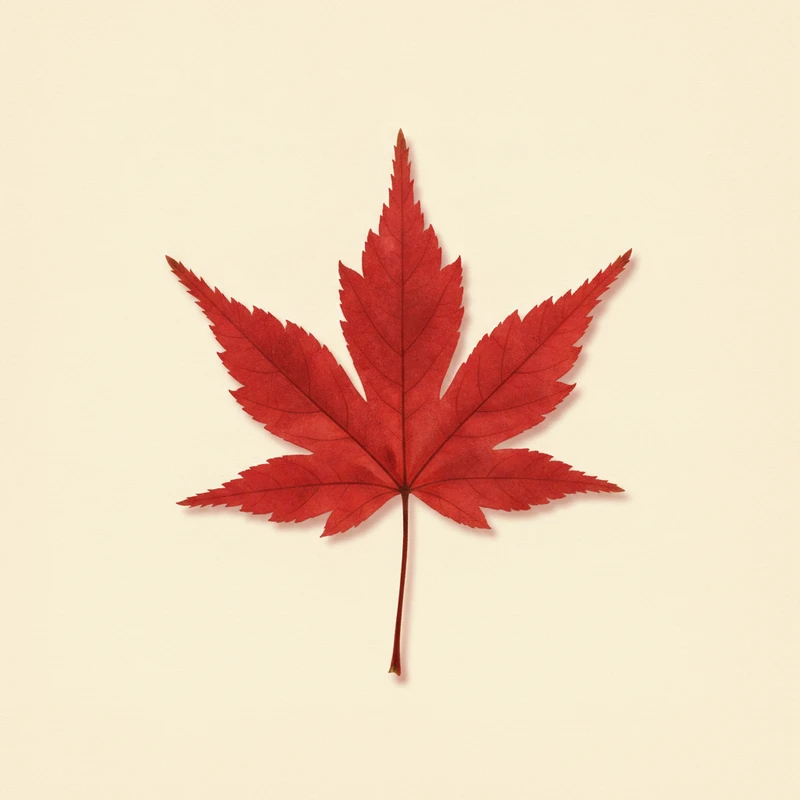
Opens the season. The scarlet you see from the road in September — often while everything around it is still green — is almost always this tree, running early on wet ground.
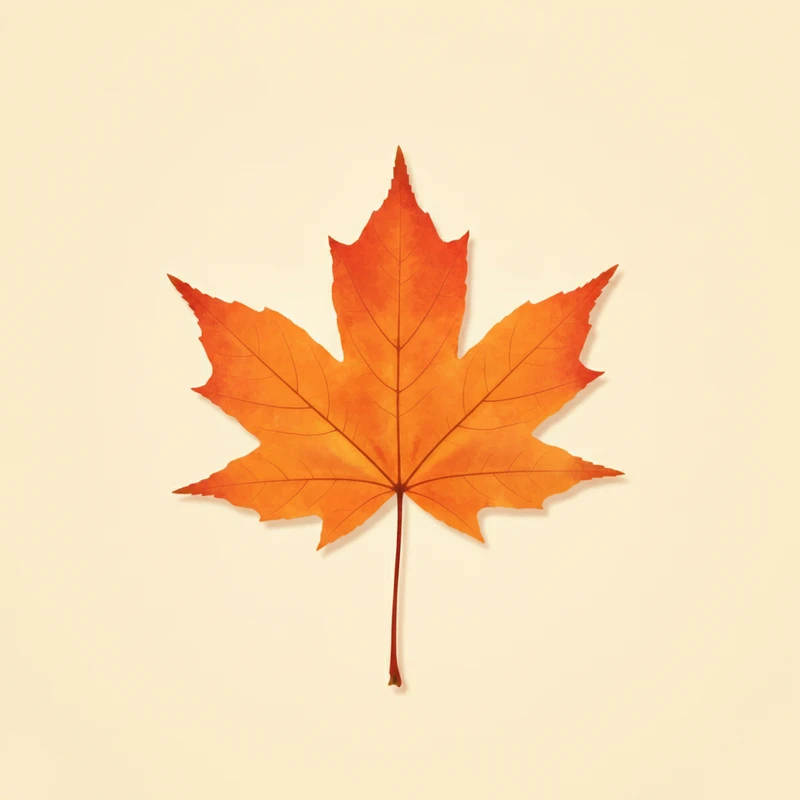
The postcard tree. Carries the middle weeks in orange shading to flame, whole hillsides at a time — the same trees that ran the sap buckets in March run the show in October.
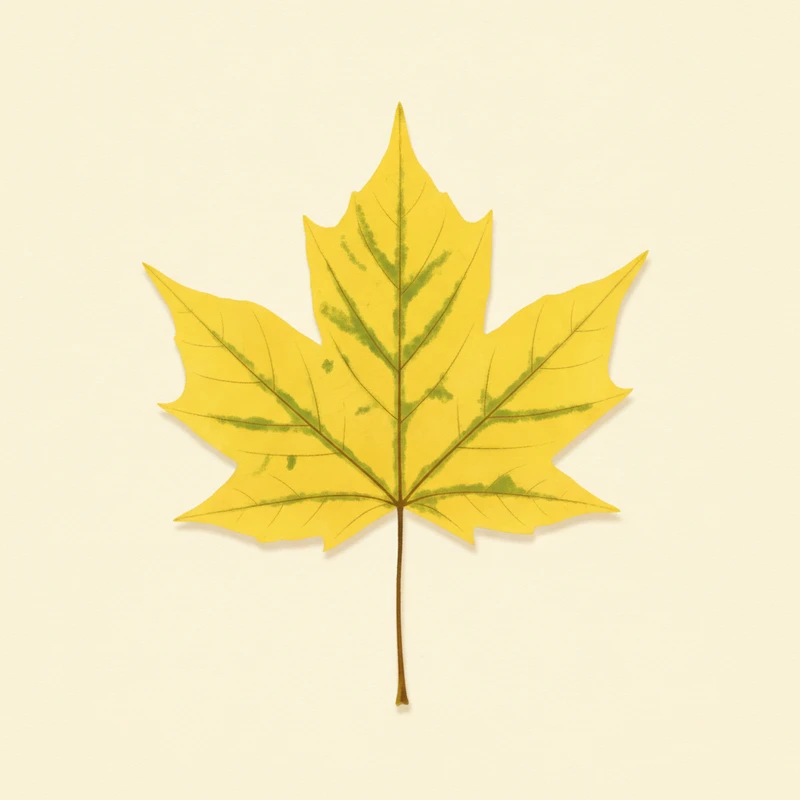
The trail-side maple — dinner-plate goosefoot leaves and green-striped bark, turning a clear lemon yellow at eye level. Moose browse it; the local name is earned.
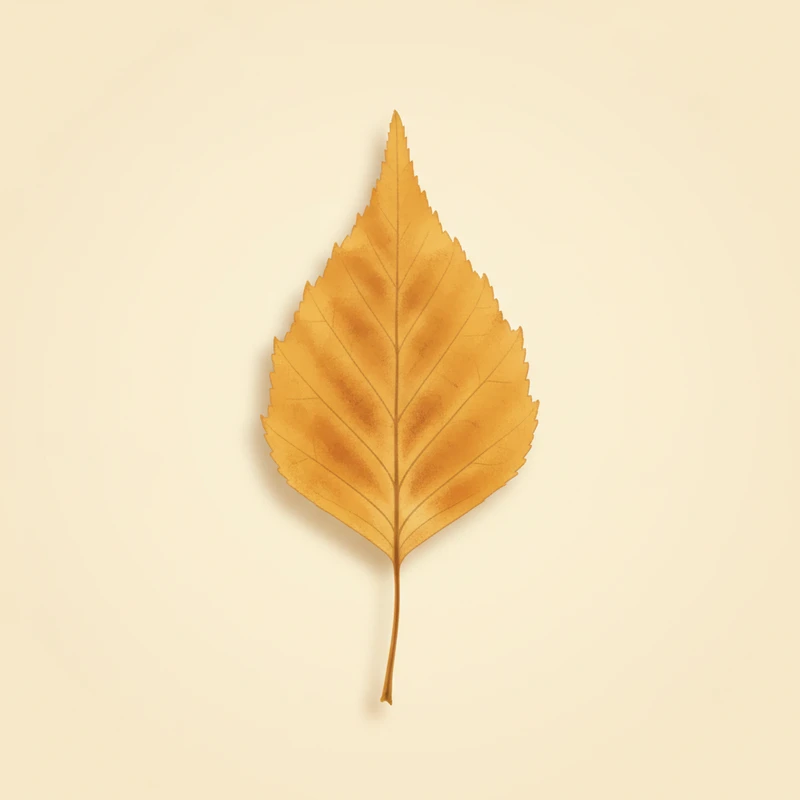
Amber-gold against white bark — the Adirondack two-tone. Its cousin the yellow birch, bronze-barked and higher on the slopes, turns the same gold a beat later.
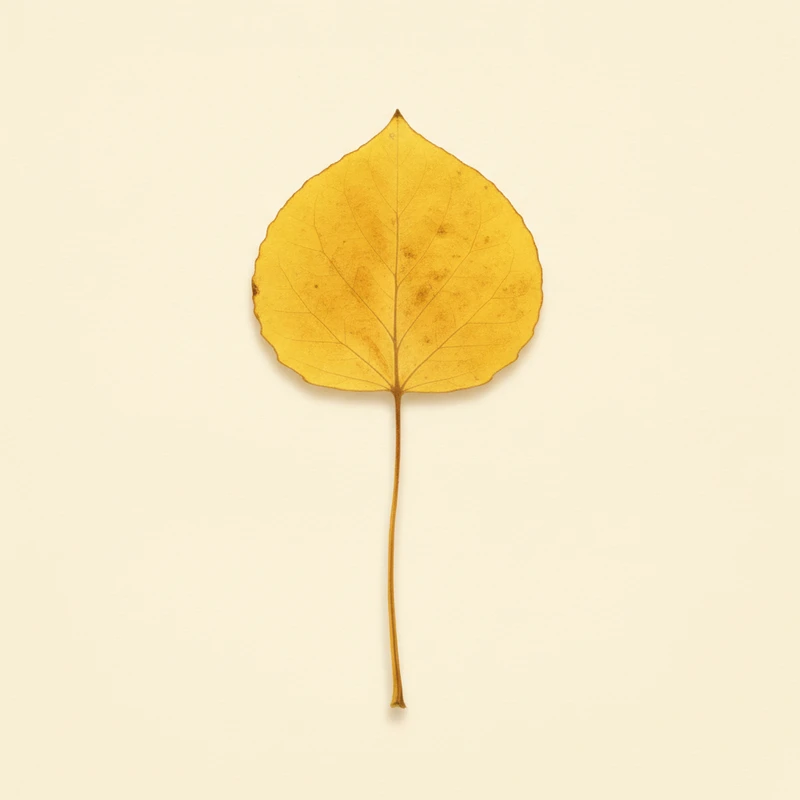
The shimmer. A flattened leaf-stem lets every round leaf tremble in wind the other trees don't feel, so a turning aspen stand doesn't just glow — it moves.
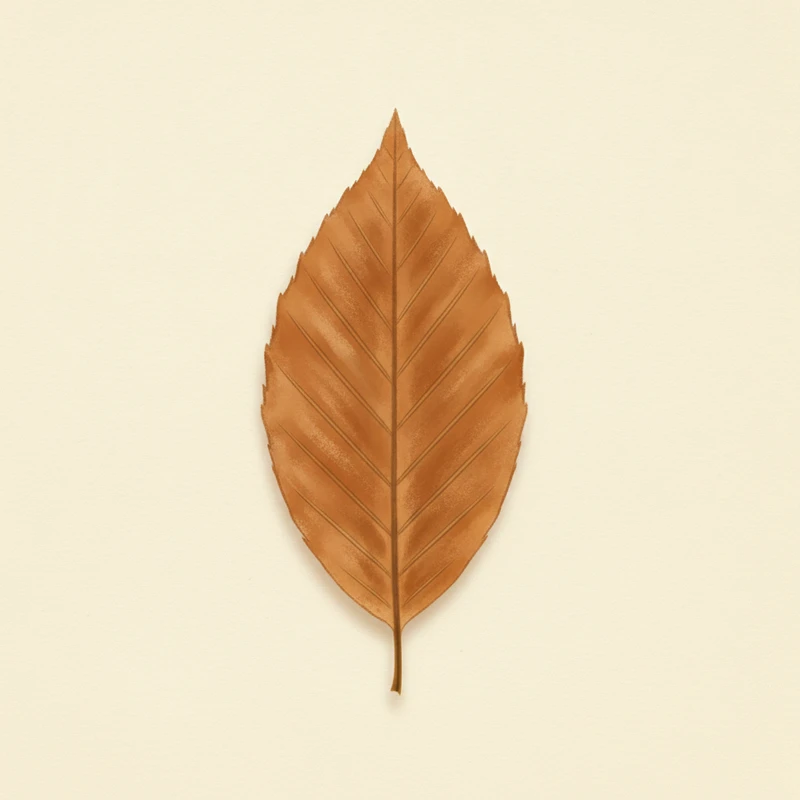
Copper to parchment — and then it refuses to let go. Young beech hold their pale dried leaves all winter, which is why the November understory rustles.
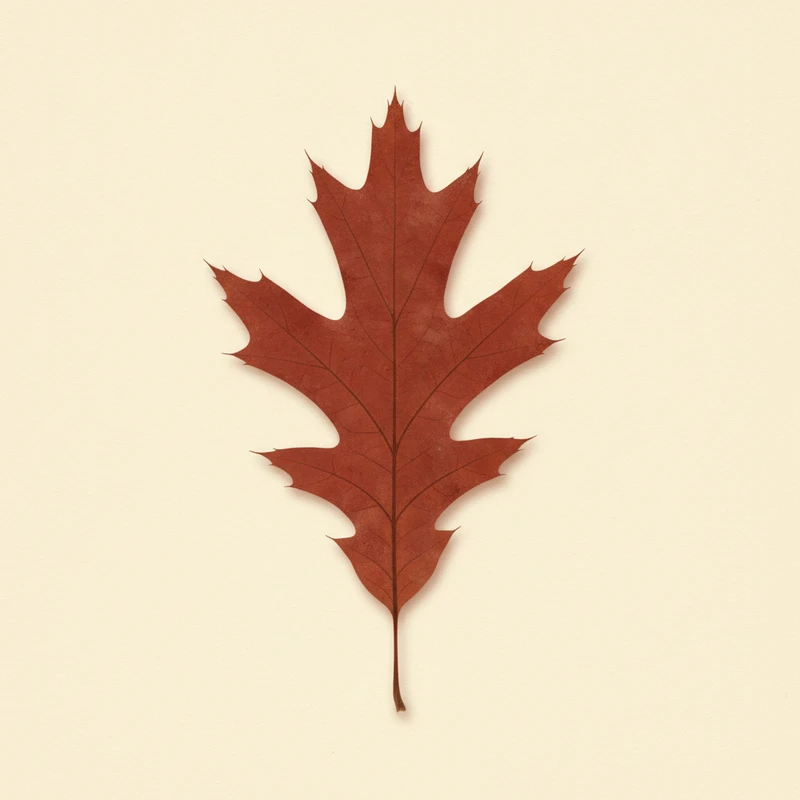
The late shift. Russet to deep wine-red after the maples have finished — the reason the Lake George shoreline peaks a full two weeks behind Keene Valley.
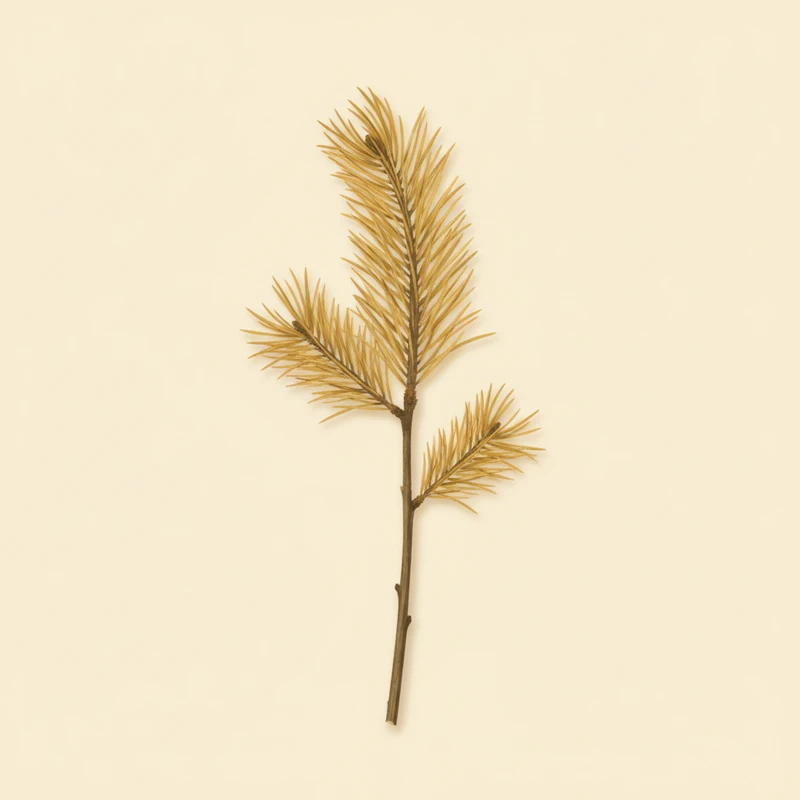
The season's last word: a conifer that turns smoky gold and drops every needle, lighting the bogs weeks after the hardwoods go bare. Most visitors never stay long enough to see it.
Asked at the overlook
Field questions, answeredQ01Why do leaves change color at all?
They don't gain color so much as lose their disguise. All summer, chlorophyll — the green engine of photosynthesis — masks the yellow and orange carotenoids that were in the leaf the whole time. As nights lengthen, the tree stops maintaining chlorophyll and the hidden pigments show through. The reds are different: anthocyanins are manufactured fresh each fall from sugars trapped in the leaf, which is why red years vary so much more than yellow years.
Q02What kind of weather makes a great color year?
The recipe is a moist growing season, then a dry, sunny September with cool — but not freezing — nights. Bright days build sugar in the leaves; cold nights trap it there; trapped sugar becomes anthocyanin, the red pigment. The spoilers: summer drought, a warm wet fall, a hard early frost, and any big wind-and-rain day at peak — which can strip a hillside overnight.
Q03Is the color coming earlier or later than it used to?
Our own twelve-year satellite record is honest but short — it shows swings of four or five days in either direction year to year, more weather than trend. Longer studies across the Northeast point to peak color drifting gradually later as falls warm. That is exactly the question this tracker is built to answer over time: every reading adds to the park's permanent record.
Q04Why does the north turn before the south?
Cold arrives first at elevation and in the northern valleys, and cold is the trigger. In our record the wave takes about eleven days to cross the park: Keene and the High Peaks go first, the central lakes follow, and Lake George — low, southern, and warmed by its own big water — holds out longest. The same gradient runs uphill: summits go over a week before their trailheads.
Q05Is the sugar maple in my syrup the same tree turning orange?
The very same. Acer saccharum runs the sap buckets in March and the hillsides in October — sweet sap in spring becomes trapped sugar in fall, which becomes the flame color that makes the species the park's headliner twice a year. It takes roughly forty gallons of sap to make one gallon of syrup. Visit a sugarhouse in season and you're standing under October's main event.
Q06How many kinds of trees grow in the park?
The Adirondacks hold dozens of native tree species across three great forest types: the northern hardwoods (sugar maple, beech, yellow birch) that carry the color show, the boreal spruce-fir forest that frames it in evergreen, and the pines on sandy ground. The eight species in our field guide account for most of what a leaf-peeper actually sees turn.
Q07When should I book if I want peak color?
Aim your stay at your region's typical peak in the ledger above, and book the lodging before Labor Day — peak-week rooms in Keene and Lake Placid go first. The record's practical advice: the first three weeks of October cover peak somewhere in the park every single year, so a flexible base in the central lakes is the safest bet on a trip planned months out.
The whole season, in one guide
From the guide shelf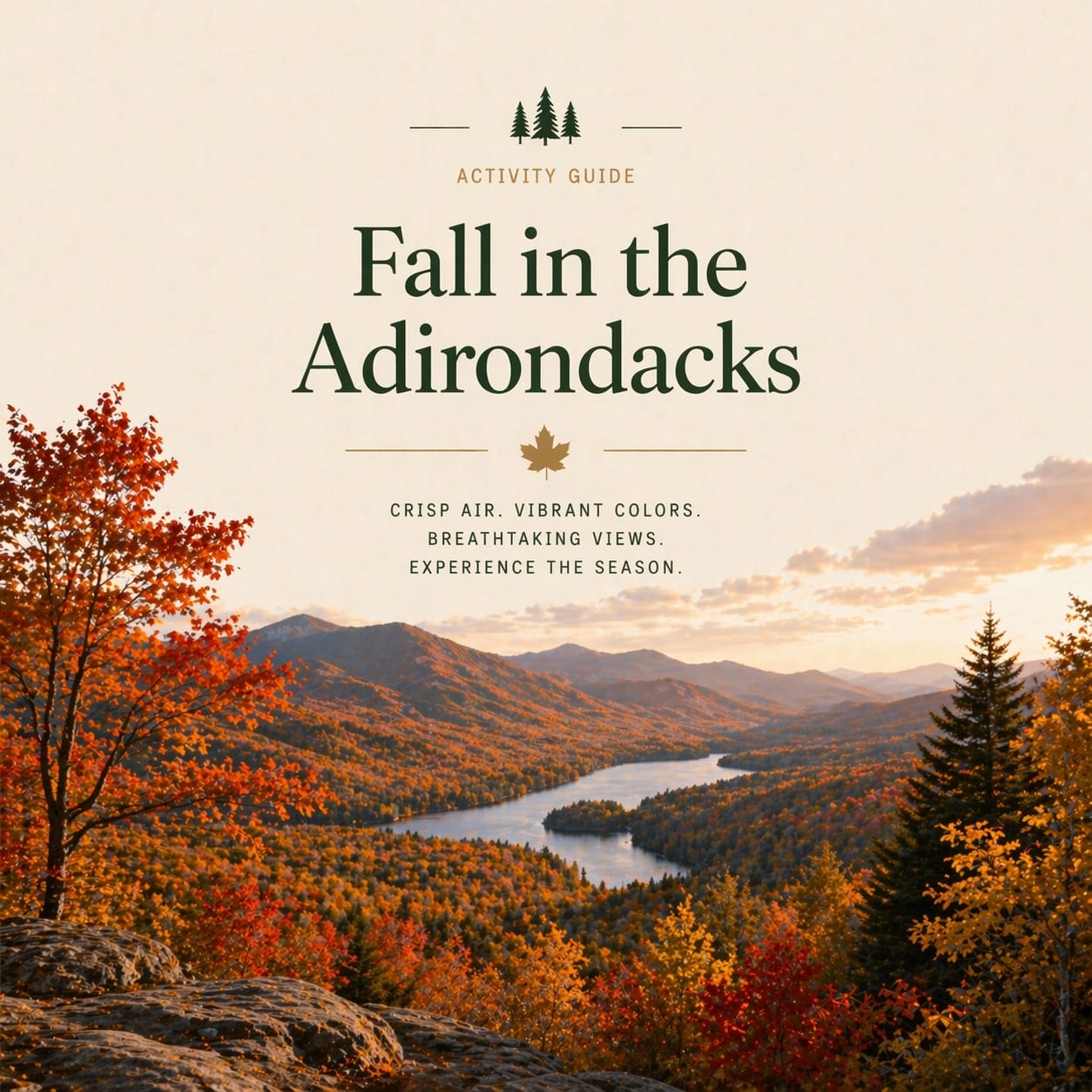
The map tells you when. The guide tells you where to be.
Our complete Fall field guide — the week-by-week foliage calendar by elevation and region, where to base, the foliage drives, easy summits with payoff, apple-picking and cider season, Oktoberfest weekends, and what closes when.
Read the Fall guide →Pair the color with a drive
From the guide shelf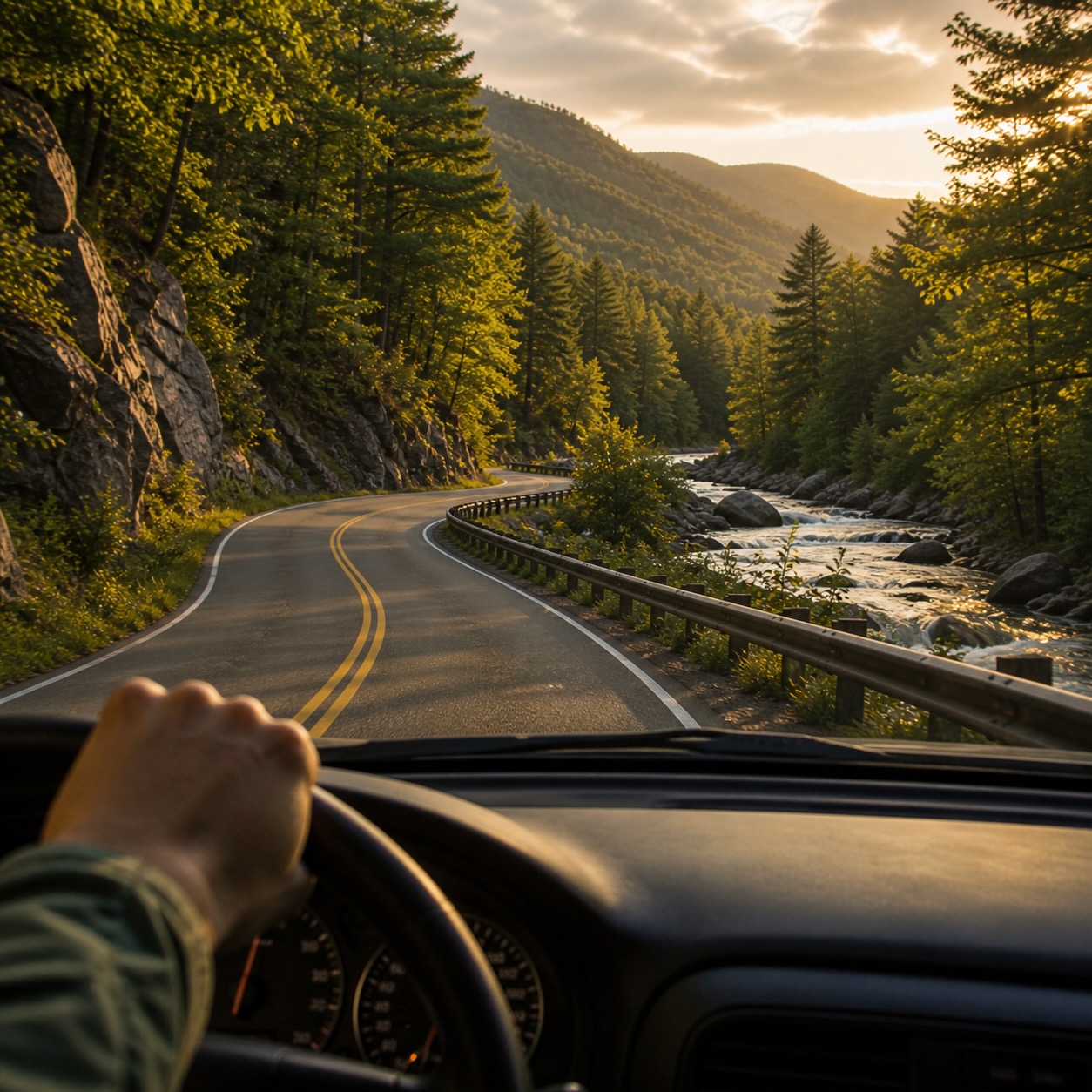
Every great foliage day ends behind a windshield.
Our complete field guide to the park's best drives — overlooks, pull-offs, and the routes locals take when the hillsides go over. Time any of them to the ledger above: when a region reads Near peak, its roads are a front-row seat.
Open the scenic drives guide →