
Show Stopper.
Show Stopper runs just under half a mile through terrain whose character the name hints at but doesn't specify. 4 miles, it's brief enough to walk in under twenty minutes at a relaxed pace, suggesting either a short connector, a spur to a viewpoint, or a standalone feature trail.
- Leg-stretcherShort and nearly flat — an hour or less
- Family-friendlyShort, easy, and gentle enough for young legs
- Good for snowshoeingNon-technical grade that carries a snowshoe track
- Peak foliage window — color starts up high and works down the valleys through mid-October.
Seasonal pattern for this trail · tops out ~1,650 ft · live closures appear above
- DirtSurface
Read the line before you walk it.
What the trailhead is doing today.
Where the hike begins.
Curated trailheads & parking near this route.
Editorial trailhead listings within roughly 3 miles — permit info, parking capacity, and access-road conditions.
Guides, outfitters & shuttles.
If you’re already out here.
Saranac Lake.
The corner of the Park this trail calls home — its hamlets, waters, lodging, and the rest of its field record.
Read the Region→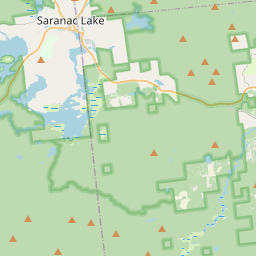
Make a weekend of it.
Closest editorial picks for a meal, a scoop, a pint, a bed, and a sight worth your time.
Eat.
4- Blue Line Brewery0.3 mi
A brewery and restaurant on Lake Flower Avenue in Saranac Lake, doing thin-crust South Shore-style bar pizza and Wing Wars-winning wings alongside the house beer. The third-oldest brewery in the Adirondacks.
- Owl's Nest Pizza Parlor1.5 mi
Owl's Nest Pizzeria is a local favorite in Saranac Lake, New York, offering New York Style pizza, wings, subs, and other munchies. Available for dine-in, take-out, and delivery, it's a convenient spot to grab a slice.
- China Jade1.5 mi
A long-running Chinese restaurant on Saranac Lake's Main Street, doing classic American-Chinese standards for dine-in and takeout, Tuesday through Saturday.
- Our Plates1.5 mi
Our Plates offers Caribbean and Southern-inspired cuisine for pickup at 7 Broadway. Enjoy dishes like Empanadas Locas, Dominican Chimi Burgers, Bistec Encebollado, and Tres Leches cake.
Sip.
4- Blue Moon1.5 mi
Blue Moon Café in Saranac Lake offers dine-in, pick-up, and curbside delivery services. Guests can enjoy weekly specials, restaurant menus, baked goods, coffee, grocery items, and adult beverages.
- Origin Coffee1.5 mi
Origin Coffee Co is a specialty coffee shop with locations in Lake Placid and Saranac Lake serving a chef-driven breakfast and lunch menu.
- Nori's Village Market1.6 mi
Nori's Village Market and Riverside Cafe offers a market with organic and local produce, bulk foods, coffee, and teas, alongside a cafe serving natural, vegetarian, vegan, gluten-free, and local meat options.
- Simply Gourmet5.7 mi
Simply Gourmet in Lake Placid offers daily breakfast and lunch with a focus on clean food, using fresh, local, and sustainable ingredients free of additives or preservatives. They also provide comprehensive catering services for various ev…
Sweet.
4- Mountain Mist Custard0.9 mi
A summer fixture on the shore of Lake Flower in Saranac Lake, with picnic tables and a dock you can tie a boat to. Frozen custard and soft serve with weekly-rotating flavors, shakes, and sundaes.
- Donnelly's Soft Ice Cream1.3 mi
A fourth-generation Saranac Lake institution on a former dairy farm, serving exactly one rotating soft-serve flavor each day — twisted with vanilla on the same 1953 machine. Cash only; check the daily flavor. Memorial Day to Labor Day.
- Mark Twain Maple Works2.5 mi
Mark Twain Maple Works produces New York State maple syrup on the shore of Saranac Lake in the Adirondack Park. They have been making syrup since 2013, expanding their operation and offering various grades.
- Emma's Lake Placid Creamery6.7 mi
A 1950s-themed creamery in the heart of walkable Lake Placid, famous for its Maple Creme soft serve alongside 16 hard flavors, gelato, sorbet, and old-fashioned malts. The reliable apres-hike treat.
Drink.
4- RiverTrail Beerworks1.6 mi
RiverTrail Beerworks is Saranac Lake’s only riverfront brewpub, located on the Saranac Lake River Walk and Rail Trail. It features a heated patio, firepits, two golf simulators, and serves lunch and dinner daily with house-brewed beers and…
- Bitters & Bones1.7 mi
Saranac Lake's only downtown brewery, restaurant, and bar, Bitters & Bones offers craft beer brewed upstairs, fresh local cuisine for breakfast, lunch, and dinner, and craft cocktails. It features rooftop decks and unique private event spa…
- Ray Brook Brewhouse1.9 mi
Ray Brook Brewhouse is a unique brewery in Ray Brook, NY, offering wild and traditional brews paired with adventurous dishes made from local and exotic ingredients.
- Top of the Park6.4 mi
A Lake Placid bar on Main Street offering a curated selection of wine, scotch, bourbon, craft beer, and top-shelf liquors, complemented by small plates and signature cocktails. Enjoy 'Spirits with a View' from its large deck overlooking Mi…
Stay.
4- Traverse Lodge0.2 mi
Traverse Lodge is a lodging establishment on the outskirts of Saranac Lake, offering a variety of rooms and cabins. It provides a base for exploring the Adirondacks, featuring a new pavilion, campfire area, outdoor kitchen, and close acces…
- Mountain Lake Inn0.5 mi
Down-to-earth hotel featuring lake views & a restaurant, as well as an indoor pool.
- Gauthiers Saranac Lake Inn0.5 mi
This family-owned inn, established in **1923**, offers renovated, eco-conscious waterfront lodging with direct access to Saranac Lake's extensive waterways.
- voco Saranac Lake NY - Waterfront by IHG1.0 mi
A waterfront IHG hotel on Lake Flower in Saranac Lake with an indoor pool, hot tub, pet-friendly rooms, and the on-site Lakeside Drift restaurant. Walking distance to downtown.
See.
4- Ice Palace at the Saranac Lake Winter Carnival1.1 mi
The Ice Palace is a prominent feature of the Saranac Lake Winter Carnival, a historic annual celebration in New York State established in 1897.
- Adirondack Birding Center1.5 mi
The Adirondack Center for Loon Conservation protects common loons in the Adirondack Park through research, conservation, and education. They focus on understanding and mitigating human impacts to ensure loons thrive as environmental sentin…
- Adirondack Center for Loon Conservation1.5 mi
The Adirondack Center for Loon Conservation works to protect common loons in the Adirondack Park and educates communities about the importance of these iconic birds and their lake ecosystems.
- Robert Louis Stevenson Cottage1.5 mi
The Robert Louis Stevenson Cottage Museum in Saranac Lake, New York, was the residence of the famous author of Dr. Jekyll and Mr. Hyde and Treasure Island. It preserves his personal belongings and is the world's first site dedicated to Ste…
Add to the record.
Free, takes thirty seconds. Yours forever.
Every page on this site gets better when readers contribute. Mark a peak you’ve climbed, drop a photo, file a field note, or flag a correction — every addition makes the next visitor’s page better.
File a report.
Trail conditions, water level, bug pressure, blowdown. The kind of detail that helps the next person plan.
Write a field note →Spot something off?
Wrong elevation, outdated access notes, a coordinate that's drifted. We'd rather hear it than miss it.
Suggest an edit →
Frequently asked.
- How long is the Show Stopper?The Show Stopper is approximately 0.42 miles (0.7 kilometers) — a short out-and-back suitable for most fitness levels.
- How long does it take to hike the Show Stopper?Most hikers complete the Show Stopper in about 15 minutes at a steady pace with roughly 46 feet of elevation gain. Allow extra time for rest stops, photos, weather, and trail conditions.
- How difficult is the Show Stopper?Based on its length and elevation gain, the Show Stopper is an easy hike (46 ft of climbing over the route) — gentle grades suitable for most fitness levels and families. This is an estimate from route data, not an official trail rating — check current DEC advisories before heading out.