The Great Camps you can visit today.
Rustic on the outside, richly appointed within. Most are gone or still private — but 3 you can walk through, and 4 you can sleep in.
Around 1877, on Raquette Lake, a young entrepreneur named William West Durant — son of the Union Pacific financier Thomas C. Durant — began building Camp Pine Knot, unlike anything else in American architecture: a cluster of low log structures with peeled-bark columns, twig railings, and stonework chimneys, organized around the rituals of refined wilderness leisure. Within twenty years the vernacular he invented — the Great Camp style — was being copied for the Vanderbilts, the Pruyns, the Rockefellers, and Marjorie Merriweather Post.
The camps formed an enclosed society that circulated between a Manhattan winter and an Adirondack summer, moving by private rail car to the head of a lake and by steamboat and guideboat the rest of the way. When the fortunes thinned, the camps scattered: some burned, some passed to the state and the Forest Preserve, some became inns, and some are still held by families who ask, politely, that you admire them from the water.
The fuller narrative — Durant, the railroad, the families, and the long decline — is in the longform history (section IV), and the moment sits on the timeline at 1877.
Ten camps, first to last.
Photos come straight from each camp’s directory listing; the facts are the well-documented ones only.
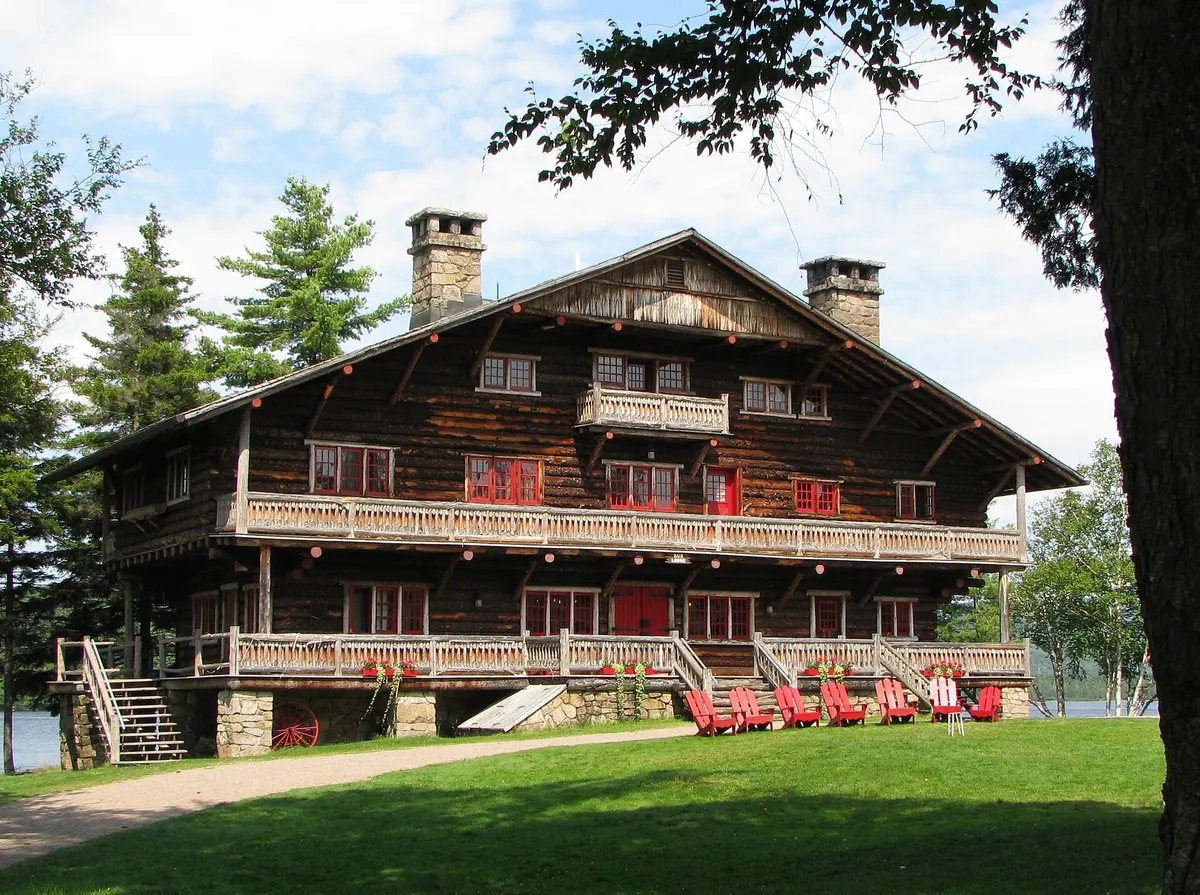
The first of the Adirondack Great Camps — also known as Huntington Memorial Camp — built by William West Durant on Raquette Lake. Its log-and-native-stone buildings, the Swiss chalet and Metcalf Hall among them, set the architectural vocabulary every later camp borrowed. Durant later sold it to Collis P. Huntington; today SUNY Cortland runs it as an outdoor-education center, open to the public only for occasional tours and programs.
See the listing→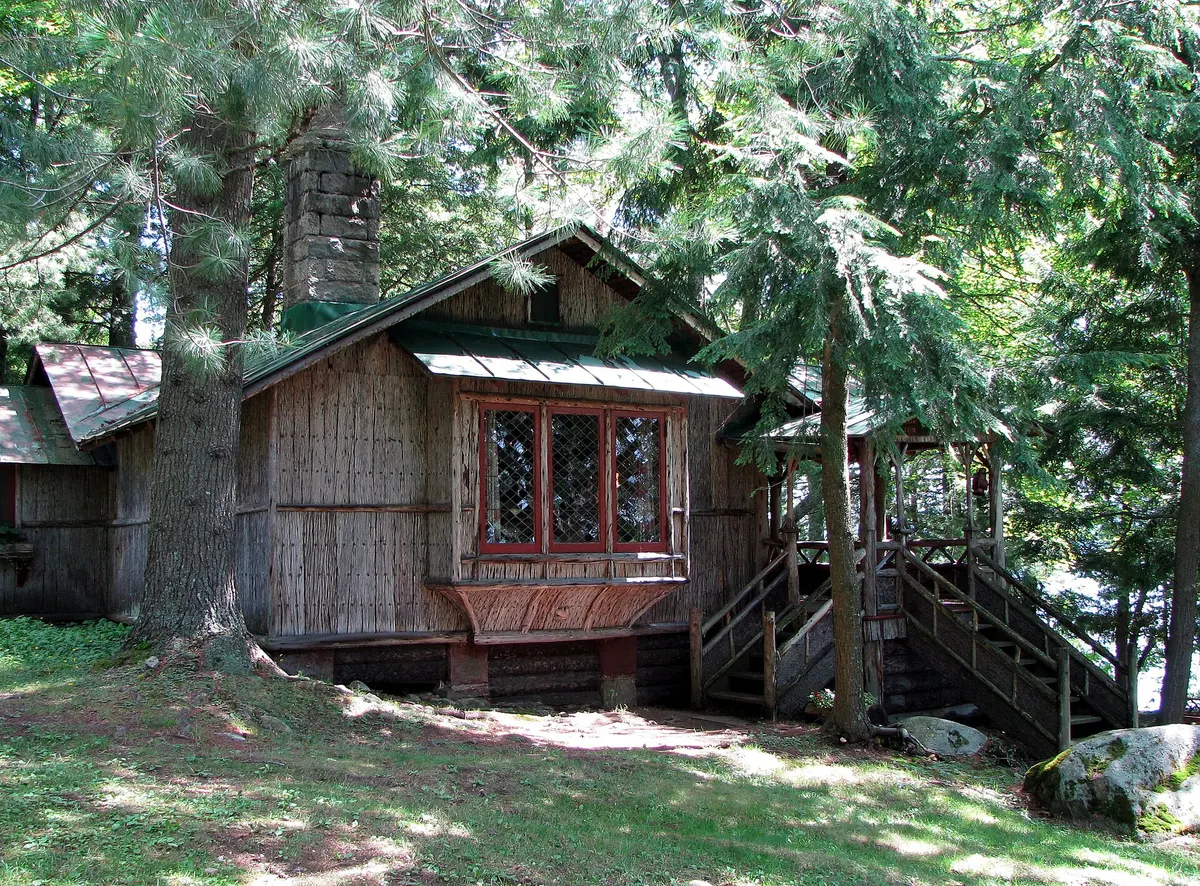 Mwanner / CC BY-SA 3.0 via Wikimedia Commons1877The Hedges1880s · Stay the nightBlue Mountain Lake · Founded by Col. Hiram Duryea
A rustic-camp compound on Blue Mountain Lake begun in the 1880s by Colonel Hiram Duryea and run as a family lakeside resort ever since. Original stone-and-log lodges, a dining room over the water, and rooms you can book by the night through the summer — one of the few places to actually sleep inside a genuine 19th-century camp.
See the stay→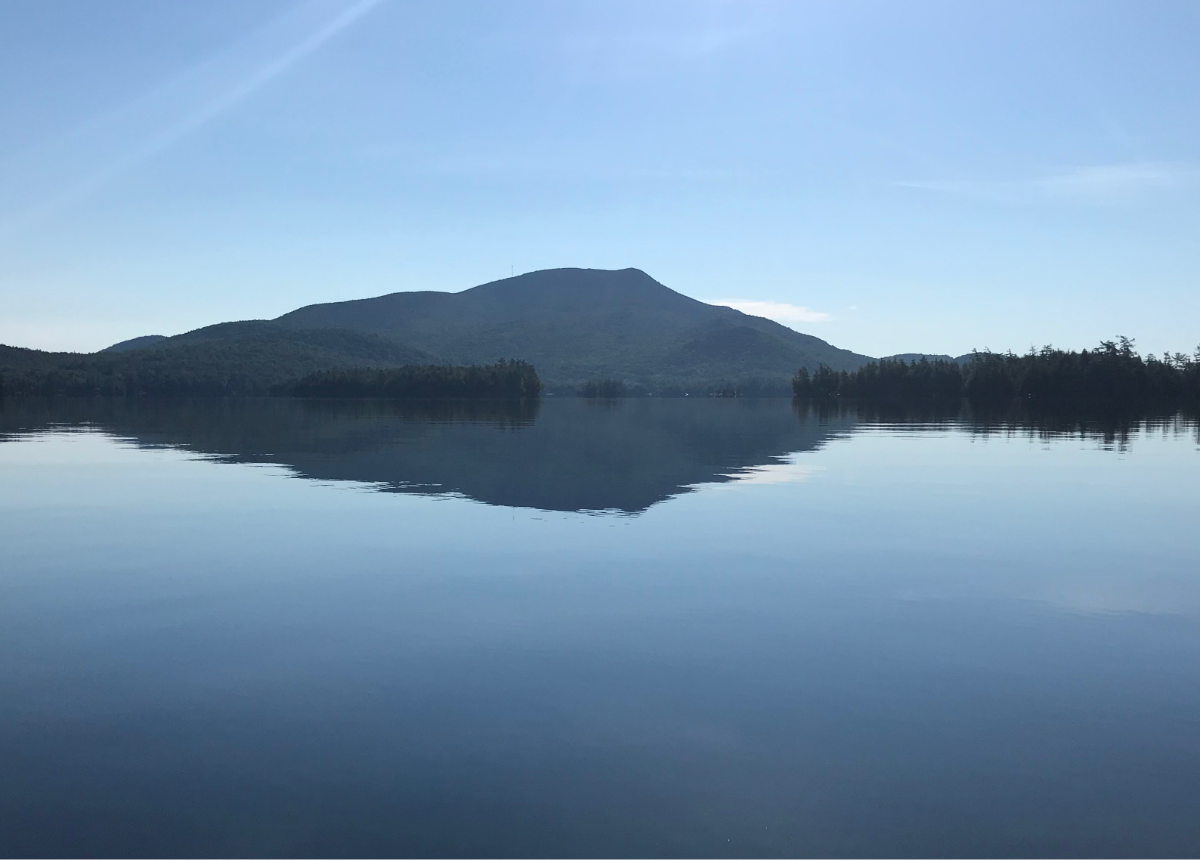 The Hedges on Blue Mountain Lake · Google1880sLake Placid Lodge1882 · Stay the nightLake Placid · Great Camp–style lodge
A Great Camp–style lodge on the quiet shore of Lake Placid, Whiteface rising across the water. Twig-work, birch-bark, and stone hearths in every room; after a 2005 fire it was rebuilt in the same Adirondack idiom, and it now operates as a Relais & Châteaux property.
See the stay→ Google Places1882Camp Santanoni1892–93 · Tour itNewcomb · Built for Robert Pruyn · architect Robert H. Robertson
Built for Albany banker Robert Pruyn to a design by Robert H. Robertson, at the heart of a 12,900-acre preserve. It is the only Great Camp inside the Forest Preserve — New York State acquired the land in the 1970s — and the main lodge, a fan of connected pavilions on a point over Newcomb Lake, is now a state historic site.
How to visit — Reach it by the 4.7-mile gatehouse road — on foot, bike, or ski, or by seasonal horse-drawn wagon. Free; interpreters on site in summer.
See the listing→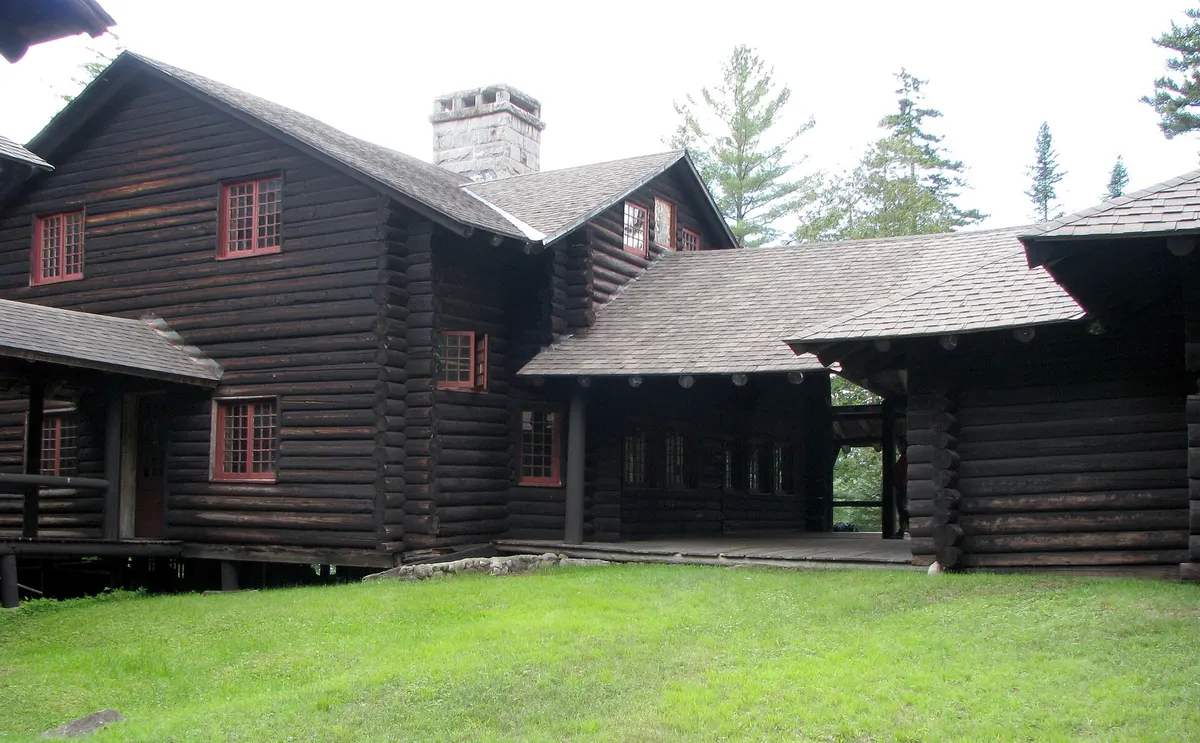 Mwanner / CC BY-SA via Wikimedia Commons1892–93Great Camp Sagamore1897 · Tour itRaquette Lake · Built by W. W. Durant · bought by A. G. Vanderbilt, 1901
Durant's masterwork on Sagamore Lake, sold to Alfred G. Vanderbilt in 1901 and used by the family for half a century. The most complete Great Camp open to the public — bowling alley, boathouse, servants' complex, and main lodge all survive — it is a National Historic Landmark.
How to visit — Daily guided tours in season, plus overnight learning programs, meals in the dining hall, and grounds walks.
See the listing→Mwanner / CC BY-SA 3.0 via Wikimedia Commons1897Kamp Kill Kare1897 · PrivateLake Kora · Rebuilt for Lt. Gov. Timothy WoodruffOne of the most lavish of the camps, rebuilt in stone and log for New York lieutenant governor Timothy Woodruff after an early fire, on secluded Lake Kora. It remains a private family estate and is not open to visitors — the closest most people get is a distant view from the water.
See the listing→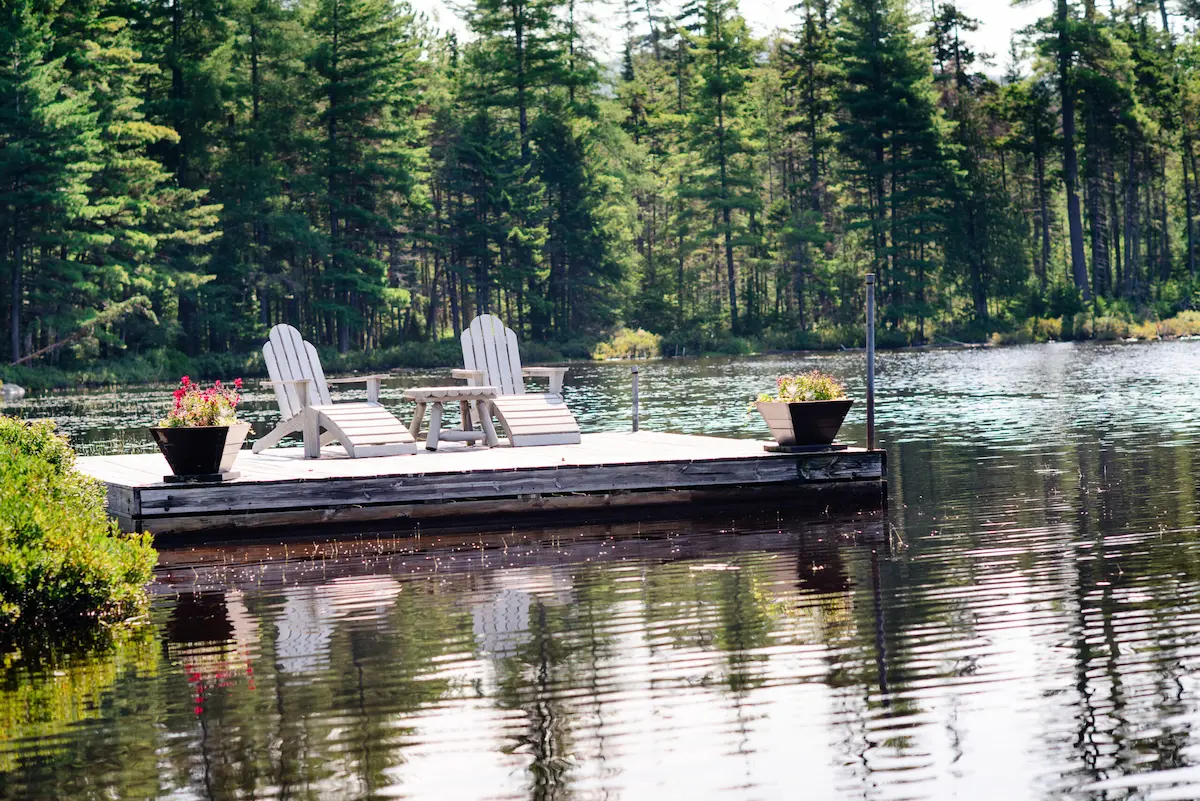 Courtesy Kamp Kill Kare / www.lakekora.com1897Timberlock1899 · Stay the nightIndian Lake · A working rustic family camp
The unplugged end of the tradition: a rustic family camp on Indian Lake with kerosene lamps instead of in-room electricity, a fleet of guideboats, and family-style meals. Great-camp living stripped to its bones, and still welcoming guests after more than 120 years.
See the stay→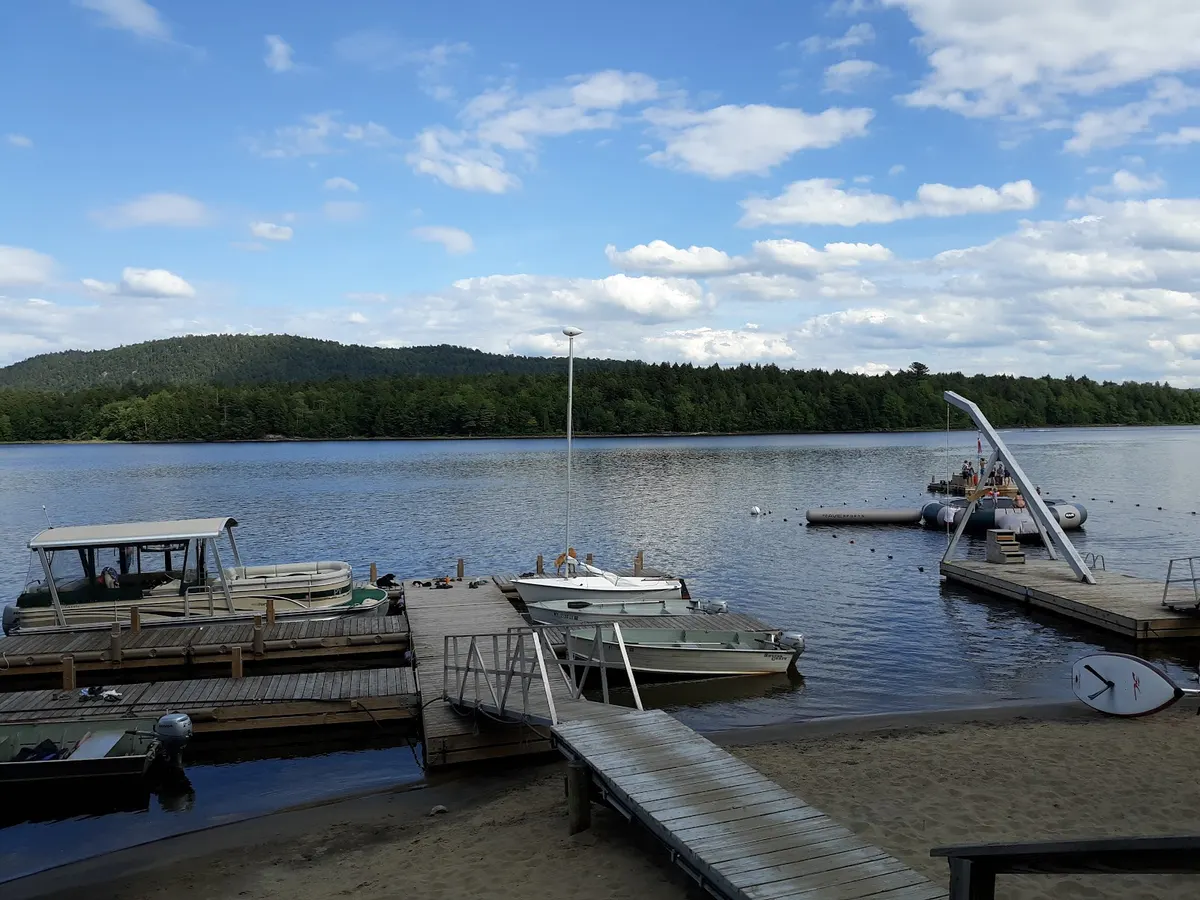 Indian Lake1899White Pine Camp1907 · Tour itPaul Smiths · Osgood Pond · Built for Archibald White · Coolidge's Summer White House, 1926
Built on Osgood Pond for New York businessman Archibald White, White Pine Camp served as Calvin Coolidge's Summer White House from July to September 1926, when the nation's business followed the president north. Its twenty buildings include a Japanese tea house and rustic boardwalks over the water.
How to visit — Seasonal guided tours; several cottages can also be rented by the week.
See the listing→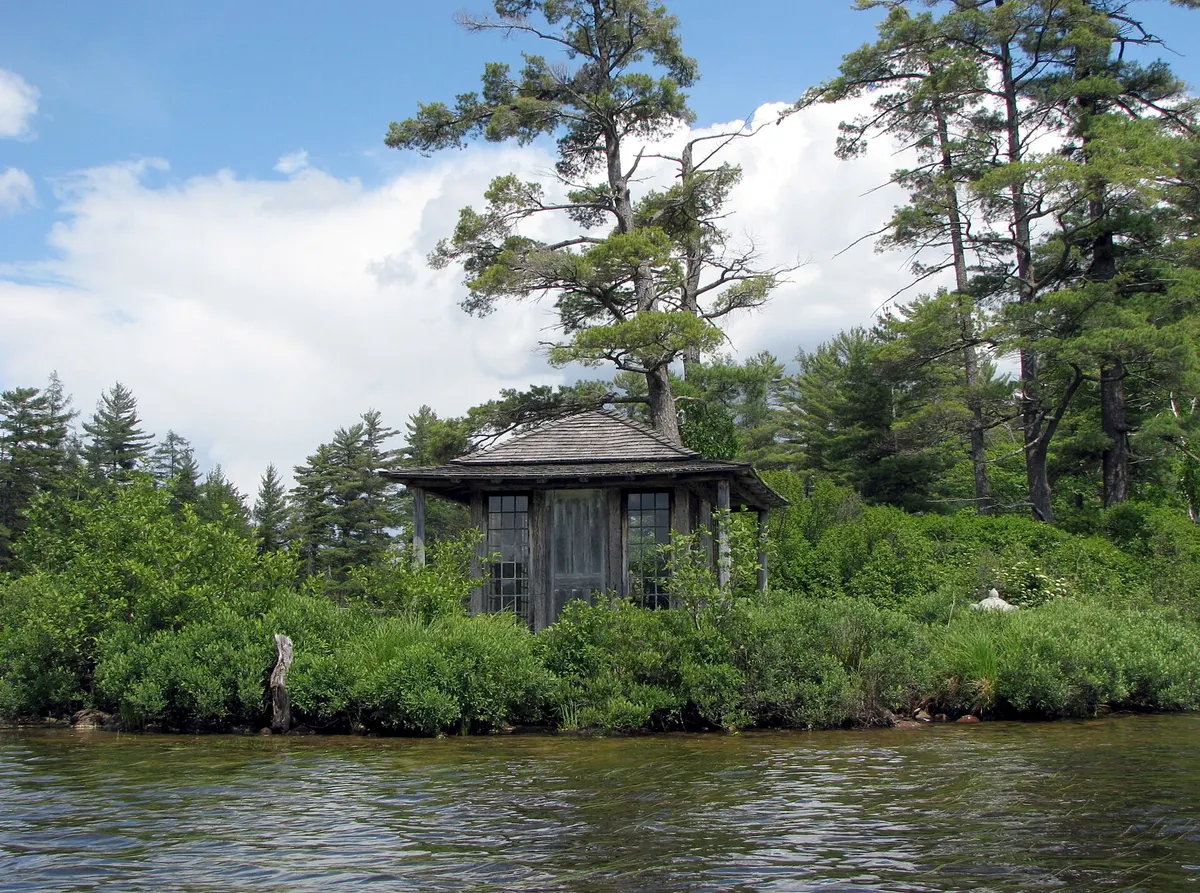 Mwanner / CC BY-SA 3.0 via Wikimedia Commons1907Topridge1920s · PrivateUpper St. Regis · Marjorie Merriweather Post's camp
Marjorie Merriweather Post — heiress to the Post cereal fortune — bought this Upper St. Regis camp in 1920 and expanded it, by 1923, into a 68-building estate near Keese Mill, staffed like a small village. She left it to New York State, which later returned it to private hands; it is best seen from a St. Regis lake cruise.
See the listing→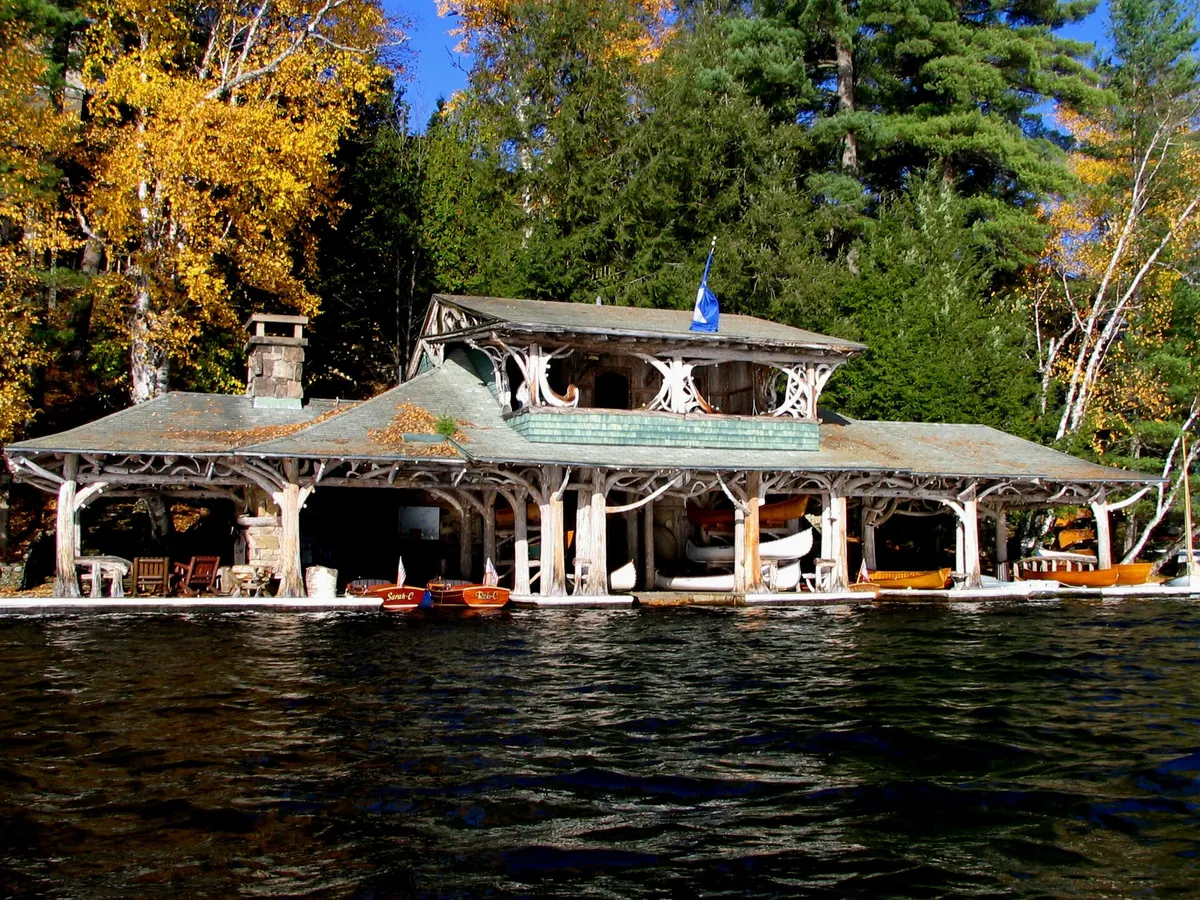 Mwanner / CC BY-SA 3.0 via Wikimedia Commons1920sThe Point1930s · Stay the nightUpper Saranac Lake · Built as Camp Wonundra for W. A. Rockefeller
Originally Camp Wonundra, built in the 1930s for William Avery Rockefeller on Upper Saranac Lake. The Rockefeller camp is now a Relais & Châteaux inn of just eleven rooms, with black-tie dinners twice a week and great-room hearths lit every evening — the most storied way to actually sleep in a Great Camp.
See the stay→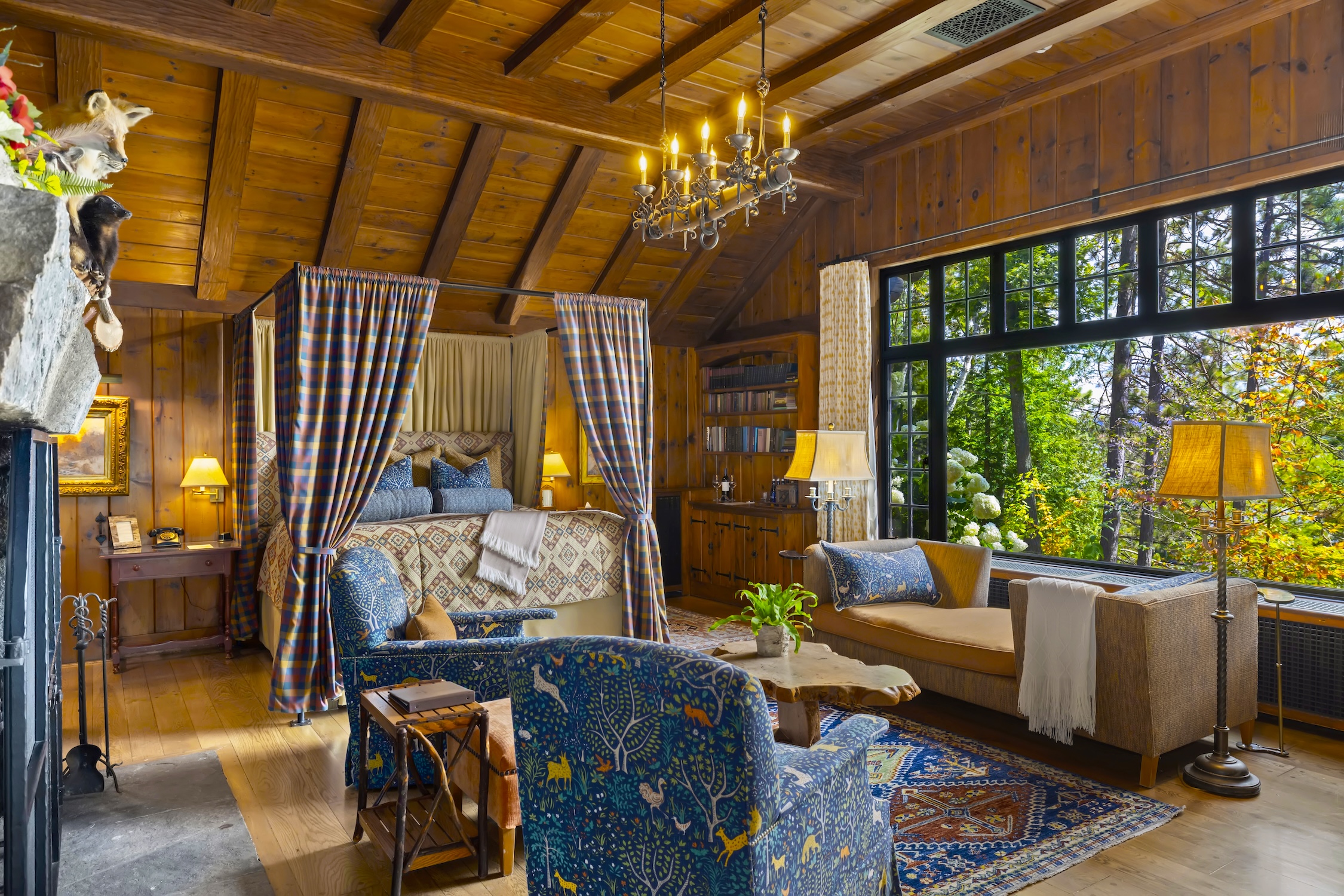 Courtesy The Point / www.thepointresort.com1930s
The tourable camps run guided visits mostly from late June through Columbus Day, and Santanoni is a hike or ski in every season. Confirm tour times and road conditions before you drive — each listing links to the camp’s own hours and site.
Great Camps tours in the directoryAttractionsResorts & Great Camps you can bookLodging