§ 01The Lead · The Thaw · Mirror Lake & the High Peaks44.28°N 73.98°W
A Century of Watching · Mirror Lake, Lake Placid
Ice-Out
There is a day, every spring, when the ice gives up the lake. Nobody can schedule it. Everybody has money on it.
The Adirondack RegionFiled from the Mirror Lake shore, Lake Placid~ 6 min read
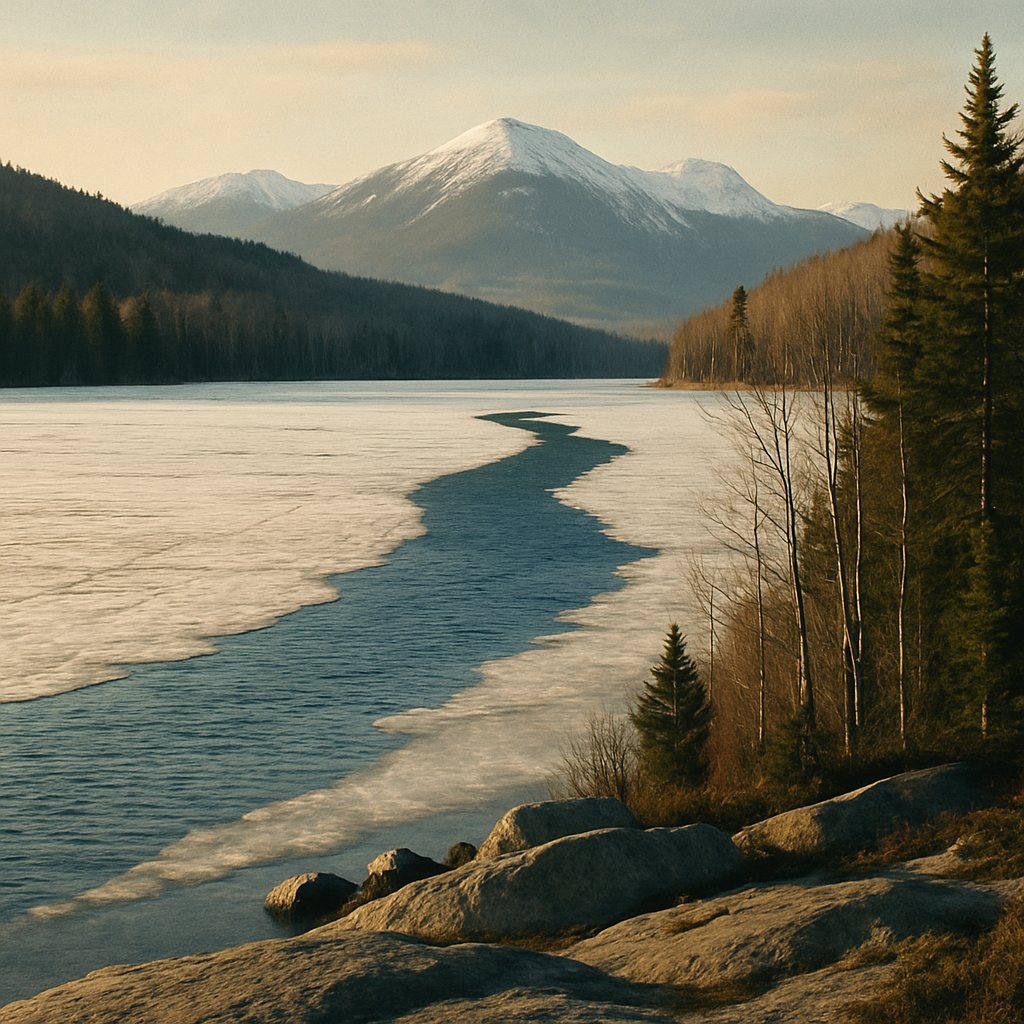
For most of the winter the lake is a floor. People walk it, drive it, fish it, race across it on skates and studded tires; the ice is nine inches of hard opinion and it is not going anywhere. And then, over a few warm afternoons, it is. The white goes gray, then rotten, then dark; a lead of open water opens along a windward shore and widens; and one morning the ice is simply gone, gone in the night, a whole winter of it vanished into water that looks as if it was never frozen at all.
They call it ice-out, and in the Adirondacks it is watched the way other places watch a groundhog, except that money changes hands and the record goes back a century. On Mirror Lake in the middle of Lake Placid, the date the ice leaves has been logged for generations; the town runs a pool on it, and the guesses cluster in mid-April with the confidence of people who have been wrong every year of their lives. The definition is looser than the betting would suggest — the ice is “out” when a boat can cross the open water from one end to the other — but the argument over the exact hour is half the point.
The lake is a floor all winter. Then, over a few warm afternoons, it is a lake again.
The high, cold, deep lakes lock up first in the fall and let go last in the spring — a place like Lake Placid can hold ice into the last week of April while a shallow pond an hour south has been open for a month. So ice-out is not one date but a wave that moves up the map and up the elevation, hamlet by hamlet, over the better part of a month. You can follow it north and watch the same morning happen again and again, a week behind itself each time.
§ 01 — The WatchReading a lake that’s deciding
What the watchers are really reading is heat. All winter the ice insulates the water beneath it; in spring the sun does its work on the black, rotting surface, and the honeycombed “candle ice” that forms in the last days will collapse with a push of wind in a single afternoon. That is the tell every local knows without being taught: the ice doesn’t melt so much as give up all at once. A lake that looked solid at breakfast can be open water by dark, and the loons — which have been circling overhead for days, waiting — drop onto it before the last floes have drifted to the lee shore.
§ 02 — Mud SeasonThe price of the thaw
The same melt that opens the lakes turns the rest of the Park to mud. For a few weeks between the snow and the green, the ground is saturated, the dirt roads go soft, and the high trails run with snowmelt and black muck. It is the Adirondacks’ least photogenic season and its most honest one — the woods stripped bare, the brooks loud, the black flies not yet arrived. The old advice is to stay low and let the summits drain: the waterfalls, the flatwater, and the rivers are all at their best exactly when the high peaks are at their worst.
By May the wave has passed over the whole Park. The last high lake opens, the loons are paired and nesting, the sugarhouses have boiled off the final run, and the first tinge of green comes into the hardwoods from the valleys up. Ice-out is not really an event, in the end — it is the moment the Adirondacks stop holding their breath. The water is moving again. Everything else follows it.
§ 02The Thaw6 dispatches · the season coming on
Six ways to read the water moving again.
What the melt sets loose — sugar, snowmelt, high water, the trout opener, the birds, and the mud. dispatch by dispatch.
01 / sugarbushSugaring
The first crop is a liquid
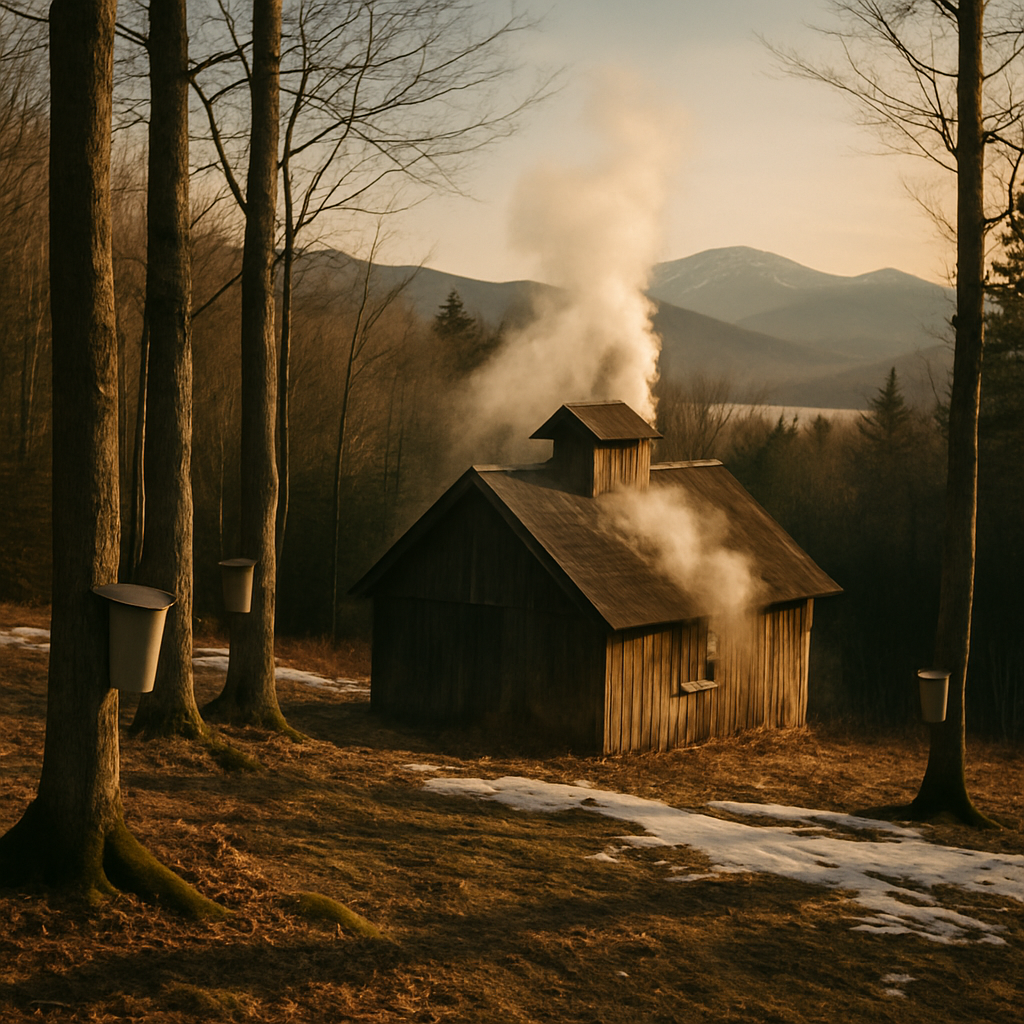
Before a single leaf is out, the sugarhouses are already running. Sap moves on the freeze-thaw — cold nights, days above freezing — so the whole crop rides a two-to-six-week window that nobody controls and everybody watches. On the last two weekends of March the doors open for NYS Maple Weekend: steam pouring off the evaporators, the smell of it a half-mile downwind, and a grade of syrup you cannot buy in a store. It is the year's first harvest, and it comes out of trees that are still, by every other measure, asleep.
WINDOW late Feb – early AprRUNS on the freeze-thaw
02 / the gorgeThe Runoff
The rivers at full volume
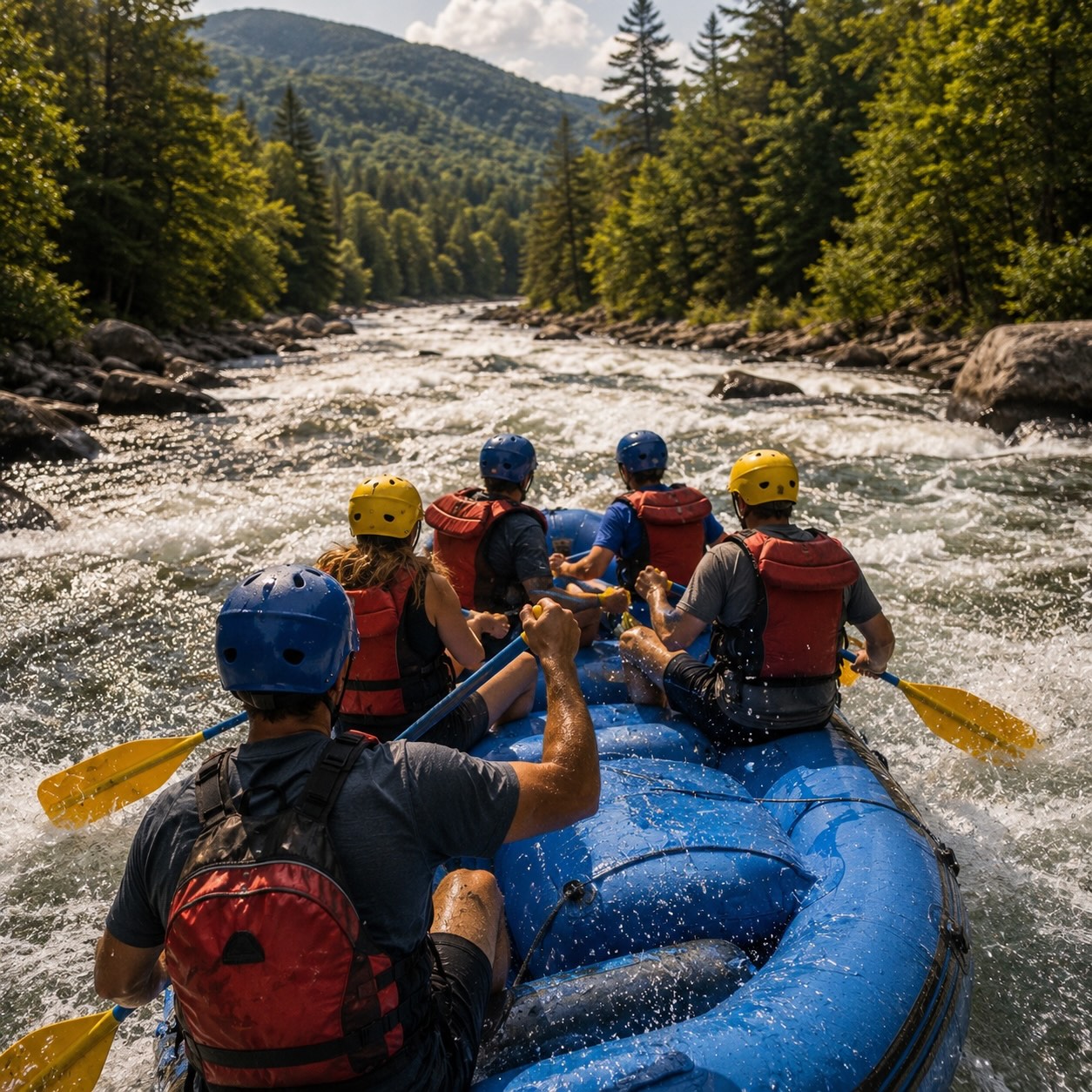
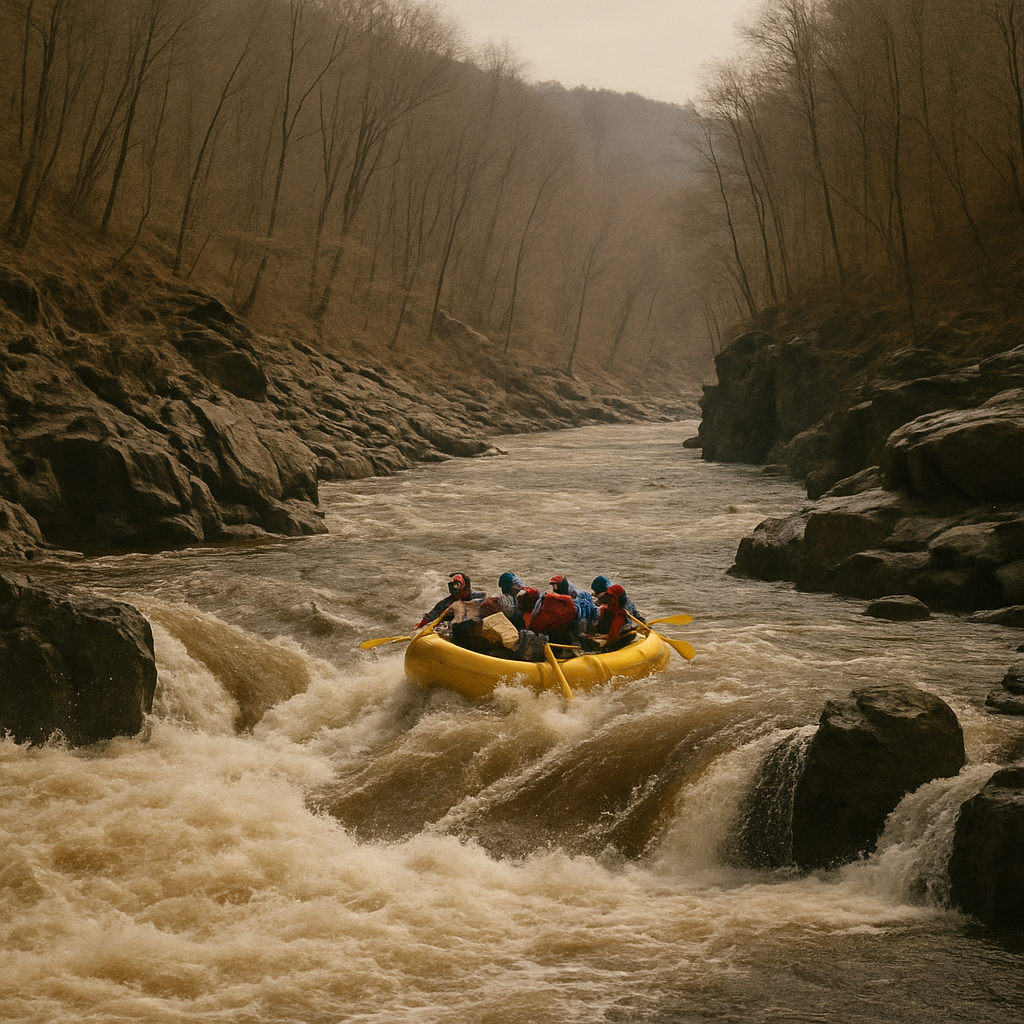
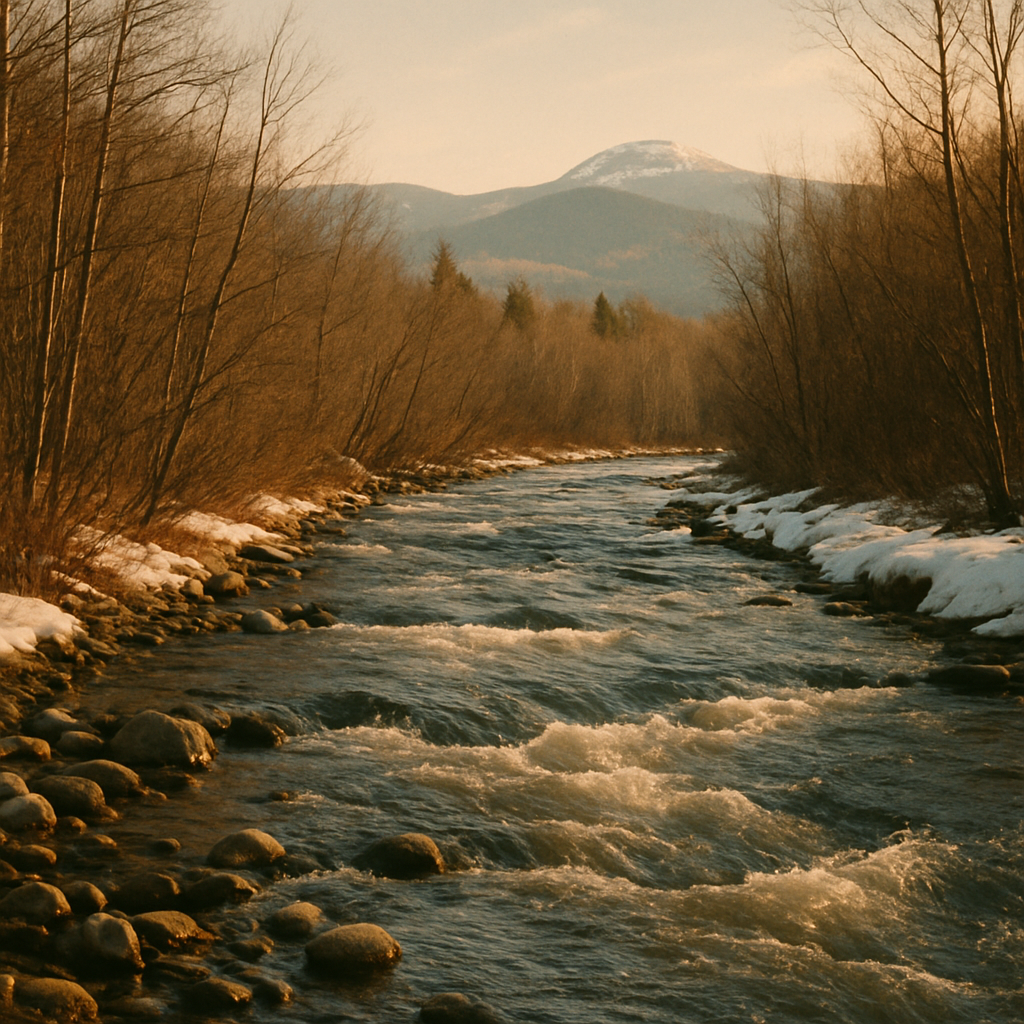
For a few weeks the snowpack comes off the high country all at once, and the rivers run bigger than they will all year. The Hudson Gorge out of Indian Lake — the Whitewater Capital of New York — turns from a summer float into a serious run; the Moose River near Old Forge goes to Class V and holds it only as long as the melt does. The guides read the gauges like a tide table. When the water is up, you go; when it drops, the window is closed until the dam releases take over.
PEAK Apr – early MayREADS by the gauge, daily
03 / high waterHigh Water
Every fall running heavy
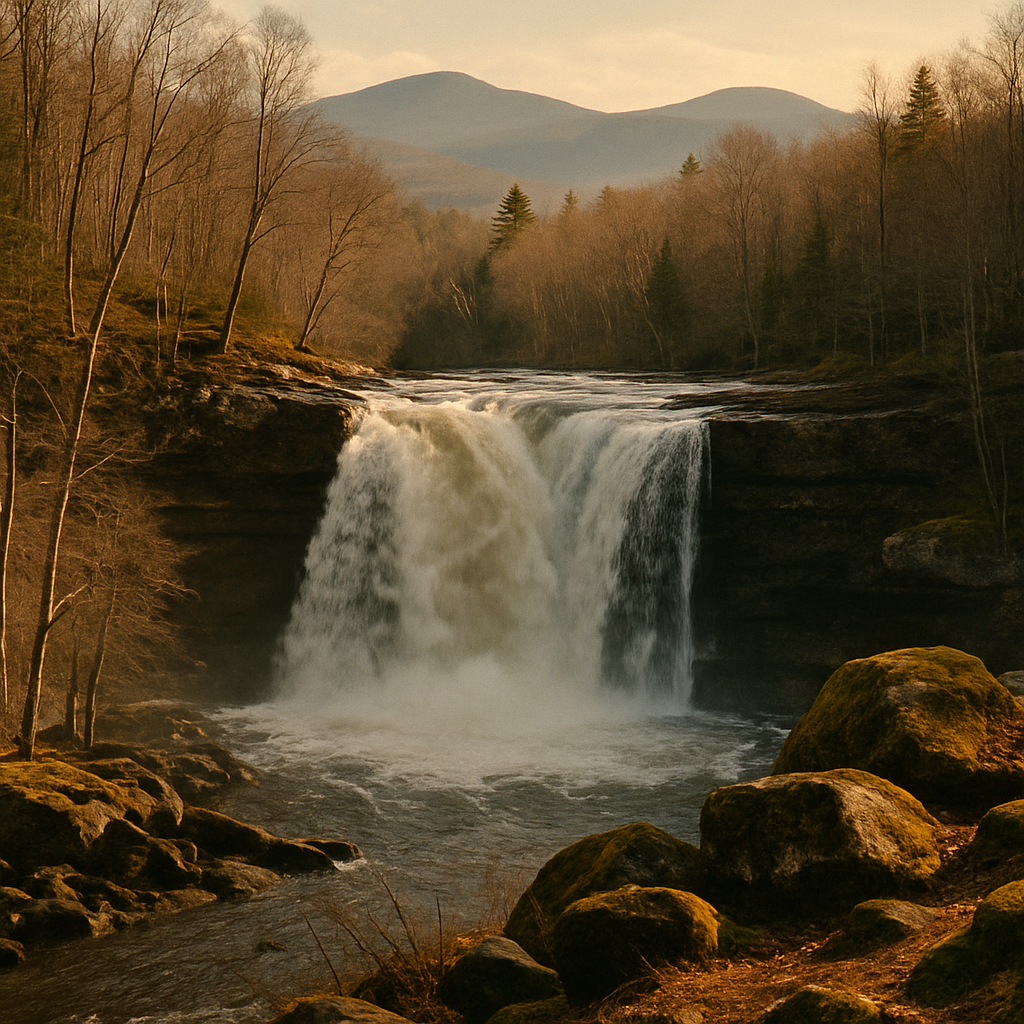
The same melt that swells the gorges puts every waterfall in the Park at its loudest. OK Slip Falls drops 250 feet with a spring roar it loses by July; Rainbow Falls in the Ausable Lakes, Auger Falls on the Sacandaga, Buttermilk below Long Lake — all of them are worth the walk exactly now, when the snowmelt is behind them and the black flies aren't out yet. Follow the sound off a byway pull-off; in spring you rarely have to go far.
PEAK Apr – MayBEST after a warm rain
04 / opening dayOpening Day
The first of April, cold and clear
Brook trout season opens April 1, and for the people who care about it there is no other date on the calendar. The natives hold in cold, clear water over cobble — the streams that have run since the glaciers and the remote ponds the state stocks by float-plane and helicopter. It is not warm and it is not easy; the water is barely above freezing and the fish are where the maps aren't. That is precisely the point.
OPENS 1 AprCOLD water, wild fish
05 / the bogsThe Return
The birds come back to the water
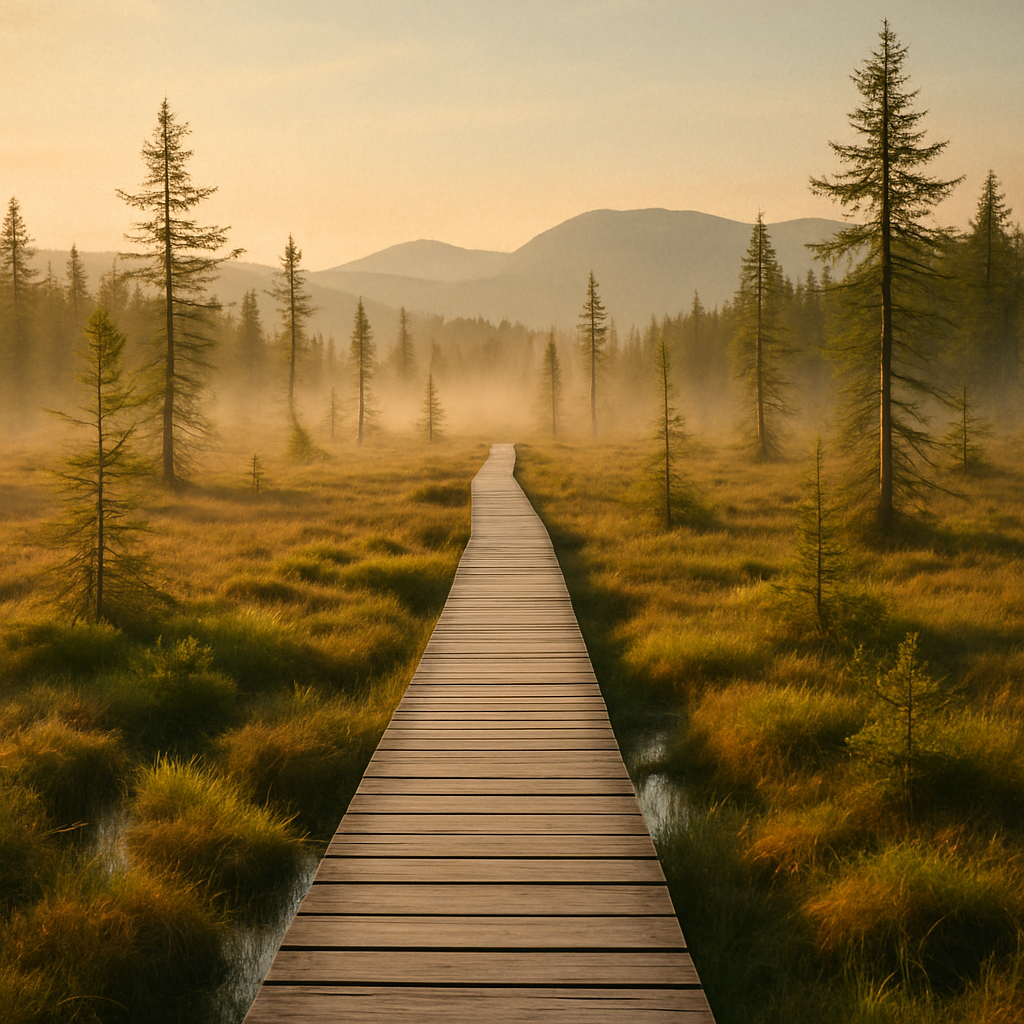
Ice-out is a starting gun for the returning birds. The loons are back on the open leads within days, yodeling over water that had a lid on it a week before. Then, through May, the boreal bogs fill with the spring warbler migration — Bloomingdale Bog and Spring Pond Bog draw birders from three states for species that breed nowhere else this side of Canada. Walk the old rail beds at dawn, before the road warms, and the trees are loud.
LOONS at ice-outWARBLERS through May
06 / the high peaksMud Season
The one season the summits ask you to wait
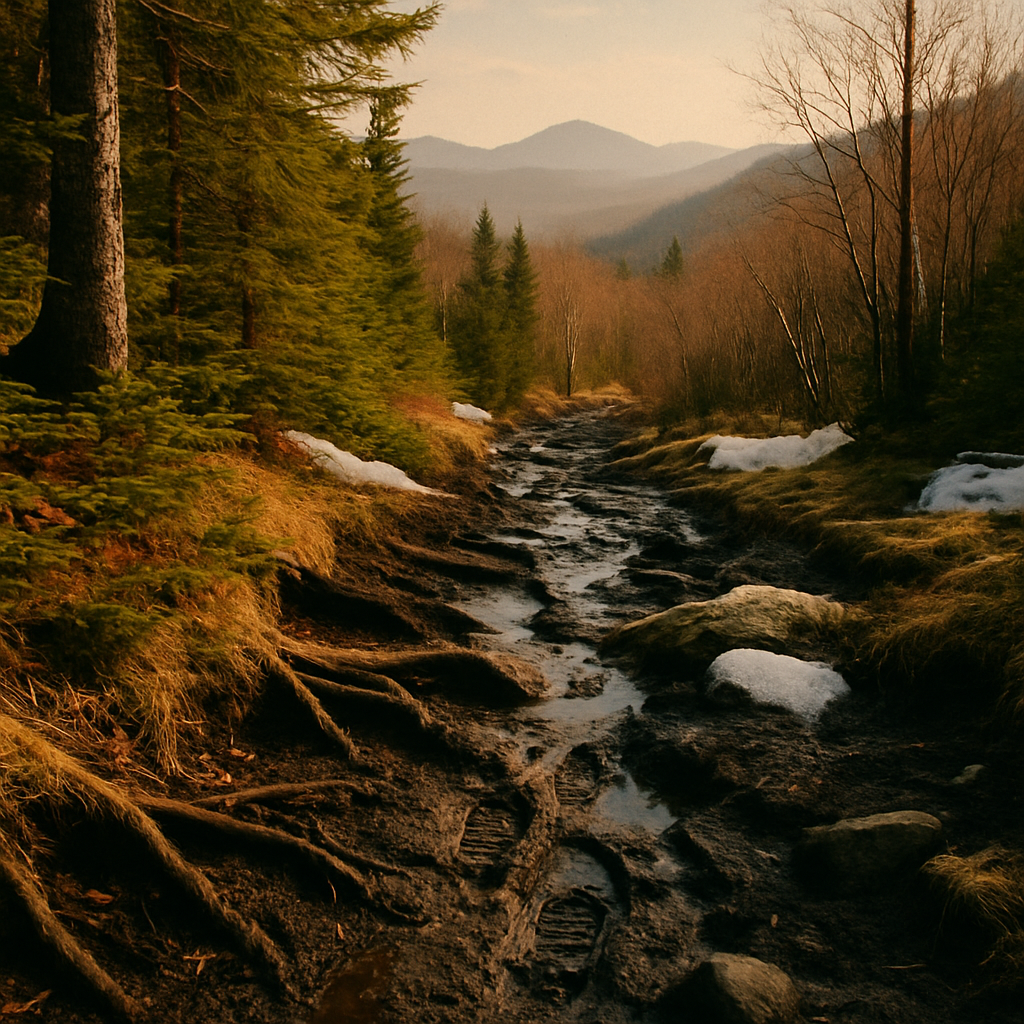
Spring in the high country is mud season, and it is the one time of year the Park politely asks you to stay low. Above about 3,000 feet the trails are a runnel of snowmelt and black mud into May, and boots widening the trail around a puddle do lasting damage to alpine soil that takes decades to recover. The DEC posts a muddy-trail advisory every spring for a reason. Give the summits until Memorial Day; the waterfalls, the paddles, and the rivers are all at their best while you wait.
ADVISORY above 3,000 ftWAIT until the melt clears
§ 03The Beatsfield guide · the season’s at its best