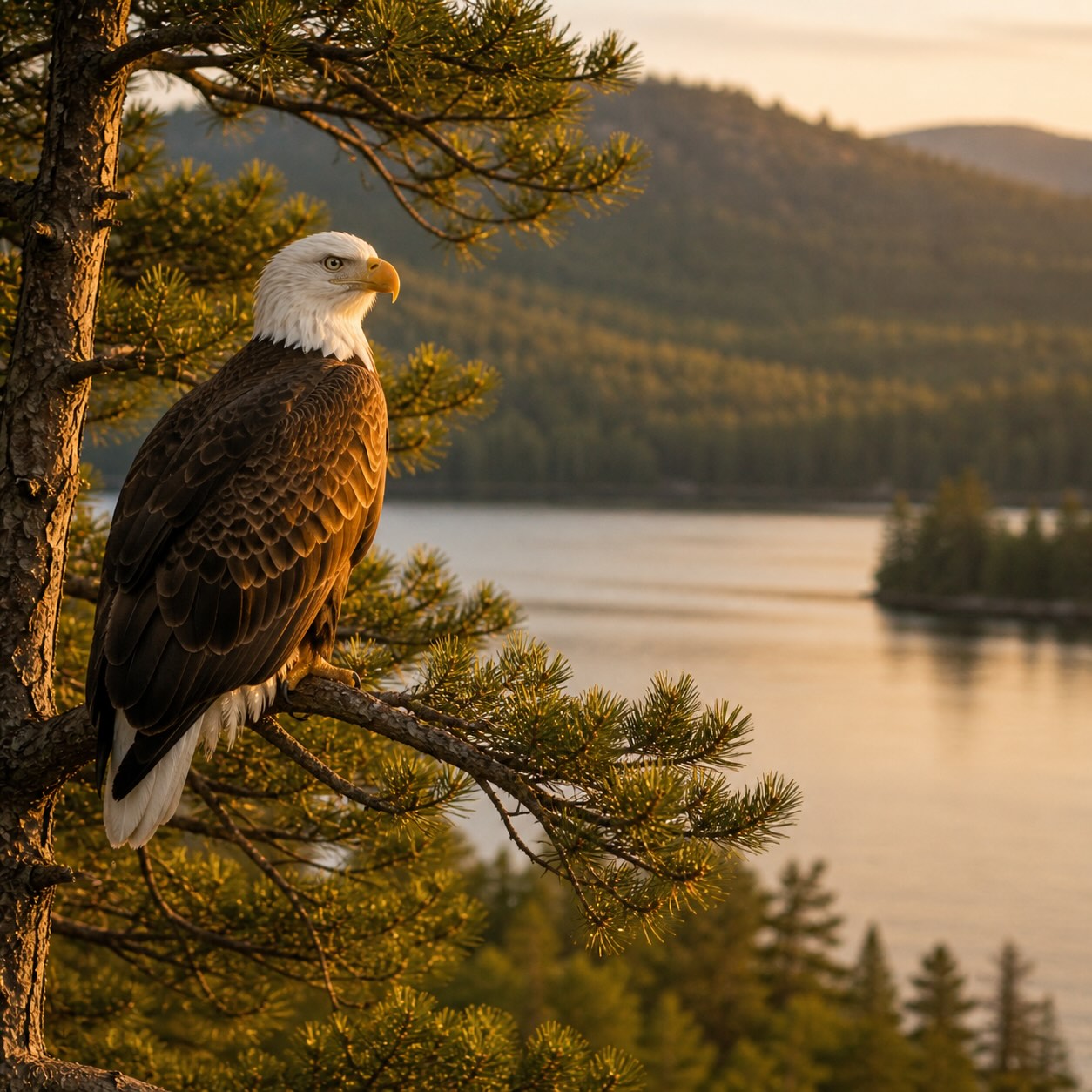
What wildlife watching here is.
The Adirondack Park is one of the great wildlife-watching landscapes in the eastern United States — not because of dramatic megafauna concentrations like Yellowstone or the Smokies, but because of the diversity of intact habitat. Six million acres of protected forest, water, and wetland; over 260 recorded bird species; the largest moose population in the Northeast outside Maine; the strongest common loon population per acre in the Lower 48; nesting bald eagles on dozens of lakes; black bear, bobcat, otter, beaver; and the boreal-forest specialty species (Spruce Grouse, Black-backed Woodpecker, Boreal Chickadee, Bicknell’s Thrush) that are difficult to see anywhere else south of Canada.
Wildlife watching here is, mostly, quiet observation rather than active pursuit. The Adirondack landscape rewards the patient watcher in a canoe at dawn, the early-morning roadside birder at Bloomingdale Bog, the dusk-walker on a low-traffic country road in moose country. The marquee experiences are within reach of any visitor with binoculars, a willingness to be out before sunrise, and a tolerance for sitting still.
The marquee five species.
Common Loon
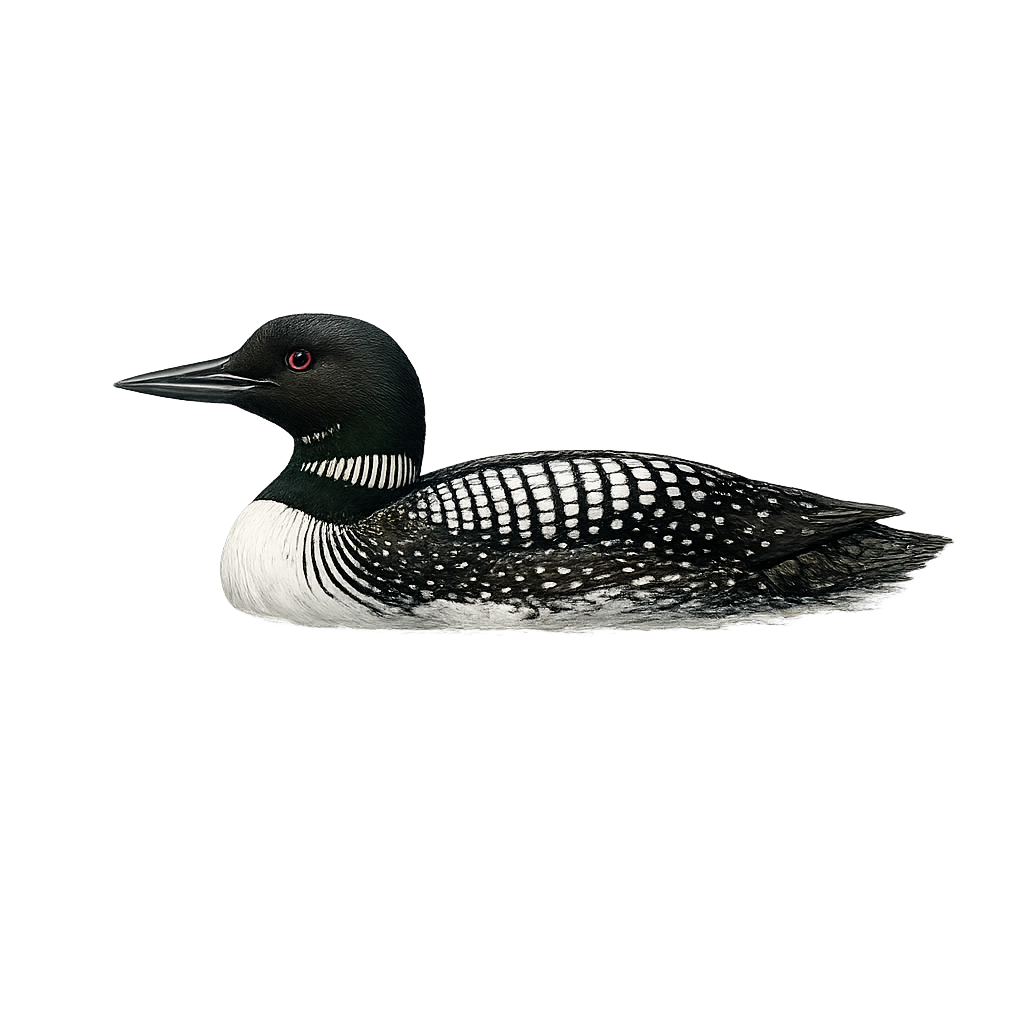
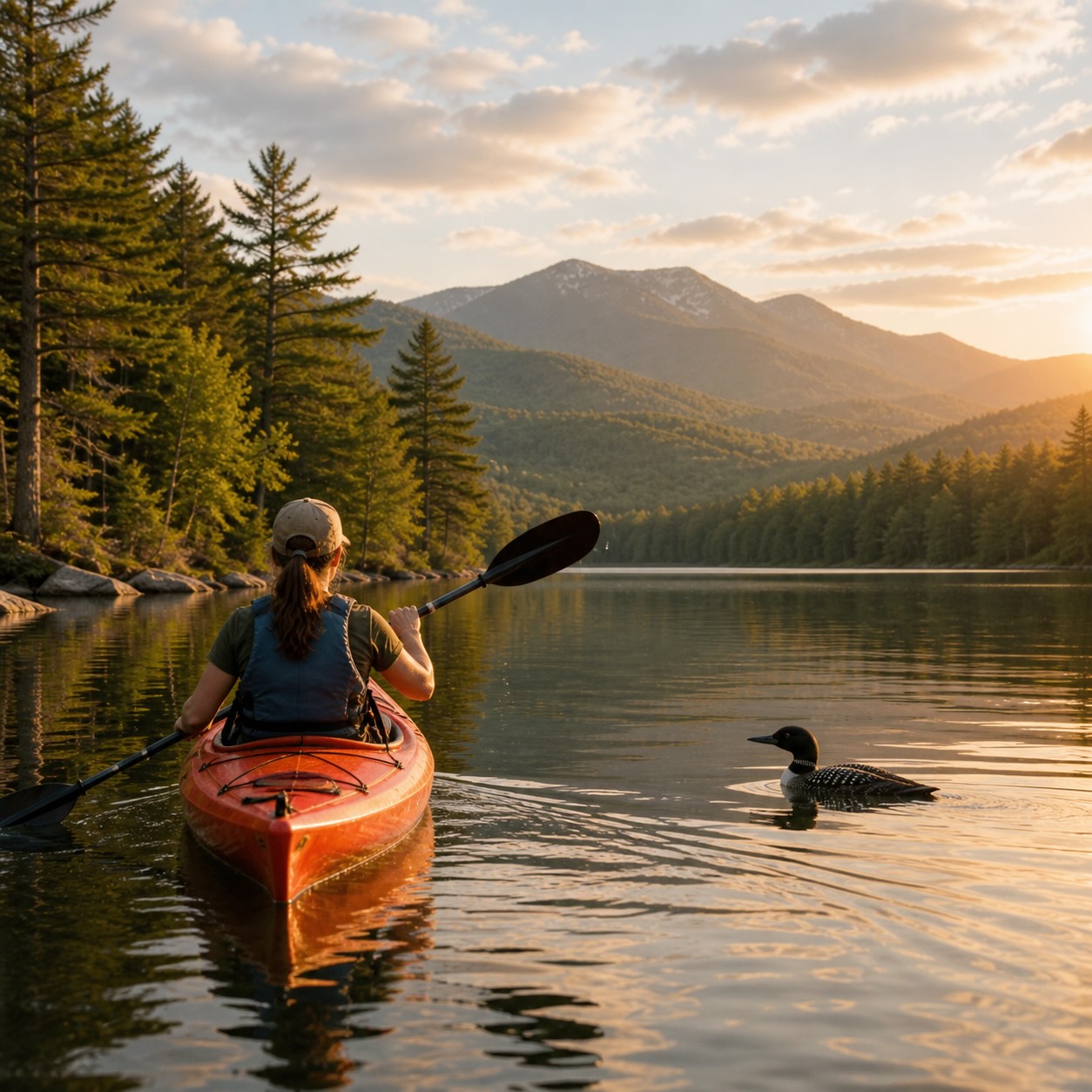
The defining bird of the Adirondacks. Roughly 400 territorial pairs nest on Adirondack lakes each summer, with a strong recovery from mid-twentieth-century declines driven by acid rain and lead fishing tackle. Most paddleable lakes hold at least one nesting pair. Best viewing: dawn or dusk on quiet water, May through September. The territorial wail and the tremolo (alarm call) are the iconic Adirondack soundscape. The Adirondack Center for Loon Conservation runs the regional research and education program out of Saranac Lake.
Moose
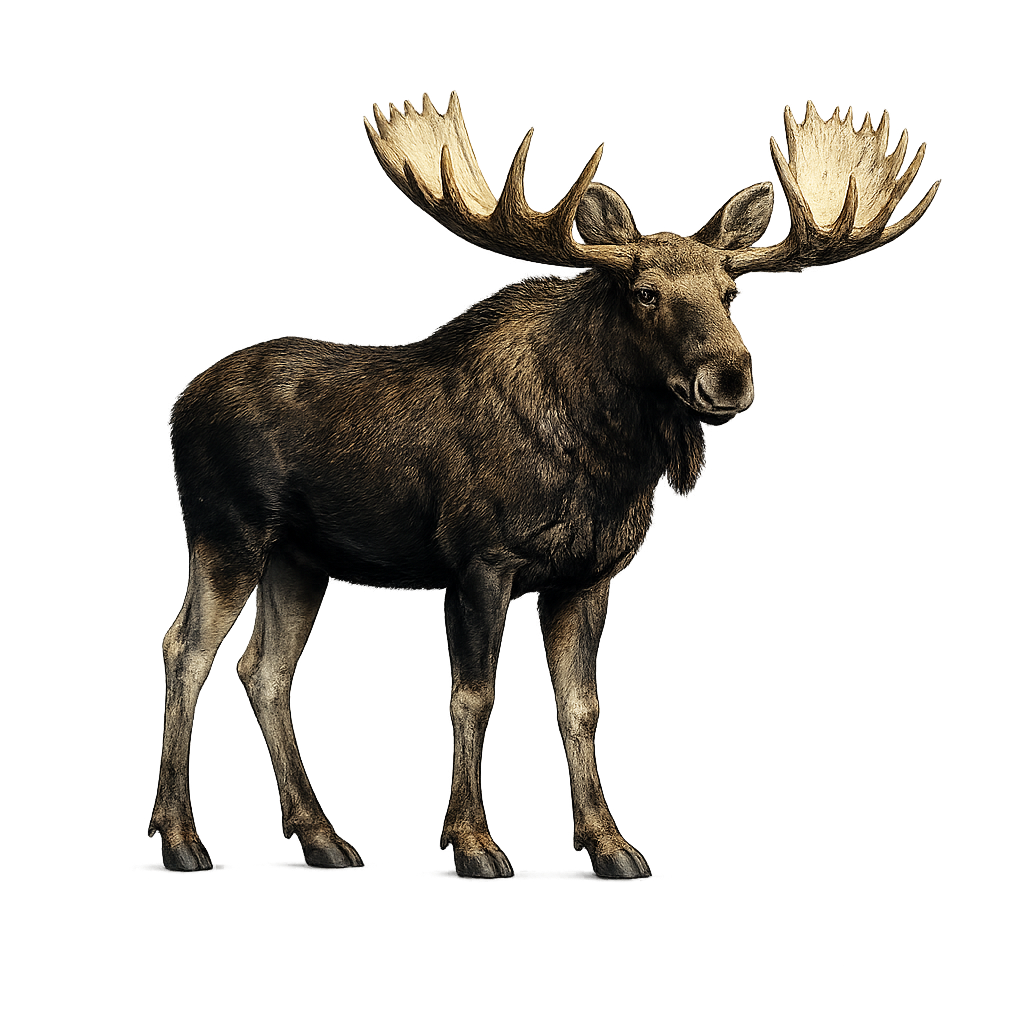
Roughly 800–1,000 moose in the Park (NYSDEC estimates). Concentrated in the central and western Park; the Whitney Wilderness, the Bog River corridor, and the Cranberry Lake region are the most reliable areas. Best viewing: dawn or dusk in marshy areas during May (cows with calves) and September–October (rut). Moose are large, fast, and unpredictable around vehicles; treat them with the same respect you would a bear.
Bald Eagle
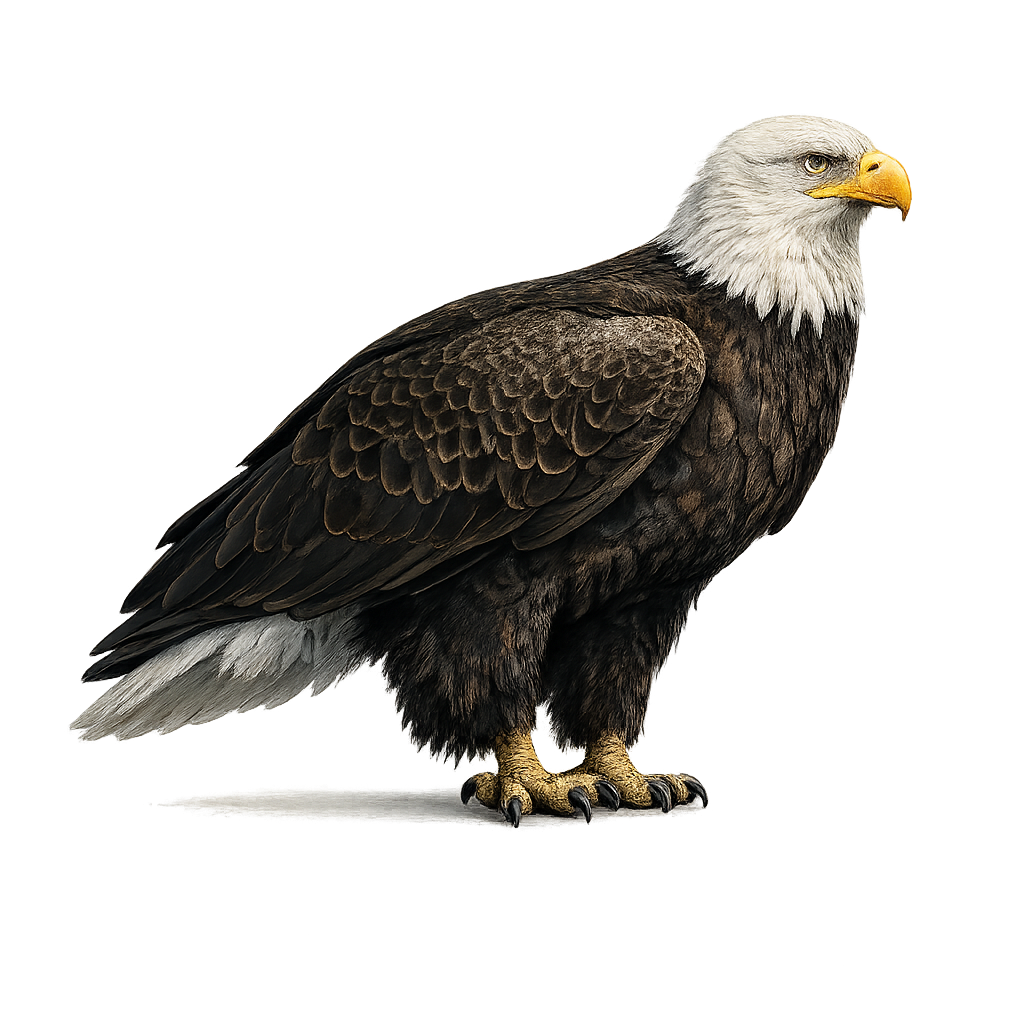
Recovered from near-extirpation in the 1970s, bald eagles now nest on dozens of Adirondack lakes year-round. Most reliably seen on open water in winter — the Saranac River below the Lake Flower dam, the open water at the foot of Lake George, the western Lake Champlain shoreline. Summer: anywhere with a healthy fish population.
Black Bear
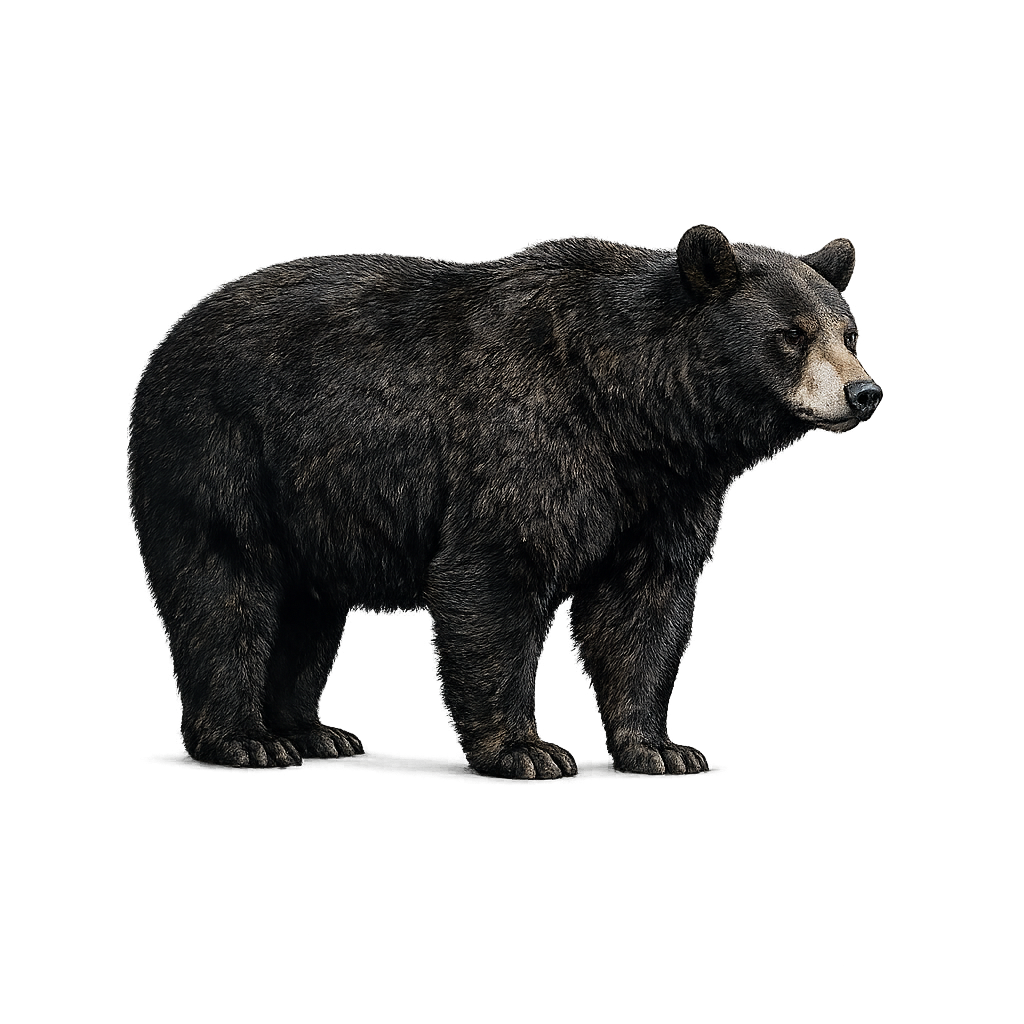
Population estimates vary; the Adirondacks hold one of the densest black bear populations in the eastern U.S. Mostly active dawn and dusk, throughout the warm months. Active around campsites — a habituated bear is a problem bear; store food properly. The chance of a glimpse is real on any backcountry trip; the chance of a problem encounter is almost entirely a function of human food management.
Otter
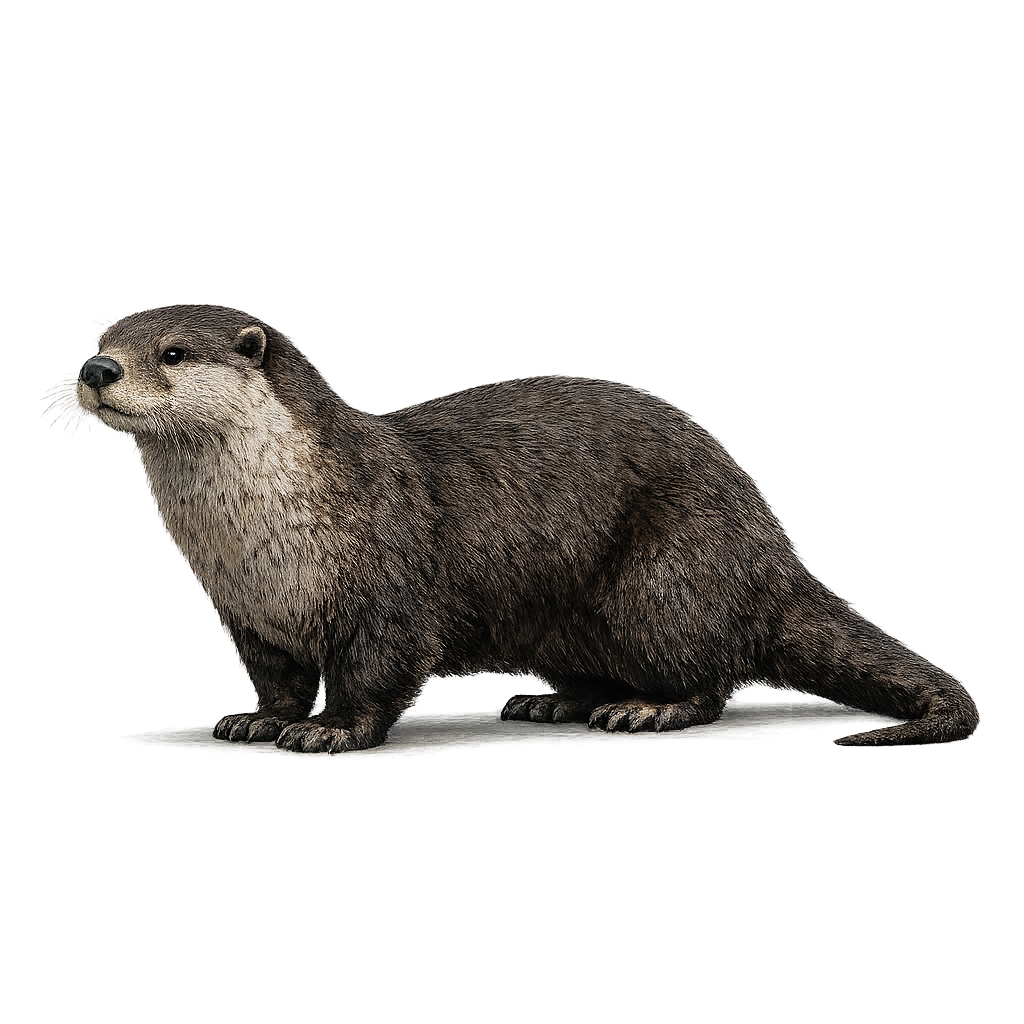
River otters are common across the Park’s waterways and one of the most charismatic Adirondack mammals. Best seen along quiet rivers (the upper Raquette, the Bog River) and in lakeshore wetlands. Late afternoon and early morning. Otters are curious; if you sit still in a canoe near an active otter, they will often approach within twenty feet.
Where to look, by location.
The marquee sites cluster around the Tri-Lakes — but a moose evening in the Whitney Wilderness and a winter-eagle morning at the foot of Lake George span the same trip with two days of driving in between.
The marquee Adirondack birding site. Boreal specialties (Spruce Grouse, Black-backed Woodpecker, Boreal Chickadee), warblers in May, moose tracks year-round.
Family-friendly birding and wildlife observation. Boardwalks through wetlands; beaver ponds; loon viewing; an interpretive center for the species you’re not sure you saw.
Boreal forest specialty area. Spruce Grouse, Black-backed Woodpecker, boreal warblers. Less-trafficked than Bloomingdale Bog.
The most reliable moose-watching area in the Park. Best from a canoe at dawn or dusk in May, September, or October.
Open water all winter; the December-through-February bald eagle viewing site for the Saranac Lake region.
The southern winter open-water concentration. Bald eagles, common goldeneye, common merganser, occasional rough-legged hawk overhead.
Spring birding — the warbler migration.
The spring warbler migration through the Adirondacks — running roughly the second week of May through the first week of June — is one of the great underweighted birding experiences in the eastern United States. Twenty-plus warbler species pass through or breed in the Park: Yellow-rumped, Black-throated Green, Black-throated Blue, Blackburnian, Magnolia, Chestnut-sided, Northern Parula, Canada, Mourning, Tennessee, Nashville, Bay-breasted, Blackpoll, Cape May, Cerulean, plus the breeding boreal specialty Bicknell’s Thrush at higher elevations.
The marquee sites for the warbler migration are Bloomingdale Bog, the Paul Smith’s VIC, Spring Pond Bog, and the higher-elevation Whiteface Mountain Veterans Memorial Highway (which provides road access to Bicknell’s Thrush habitat).
The Adirondack Birding Festival is held annually in early June — centered on the Saranac Lake region, with guided morning bird walks, evening programs, and venue partnerships across the Tri-Lakes. It is the single best weekend on the calendar for a visiting birder to land in the region.
The Adirondacks hold rare boreal-forest bird species — Spruce Grouse, Black-backed Woodpecker, Boreal Chickadee, Bicknell’s Thrush, and others — that are difficult to see anywhere else south of Canada. The known reliable sites are Bloomingdale Bog, Spring Pond Bog, and the spruce-fir habitat above 3,000 feet on the High Peaks ridges. Local birders will share location intel cautiously; respect the request.
Guided wildlife trips.
A guide is the fastest way to compress the Adirondack birding learning curve from years to days. The boreal specialties in particular reward someone who knows where the Spruce Grouse have been seen this week — not last May.
Guided birding day trips and multi-day workshops. Specialists in boreal species and the spring warbler migration. The regional birding institution.
Loon-focused programming, research-based education, and occasional public loon-banding events. The summer-evening loon paddle is a standout.
The Wild Center runs guided naturalist walks, beaver-pond evenings, owl prowls, and other field programs throughout the warm months. Family-friendly and accessible.
ADK chapters run member field trips year-round, often including birding and wildlife observation. Chapter outings are open to non-members for nominal fees.
Guided dawn paddles in the St. Regis Canoe Area — loons, otters, occasional moose. Intimate group sizes.
Both organizations publish wildlife-watching guides, identification resources, and annual reports. The WCS Adirondack Program is also the organizer of Cycle Adirondacks.
Ethics, gear, and how to look.
Ethics
- Distance Stay back. The rule of thumb: if the animal changes its behavior because of you, you are too close. Use binoculars and a long lens, not your feet.
- No food Never feed wildlife, ever, for any reason. A fed animal becomes a problem animal. The most consequential thing the average visitor can do for Adirondack wildlife is to never share lunch.
- Quiet No drone footage of wildlife. No playing recorded calls to lure birds in (a common but ethically contested practice; in the Adirondacks the consensus is don't). No flash photography of nocturnal animals.
- Stay on trail in sensitive areas Bog boardwalks exist because off-boardwalk traffic crushes the boreal-bog habitat that holds the birds you're trying to see.
Gear
- Binoculars 8×42 is the standard. 10×42 if you have a steady hand. Spend more than $200 if you can; the optics matter.
- A field guide Sibley's Eastern North America is the standard. The Merlin Bird ID app is excellent for identification, including by song.
- A notebook The Logbook on AdirondackRegion.com is built for this; you can also keep your own paper journal and transfer entries.
- Patience The most important piece of gear. The species are there. The watcher who sits still for forty minutes sees what the watcher who walks for forty minutes does not.
How to look
Be out at dawn. The single most consequential decision in wildlife watching is the start time. Dawn (and the hour before sunset) is when most Adirondack mammals are active, when birds are most vocal, and when the light is photographically best.
Stay still. Pick a spot, sit, wait. Forty minutes of stillness will show you more than four hours of walking.
Listen first. Most birds are heard before they are seen. Most mammals are heard or smelled before they are seen. Looking at the woods is a different skill than walking through them; develop the looking skill.
“The species are there. The watcher who sits still for forty minutes sees what the watcher who walks for forty minutes does not.”
Sources & further reading.
This guide is editorial — written to help you plan well — and is not a substitute for current NYSDEC advisories, seasonal boardwalk closures, or the day-of weather conditions on your chosen site.