Sheet The High Peaks Color LineSeason peak ~ 6 Oct
The Turn.reading peak color off the map
Fall begins · in
—
September equinox
First frost · typical
Sep 21
Lake Placid basin · 1,800 ft
Peak color · typical
Oct 12
park-wide · 12-yr record
Sunset · today
6:19 PM
the light is going earlier
§ 01The Lead · The Foliage Report44.19°N 73.79°W · +4,000 ft
How the color moves · summit to shoreline
The Turn
Peak is not a weekend. It’s a wave four to six weeks long that starts on the summits in September and comes downhill all October. Learn to read it and you stop chasing the color — you meet it.
The Adirondack RegionFiled from the Route 73 corridor~ 5 min read
The first red is always in the wrong place. You go looking for autumn up on a mountain and find it instead in a roadside swamp — a single red maple, weeks ahead of the hills, standing in wet ground with its crown already scarlet while everything around it is still deep July green. That is the turn giving itself away early. It does not arrive all at once, and it never starts where you expect.
Summer gets the crowds and winter gets the Olympics; fall is the season the people who live here keep for themselves. The black flies are gone. The humidity breaks and the air holds at sweater temperature for weeks. In the dry October light a summit view runs forty miles, clear to Vermont. And because the drop from the Champlain shore to the summit of Marcy is more than four thousand feet, the color can’t happen everywhere at once: it starts high in mid-September and works downhill for a month. There is no single weekend to hit or miss — only where the wave is today.
A sunny September with cold nights makes a red year. It’s chemistry, and you can read it right off the sky.
§ 01 — The ChemistryWhy the leaves change color
The gold was there all along. Every leaf carries carotenoid pigments — the same family that colors carrots and corn — masked all summer under green chlorophyll. When the shortening days tell the tree to shut down for winter, it stops renewing that chlorophyll, pulls the valuable nitrogen back into its wood, and the green simply drains away. The gold of a birch is not something the leaf makes in October. It’s something the leaf finally stops hiding.
The reds are different — those the tree makes fresh, on purpose. Anthocyanins, the scarlet of a red maple and the wine of an oak, don’t exist in the summer leaf at all; the tree manufactures them in the last weeks of the leaf’s life, out of sugars trapped in the blade as the stem seals itself off. Bright sun makes more sugar; cold nights, just above freezing, lock it in. Which is why a sunny September with crisp nights makes a red year, a warm gray fall leans yellow and rust, and a drought summer turns early and burns out fast. Stand on a dock the first genuinely cold night of September and you already know something about the show to come.
It breaks the same way most years, and it breaks from the top down. In mid-September the first color shows above twenty-five hundred feet — the flanks of the High Peaks, the ridges around Whiteface — while the villages still read as summer. By the last week of September, Route 73 from Keene Valley to Lake Placid runs at full color, past Chapel Pond and the Cascade Lakes. The first week of October the peak moves to the center of the Park — Long Lake, Blue Mountain Lake, Indian Lake, and the Route 30 corridor that strings them together, an eighty-mile drive with a fraction of the traffic.
The second week it reaches the western and southern Park — Old Forge and the Fulton Chain, the Schroon corridor, the Lake George shoreline — which obliges with an Oktoberfest the same weekend and, fair warning, the crowd apex of the entire fall. The Champlain Valley, warmed by the lake, holds its color longest, into the third week, orchards in full press season along the shore. And last of all, after the hardwoods are bare, the tamaracks in the Route 30 bogs near Paul Smiths go gold — the quietest good day of the season, if you know to go looking for it.
So you don’t chase peak; you position for it. Base where the color will be that week, drive the high roads at first light before the pull-offs fill, and let the wave come to you. The instrument below reads it live, region by region, against a twelve-year record. Everything after that is just knowing where to stand.
§ 02Cornerstone · The Foliage Trackerlive instrument
Regional Foliage IndexLIVE · reading now
0%
Peak.
region-wide color, all elevations
▼ PEAK BAND
0 · green25 · early50 · turning75 · near peak100 · past
By region · N → S
Keene & the High Peaks44.2°N · 3,500 ft+94%
Lake Placid44.3°N · 1,800 ft94%
Saranac Lake44.3°N · 1,540 ft94%
Old Forge43.7°N · 1,710 ft78%
Long Lake43.9°N · 1,650 ft94%
Indian Lake43.8°N · 1,660 ft86%
Schroon Lake43.8°N · 810 ft78%
Lake George43.4°N · 320 ft78%
Updated from satellite · Copernicus CLMS NDVI · 10-day composite · Oct 9satellite estimate · field reports outrank it · Open the live tracker →
Peak color climbs down the mountain, not across the map. The High Peaks turn first and burn out fast; the valleys hold another two weeks. read it top-down.
§ 03The Field Chart · eight treesleaf · color run · where
Who turns what color, when.
Learn these eight and a hillside stops being “foliage” and becomes legible. early scarlet, an orange wave, gold roadsides, late wine.
Plate I
From Labor Day
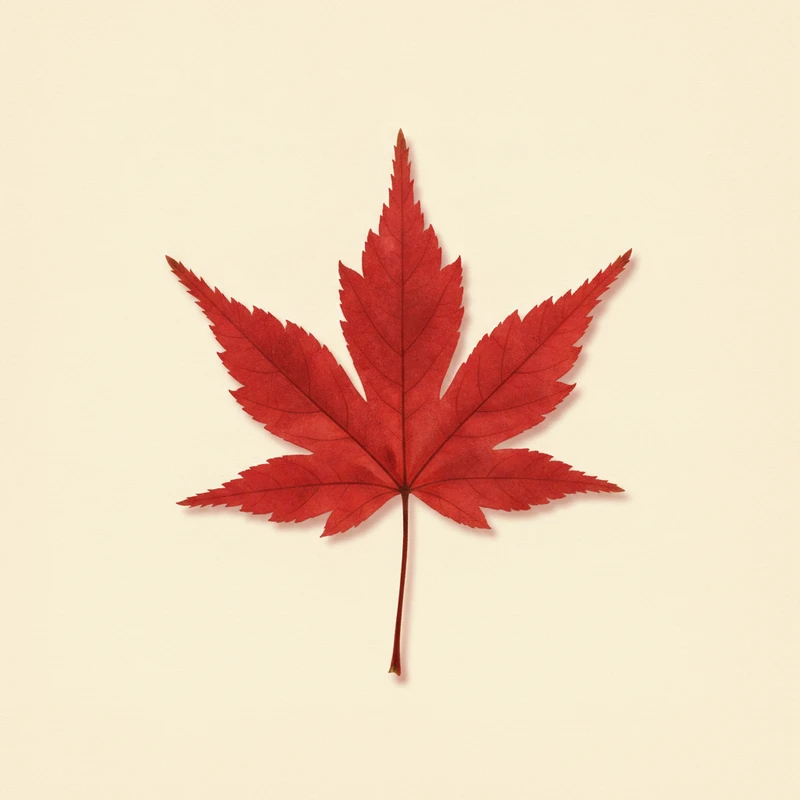
Red mapleAcer rubrum · “swamp maple”
summer → peak
Opens the season. The scarlet you see from the road in September — often while everything around it is still green — is almost always this tree, running early on wet ground.
Where: Swamps, shorelines, beaver meadows
Plate II
Late Sep – early Oct
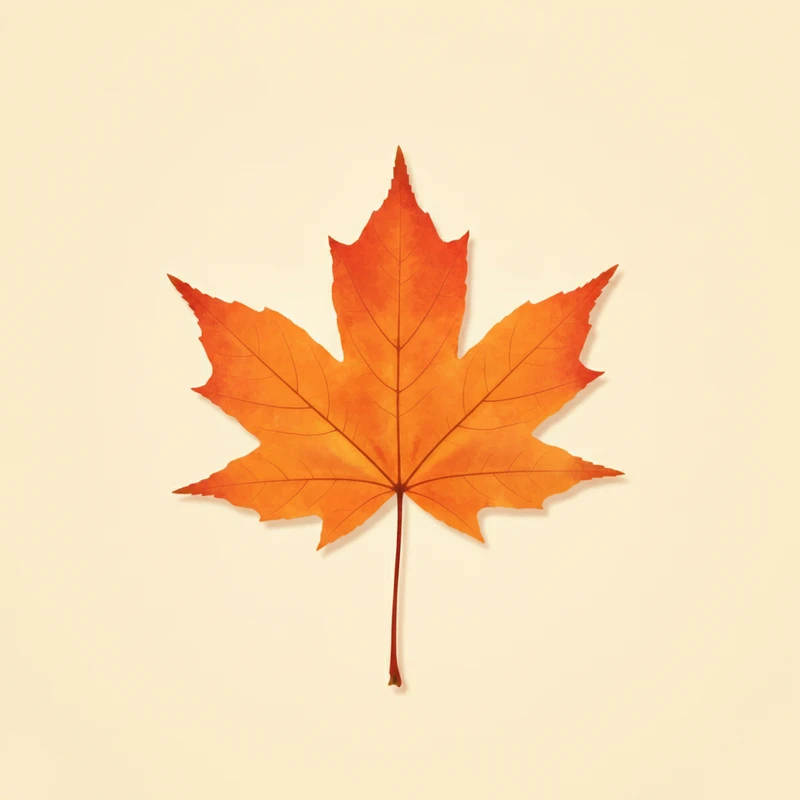
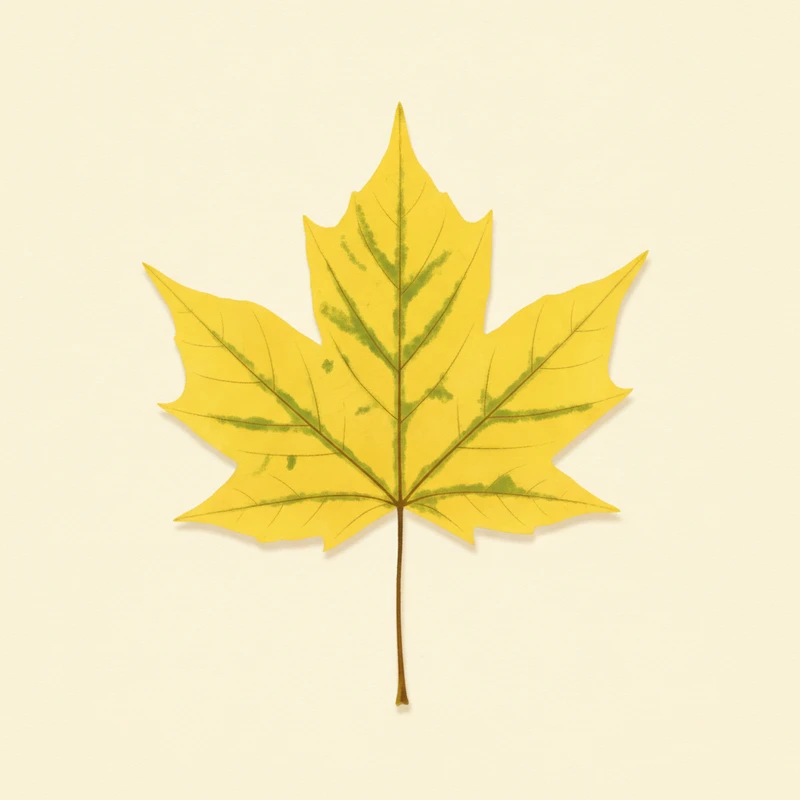
Sugar mapleAcer saccharum
summer → peak
The postcard tree. Carries the middle weeks in orange shading to flame, whole hillsides at a time — the same trees that ran the sap buckets in March run the show in October.
Where: Hardwood hillsides, village streets
Plate III
Early Oct
Striped mapleAcer pensylvanicum · “moosewood”
summer → peak
The trail-side maple — dinner-plate goosefoot leaves and green-striped bark, turning a clear lemon yellow at eye level. Moose browse it; the local name is earned.
Where: The understory, along every trail
Plate IV
Early – mid Oct
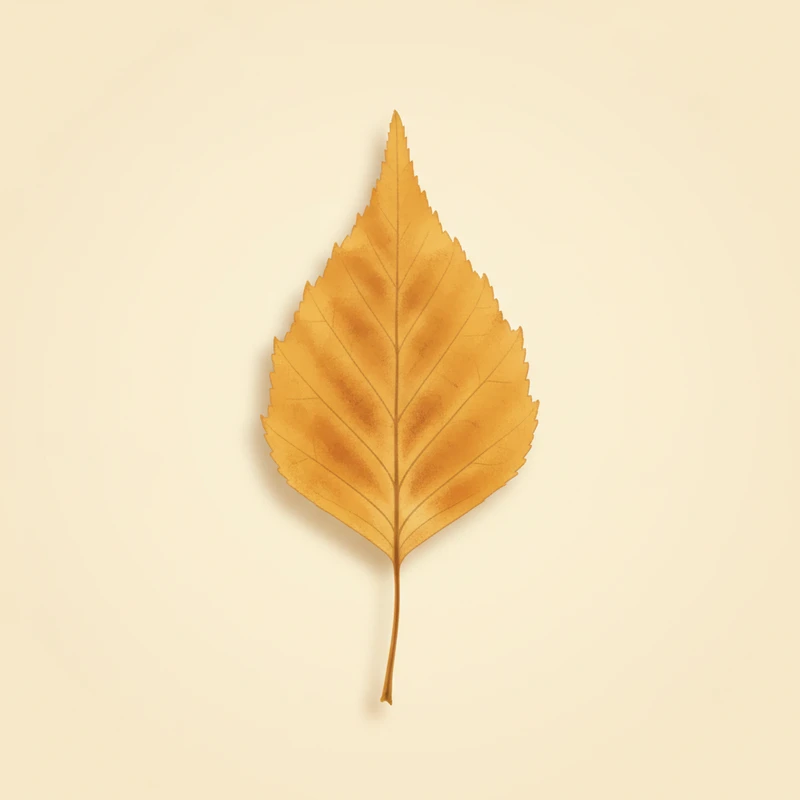
Paper birchBetula papyrifera · “white birch”
summer → peak
Amber-gold against white bark — the Adirondack two-tone. Its cousin the yellow birch, bronze-barked and higher on the slopes, turns the same gold a beat later.
Where: Old burns, lakeshores, postcard groves
Plate V
Early – mid Oct
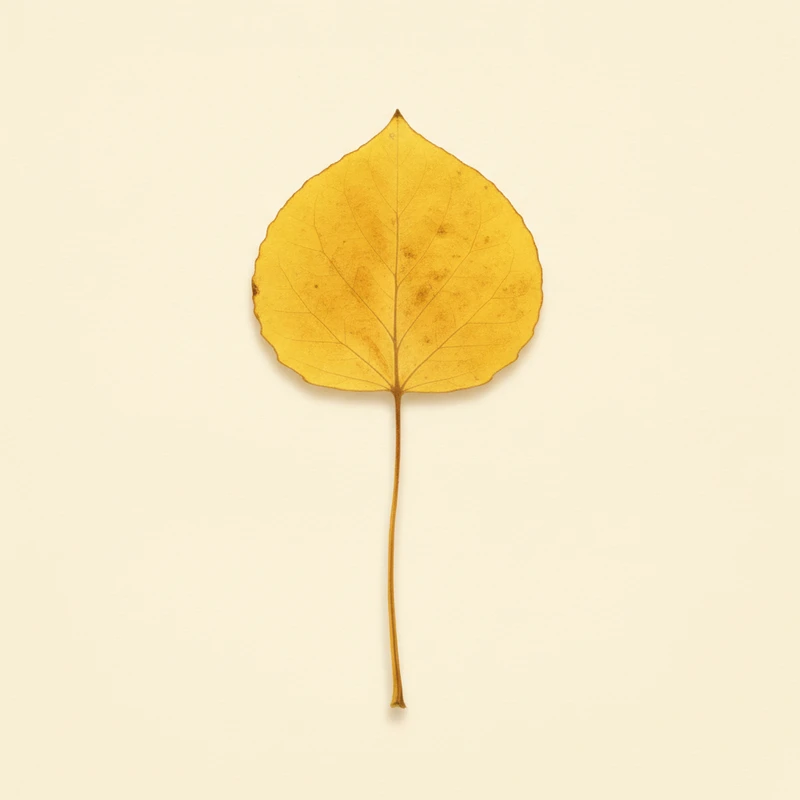
Quaking aspenPopulus tremuloides
summer → peak
The shimmer. A flattened leaf-stem lets every round leaf tremble in wind the other trees don't feel, so a turning aspen stand doesn't just glow — it moves.
Where: Roadsides, clearings, young forest
Plate VI
Mid Oct — then holds
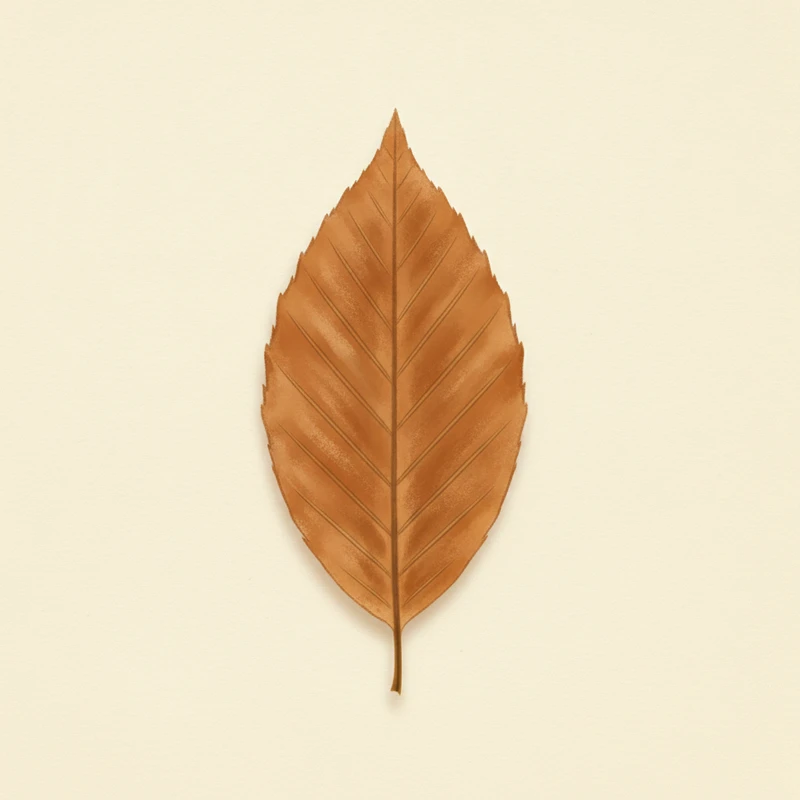
American beechFagus grandifolia
summer → peak
Copper to parchment — and then it refuses to let go. Young beech hold their pale dried leaves all winter, which is why the November understory rustles.
Where: Mixed hardwoods, with the maples
Plate VII
Mid – late Oct
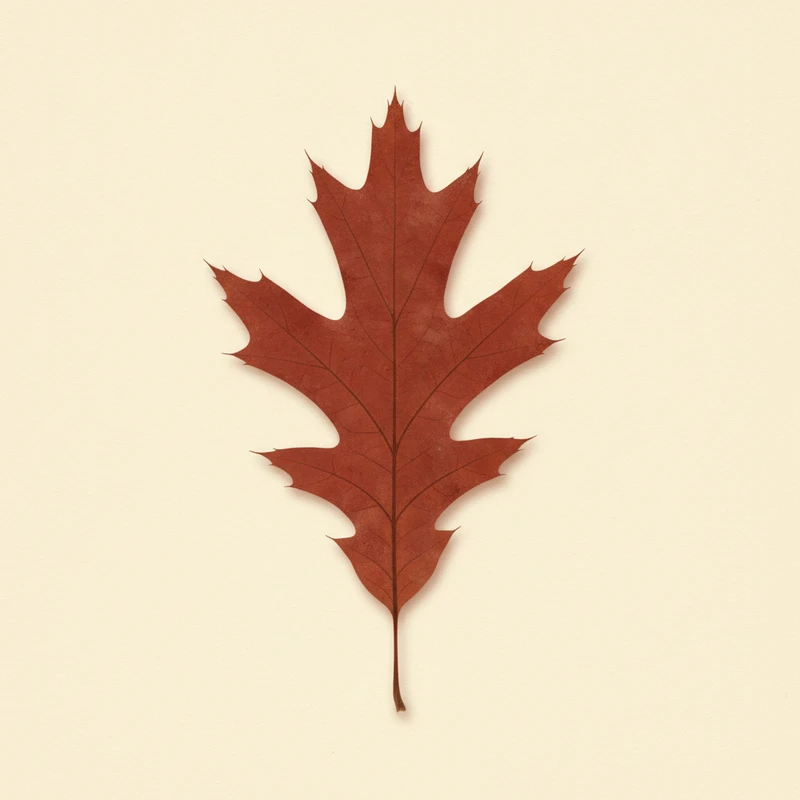
Northern red oakQuercus rubra
summer → peak
The late shift. Russet to deep wine-red after the maples have finished — the reason the Lake George shoreline peaks a full two weeks behind Keene Valley.
Where: Lake George, the Champlain shore, low warm slopes
Plate VIII
Late Oct – Nov
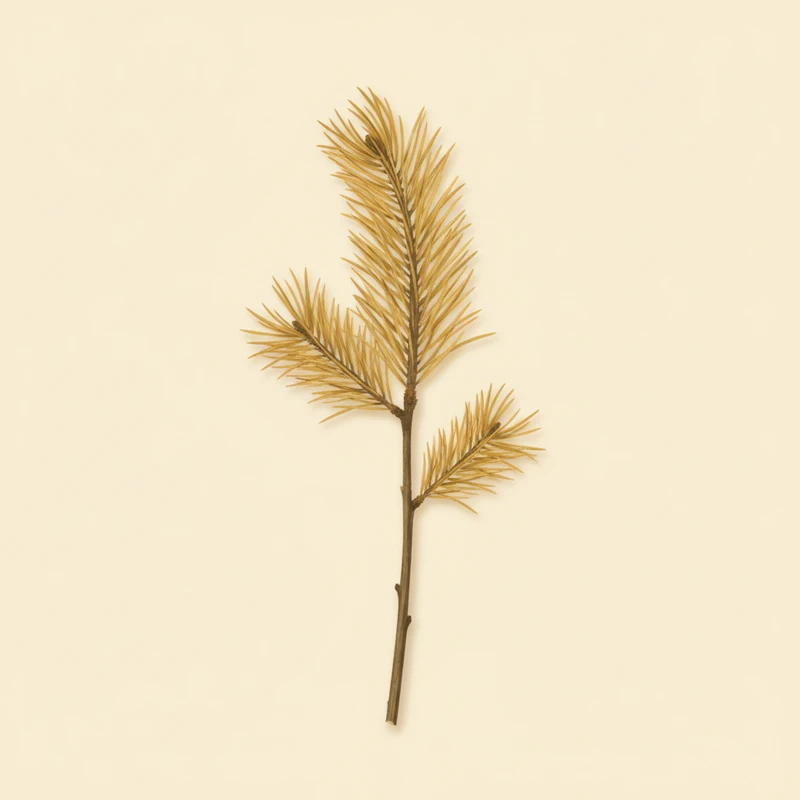
TamarackLarix laricina · “eastern larch”
summer → peak
The season's last word: a conifer that turns smoky gold and drops every needle, lighting the bogs weeks after the hardwoods go bare. Most visitors never stay long enough to see it.
Where: Bogs — Paul Smiths, the St. Regis country
And the dark green that makes it all pop: red spruce, balsam, hemlock, and white pine hold the ridgelines all season. The Adirondack show reads so vividly precisely because it burns against that conifer backdrop — something the all-hardwood states can’t stage.
§ 04The Calendar · week by weeka typical year · ±1 week
Where the wave breaks each week.
The typical year. For where the color actually is right now, the tracker above reads the Park from orbit; every date here carries an implicit ±1 week.
Mid-September — the first turn. Color starts above 2,500 feet: the flanks of the High Peaks, the ridges around Whiteface, the red maples in the swamps. The villages still read as summer. The sleeper week for hikers — summit views over a turning canopy, warm valley afternoons, the summer crowds gone home.
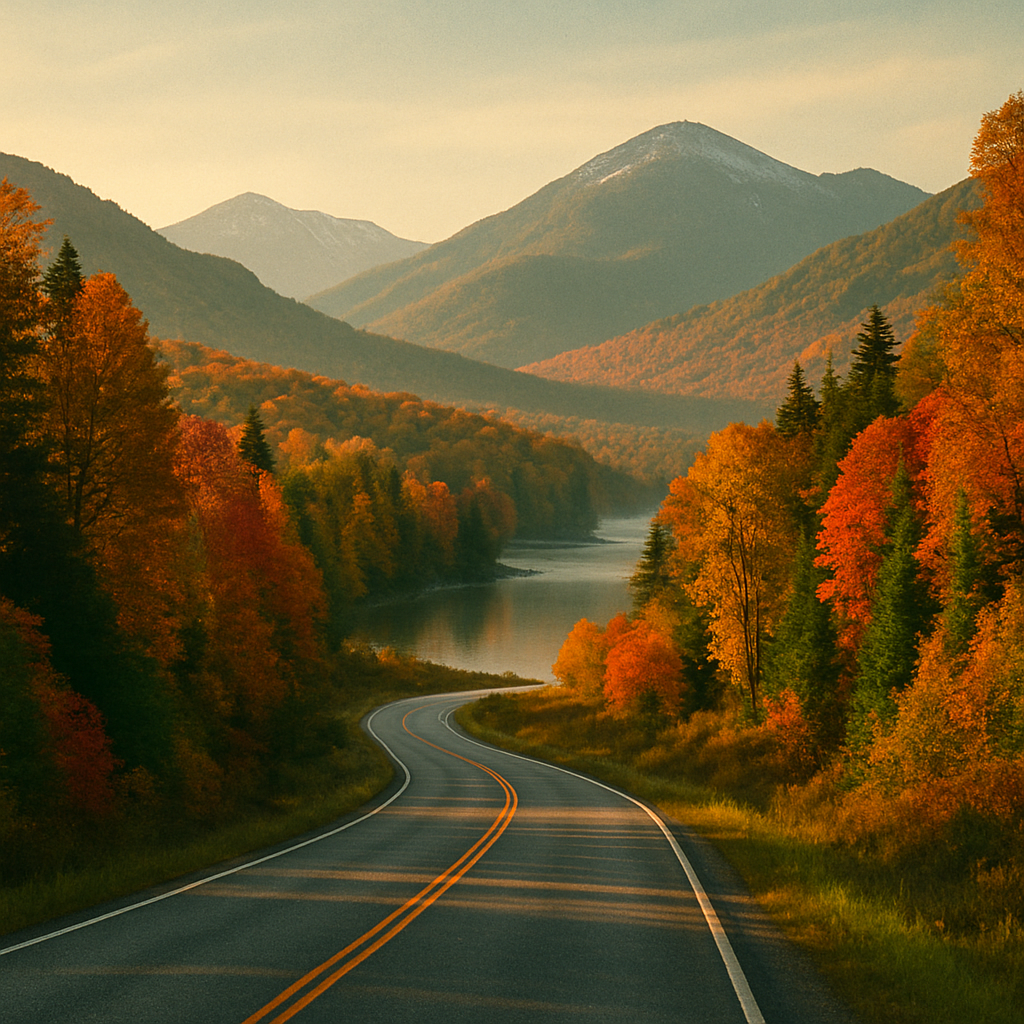
Last week of September — the High Peaks peak. The marquee week for the high country. Route 73 from Underwood through Keene Valley to Lake Placid runs at full color — Chapel Pond, Cascade Pass, the walls above the Ausable lakes. Book lodging well ahead; Keene Valley knows exactly what week it is.
First week of October — the central plateau. Peak moves to the center of the Park: Long Lake, Blue Mountain Lake, Indian Lake, and the Route 30 corridor that strings them together. The week for the long interior drives — sustained color for eighty miles with a fraction of Route 73’s traffic.
Second week of October — the western & southern Park. Old Forge and the Fulton Chain, the Schroon corridor, and Lake George hit peak. The 9N shoreline drive is at its best, the village obliges with an Oktoberfest the same weekend — and this is the crowd apex of the entire fall.
Third week of October — the Champlain Valley holds last. The lake-warmed corridors keep their color longest. The Westport-to-Essex stretch holds strong into the third week, with the orchards in full press season alongside.
Late October into November — tamarack gold. The bogs along Route 30 near Paul Smiths and the wetlands of the St. Regis country go gold last, after the hardwoods are bare. Pair a tamarack drive with a diner lunch and you have the quietest good day of the season.
§ 05The Autumn Field Guide4 stations · plotted
Where to chase the color.
Drives, lookouts, and orchards plotted against the turn. cross-referenced to the tracker.
01 · scenic bywaysNY-73 · NY-30
Leaf-peeping drives.
Run the Cascade Lakes on NY-73 at first light, then loop the Ausable road while the High Peaks band is lit. The valley roads stay green another week — save them for the second trip.
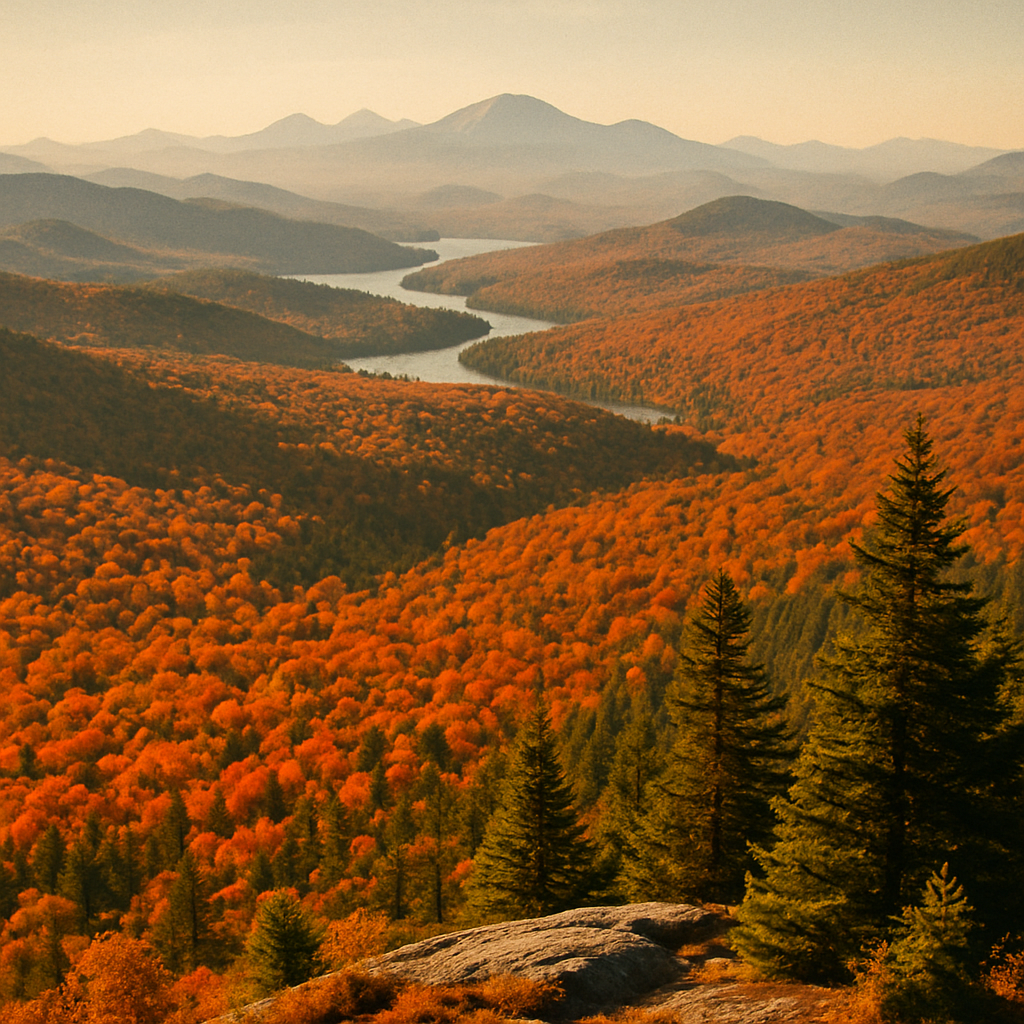
Hurricane, Goodnow, Bald — the old fire towers put you above the canopy where the whole watershed reads at once. Above the turn line, you look down onto peak color instead of up into it.
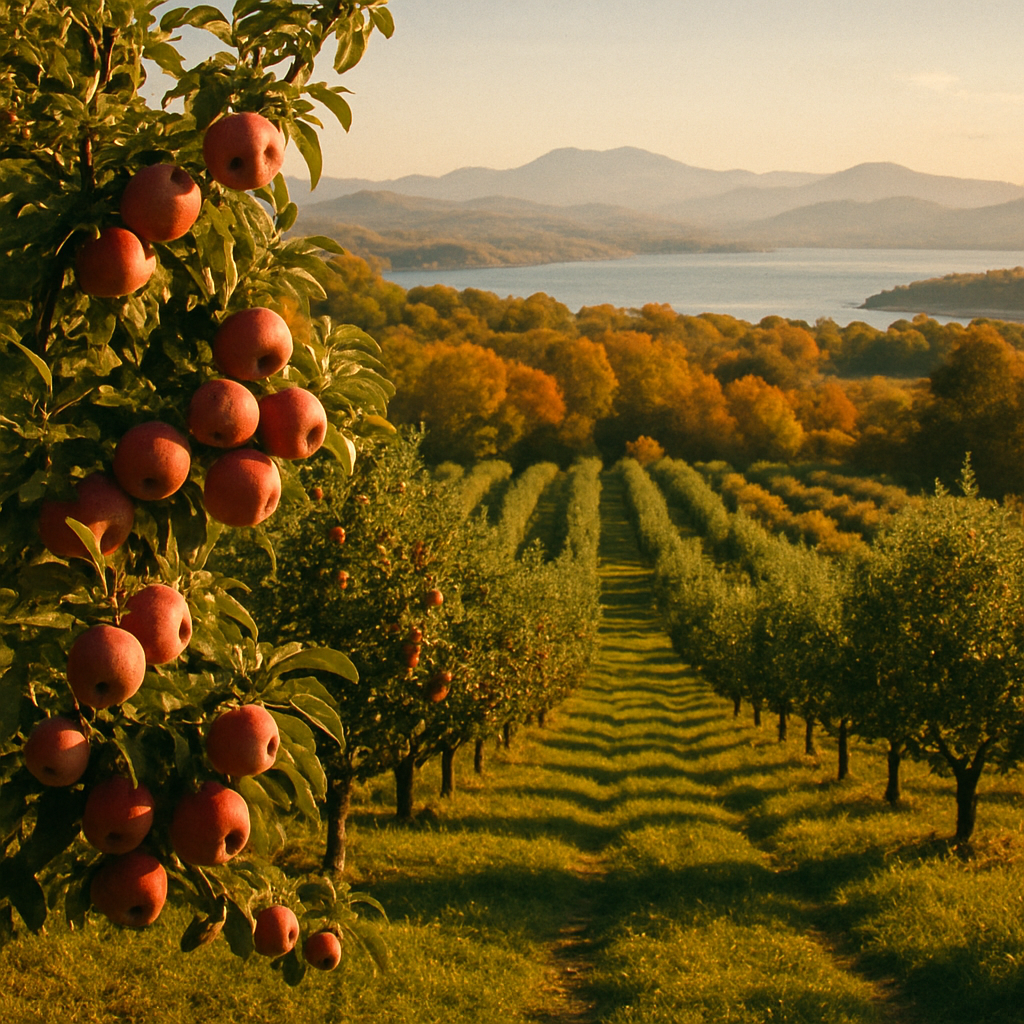
The valley warmth that delays the leaves ripens the fruit. Pick McIntosh and Cortland along the Champlain shore, then press the drops into cider on the drive home while the hills go gold overhead.
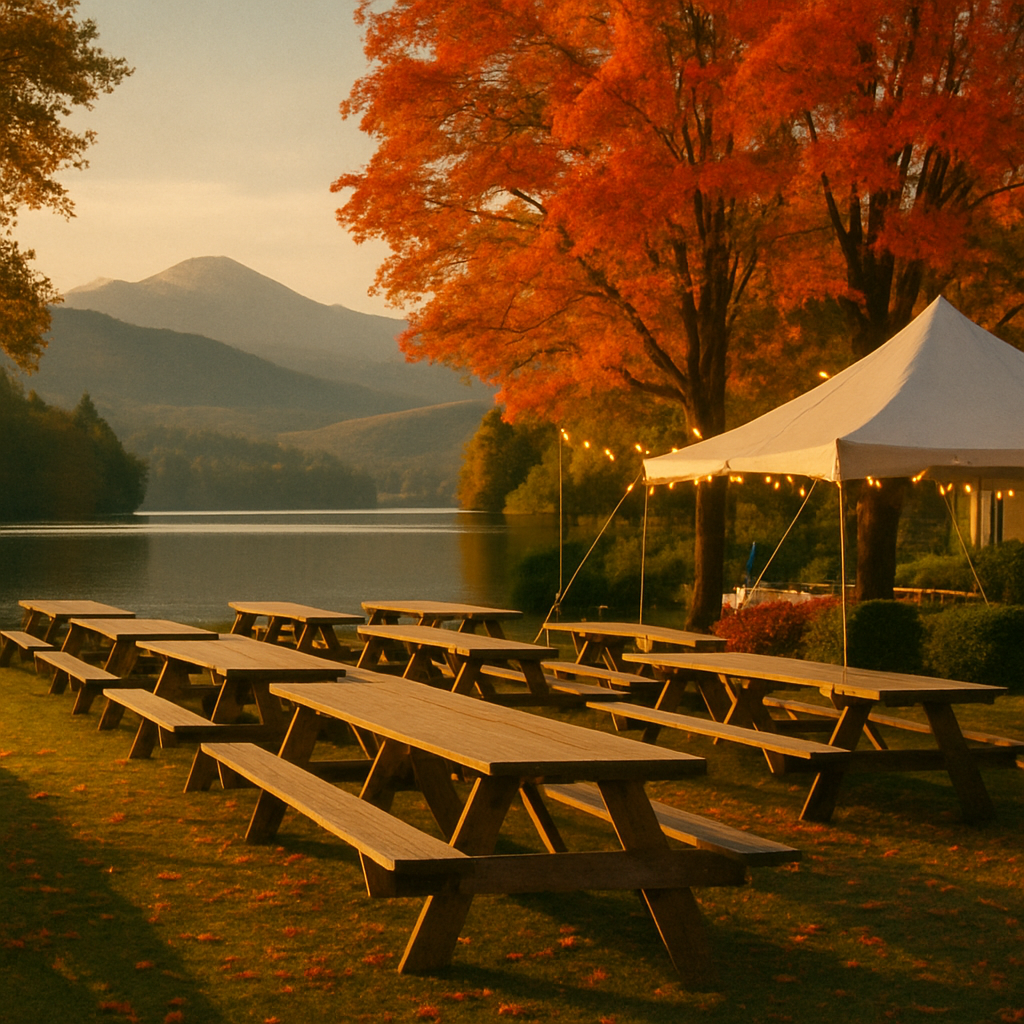
When the color peaks up high, the towns down low raise the tents. Long tables, a brass band, and the season's last warm afternoons before the frost line drops to the water.