
Panther Mountain Trail.
A short connector through forested terrain, this trail spans just over half a kilometer and is marked by red disks maintained by the state's Department of Environmental Conservation. The route is brief enough to serve as a link between longer paths or as a quick woodland walk in its own right.
- Good for snowshoeingNon-technical grade that carries a snowshoe track
Seasonal pattern for this trail · tops out ~2,205 ft · live closures appear above
- NYS DECOperator
- lwnNetwork
Read the line before you walk it.
What the trailhead is doing today.
Where the hike begins.
What the route itself carries.
Summits reached, waters touched, and the lean-tos along the way — read it like a cue sheet, mile posts ascending.
Curated trailheads & parking near this route.
Editorial trailhead listings within roughly 3 miles — permit info, parking capacity, and access-road conditions.
Guides, outfitters & shuttles.
If you’re already out here.
Tupper Lake.
The corner of the Park this trail calls home — its hamlets, waters, lodging, and the rest of its field record.
Read the Region→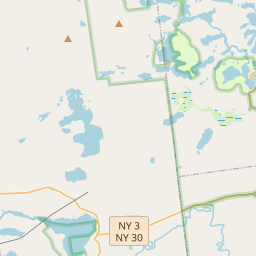
Make a weekend of it.
Closest editorial picks for a meal, a scoop, a pint, a bed, and a sight worth your time.
Eat.
4- ADK Food Hub5.6 mi
A year-round market and casual eatery on Park Street in Tupper Lake, with a deli case, pantry staples, and a summer buffet built around the on-site Whitten Family Farm. Sunday farmhouse breakfast in July and August.
- Guido's Pizzeria6.4 mi
Guido's Pizzeria in Tupper Lake has been serving hand-thrown pizzas, subs, calzones, dinners, and wings since 1988. They offer free delivery within the Town of Tupper Lake on any size order and make fresh dough daily.
- Amado6.5 mi
A small restaurant on Cliff Avenue in Tupper Lake serving Brazilian dishes (moqueca, feijoada) alongside lamb pot pie, fish fry, and a clearly marked vegan section. Homemade desserts.
- PorkBusters BBQ7.5 mi
PorkBusters BBQ is a Tupper Lake restaurant serving barbecue dishes seven days a week from 11 AM to 9 PM. They offer a menu for dine-in or takeout, plus catering for parties and events.
Sip.
4- Blue Moon12.0 mi
Blue Moon Café in Saranac Lake offers dine-in, pick-up, and curbside delivery services. Guests can enjoy weekly specials, restaurant menus, baked goods, coffee, grocery items, and adult beverages.
- Origin Coffee12.1 mi
Origin Coffee Co is a specialty coffee shop with locations in Lake Placid and Saranac Lake serving a chef-driven breakfast and lunch menu.
- Nori's Village Market12.2 mi
Nori's Village Market and Riverside Cafe offers a market with organic and local produce, bulk foods, coffee, and teas, alongside a cafe serving natural, vegetarian, vegan, gluten-free, and local meat options.
- Saranac Juice17.0 mi
Cold-pressed juices, cleanses, protein elixirs, and nut mylks from Saranac River Ranch in Bloomingdale, made from organic produce grown on the farm or sourced from local Adirondack growers.
Sweet.
4- Skyline Ice Cream6.2 mi
A roadside soft-serve stand on Route 30 in Tupper Lake since 1985 — vanilla and black-raspberry twists, gelato, Dole Whip, and Michigans, now with an expanded burger-and-fries menu.
- Mark Twain Maple Works10.8 mi
Mark Twain Maple Works produces New York State maple syrup on the shore of Saranac Lake in the Adirondack Park. They have been making syrup since 2013, expanding their operation and offering various grades.
- Mountain Mist Custard11.6 mi
A summer fixture on the shore of Lake Flower in Saranac Lake, with picnic tables and a dock you can tie a boat to. Frozen custard and soft serve with weekly-rotating flavors, shakes, and sundaes.
- Donnelly's Soft Ice Cream13.1 mi
A fourth-generation Saranac Lake institution on a former dairy farm, serving exactly one rotating soft-serve flavor each day — twisted with vanilla on the same 1953 machine. Cash only; check the daily flavor. Memorial Day to Labor Day.
Drink.
4- Lakeview Lanes & The Foul Line Sports Bar6.7 mi
Lakeview Lanes & The Foul Line Sports Bar in Tupper Lake offers 8 lanes of bowling, an arcade, a sports bar, and outdoor seating with food and drinks for family fun.
- Raquette River Brewing7.0 mi
A family- and dog-friendly taproom pouring year-round craft beer alongside four permanent food trucks, from wood-fired pizza to Carolina barbecue.
- The 1892 Bar & Grille10.7 mi
The 1892 Bar & Grille is a locally owned rustic bar and restaurant in Lake Clear, NY, offering homemade food. Recently under new ownership, it brings fresh energy and an updated menu to its patrons.
- Bitters & Bones12.1 mi
Saranac Lake's only downtown brewery, restaurant, and bar, Bitters & Bones offers craft beer brewed upstairs, fresh local cuisine for breakfast, lunch, and dinner, and craft cocktails. It features rooftop decks and unique private event spa…
Stay.
4- Northwood Cabins3.7 mi
Straightforward cabins with TVs & porches on a wooded property offering fire pits.
- Saranac Lake Islands Campground - Campsite #704.0 mi
Saranac Lake Islands Campground offers primitive, boat-access-only island campsites on Lower Saranac Lake, providing extensive boater recreation and access to four additional lakes via a system of locks.
- Saranac Lake Islands Campground Campsite 714.0 mi
Saranac Lake Islands Campground offers primitive, boat-access-only camping on Lower Saranac Lake. It provides extensive boater recreation and direct access to four other lakes via a system of locks.
- Saranac Lake Islands Campground - Campsite #774.2 mi
Explore the Lower Saranac Lake Islands, offering extensive boater recreation and access to four other lakes via locks. Camp on designated island sites for a primitive, boat-access-only experience.
See.
4- The Wild Center5.1 mi
Live animals, hands-on exhibits & forest trails connect guests with the Adirondacks.
- The Adirondack Sky Center & Observatory6.9 mi
Free 2-Day Space Camp at the Adirondack Sky Center Calling all future space explorers— get ready for an out-of-this-world adventure! Join us to explore some of the most fascinating topics in outer space! We’ll cover black holes, space tra…
- Adirondack Railroad7.1 mi
Adirondack Railroad offers scenic train experiences through the beautiful outdoor scenery of New York, departing from stations in Utica, Thendara, and Tupper Lake. They provide various themed rides, including special events and multi-hour…
- Sail Adirondacks: Saranac Lake-Lake Placid10.2 mi
A crewed sailboat charter operation with bases in Saranac Lake and Port Henry on Lake Champlain, running learn-to-sail lessons and skippered cruises on a fleet of classic sailboats.
Add to the record.
Free, takes thirty seconds. Yours forever.
Every page on this site gets better when readers contribute. Mark a peak you’ve climbed, drop a photo, file a field note, or flag a correction — every addition makes the next visitor’s page better.
Add a shot.
Sunrise on the dock, a cairn at the summit, a bend on the trail. Your camera roll, our archive.
Add a photo →File a report.
Trail conditions, water level, bug pressure, blowdown. The kind of detail that helps the next person plan.
Write a field note →Spot something off?
Wrong elevation, outdated access notes, a coordinate that's drifted. We'd rather hear it than miss it.
Suggest an edit →
Frequently asked.
- How long is the Panther Mountain Trail?The Panther Mountain Trail is approximately 0.40 miles (0.6 kilometers) — a short out-and-back suitable for most fitness levels.
- How long does it take to hike the Panther Mountain Trail?Most hikers complete the Panther Mountain Trail in about 20 minutes at a steady pace with roughly 335 feet of elevation gain. Allow extra time for rest stops, photos, weather, and trail conditions.
- How difficult is the Panther Mountain Trail?Based on its length and elevation gain, the Panther Mountain Trail is a moderate hike (335 ft of climbing over the route) — steady climbing that rewards a reasonable base of fitness. This is an estimate from route data, not an official trail rating — check current DEC advisories before heading out.
- Who maintains the Panther Mountain Trail?The Panther Mountain Trail is operated or maintained by NYS DEC (part of the lwn network).